


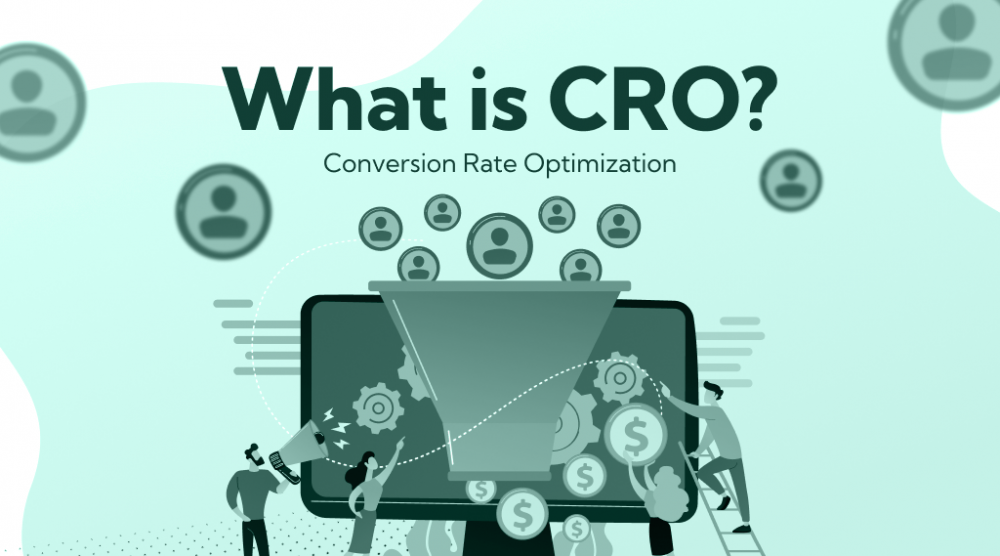
CRO has always been, and continues to be, one key focus: turning visitors into customers. But six years later, in 2026, the manner in which businesses accomplish this has been transformed. CRO isn’t just about changing button colors, headline tweaks and simple A/B tests anymore. Instead, it is a cultivated, AI-powered industry where real-time data, predictive analytics and behavioral intelligence shape every interaction with the user.
The current backbone of modern CRO strategies is Artificial Intelligence. From predicting intent before a click occurs to personalizing entire website experiences (in milliseconds), AI has revolutionized the way websites convert traffic into revenue. This development is most obvious with CMS platforms such as WordPress and eCommerce systems, where user behavior is competitive and complex against a constantly shifting backdrop.
In this post, we’ll dig into one of the most dominant: how CRO is being redefined in 2026 by AI and why it’s gone from “nice to have” to “have” in terms of business operations. We also touch on what use cases are appropriate (and not) for AI technologies for CRO; as well as some misgivings marketers may have about using AI to optimize conversions while simultaneously regaining trust with users, maintaining growth long-term.
Why CRO has Changed Beyond Recognition by 2026
To know the role of AI in CRO, we should also understand how user behavior has changed over time.
Modern users are:
- Less tolerant of slow or irrelevant sites
- More privacy-aware than ever before
- Visiting websites on multiple devices and platforms
- Shaped by the tech company’s example of what personalization should look like
By 2026, users will all expect sites to read their minds as soon they arrive. The generic landing pages, static funnels and one-size-fits-all offers simply don’t cut it anymore. This transformation has taken CRO into a new era where AI is not up to choice but a necessity.
The traditional CRO model was based on legacy data and required manual test specifications. AI-powered CRO, on the other hand, is performed in real time—it learns and evolves with user behavior as it occurs.
AI as the Brains for CRO
If we think of AI acting as brains for early CRO, thirty years later new forms of AI are our cross-strategy applications: modernity’s top-down metasystem.
At its heart, AI-powered CRO takes huge amounts of user data and they apply machine learning algorithms to it, highlighting patterns that humans are unable to infer when analyzing the data in large quantities.
What AI Can Read and Watch in Real Time
By 2026, AIs will be choosing between these eight arguments:
- Mouse movements and scrolling behavior
- Session duration and exit intent
- Click patterns and hesitation points
- Traffic source intent
- Device, location, and time-based behavior
- Returning vs first-time visitor signals
For AI, User Experience Should Be Adaptive For example, instead of waiting on A/B test results for weeks, AI tweaks the user experience instantly. If a visitor indicates buying intent, the website changes. If any hesitation is noticed, AI adjusts messaging, layouts or offers on the fly.
That’s the general mindset shift in CRO: optimization is no longer reactive — it’s predictive.
Predictive CRO: Knowing what the User Wants before Conversion
Perhaps the most potent ways that AI applies to CRO is predictive analytics. In 2026, those AI models don’t just examine what users did — they predict what they will probably do next.
How Predictive CRO Works
AI relies on historical and real data to enable:
- Predict which customers are likely to convert
- Detect potential page drop visitors
- Projected revenue impact of layout or copy changes
- Identify potential churning customers in the early funnel
A visitor, for instance, may be close to conversion if an AI system observes them reading pricing pages, scrolling slowly and returning repeatedly. The system can then serve user-specific personalized incentives, social proof, or urgency messaging.
This is not something you could do with the old CRO tools.
Hyper-Personalization at Scale
Personalization used to mean showing a person’s name in a headline. AI drives full journey personalization by 2026.
AI-Driven Personalization Includes
- Dynamic Headlines for traffic sources
- Contextual CTAs based on user response
- Product suggestions based on intent, not just history
- Custom page compositions for several types of users
- Tone of content shifting according to the depth of engagement
This is especially important for businesses that sell products, since AI-enabled CRO can improve every element of the customer experience.
What’s more, interestingly enough, businesses on different platforms can learn from one another. For instance, eCommerce businesses using WordPress would learn about PrestaShop workflows; like how a prestashop pre order module organizes demand forecasting and customer intent prior to launching a new product. Such revelations lead the way for AI-powered CRO strategies revolving around foretelling and not foreseeing.
AI-Powered A/B Testing: Beyond Traditional Experiments
A/B testing, the way people often do it, is based on comparing 2 static pages. AI-driven CRO replaces this with ongoing, multi-variate optimization.
The Way AI Makes Testing Better in 2026
- Tests dozens of variables simultaneously
- Distributes traffic to winners automatically
- Micro-conversion based learning rather than final sales
- Eliminates human bias in decision-making
AI doesn’t sit around waiting for statistical significance in the classic sense of that term. Instead it iteratively hones in on experiences through real time feedback loops.
Which means that the websites are getting better all the time — even when no marketer is actively conducting tests.
Artificial Intelligence and Behavioral Psychology in CRO
AI has also transformed how we apply psychology in CRO.
In 2026, AI systems understand:
- Cognitive load and attention span
- Interaction based emotional triggers
- Trust signals that influence decision-making
- Fear, urgency, and reassurance patterns
For example, when the AI sees people hesitating in checkout, it can pull trust badges, testimonials or flexible payment messaging dynamically into the buyers journey. And it is this emotional intelligence that contributes to far higher conversion rates, all whilst ensuring a natural and non-disruptive experience.
Voice, Visual and Multimodal CRO Optimization
User engagement is not just a click or scroll anymore.
By 2026 AI-supported CRO consists of:
- Voice search behavior
- Visual search patterns
- Gesture-based navigation
- AI chat interactions
Websites today are designed as much for the way users speak, see and interact, as they are for what a user may click.
AI chatbots in particular take the lion’s share of CRO. Today’s bots aren’t coded, they are context-aware, memory-enabled assistants that help lead users down the funnel and gather key behavioral data.
AI-Enabled CRO and Trust as a Conversion Factor
Trust is an under-estimated conversion tool.
AI helps improve trust by:
- Detecting suspicious traffic and bots
- Ensuring data integrity for personalization
- Protecting user privacy preferences
- Delivering consistent, reliable experiences
When users feel understood and safe, then they are more likely to convert. Personalized yet privacy-preserving AI fortifies brand trust and lifetime value.
CRO AI for Ecommerce and Pre-launch Strategies
Below are the most impactful use cases of AI powered CRO in 2026, specifically for pre-launch and demand validation strategies.
AI can:
- Predict demand before product release
- Tune messaging with Early Interest and microproxy topics.
- Adjust pricing expectations dynamically
The same concept applies when tools like a presta shop pre order add-on are used to test the fields and measure interest levels of customers before making any committal. Applying this to the whole site thanks to AI-driven CRO, companies can optimise conversions before a new product ever launches.
AI Ethics and Accountable CRO in 2026
With responsibility comes power.
In 2026 (ethical) CRO is a big issue. In conclusion, AI needs to optimize conversions without treating users.
Responsible AI-driven CRO includes:
- Transparent data usage
- Consent-based personalization
- Avoiding dark patterns
- Respecting accessibility standards
As a matter of fact, search engines and government bodies have been penalizing manipulative optimization methodologies. Ethical AI is not only about protecting users; it’s also about protecting the brands behind those users from causing long-term damage.
Measuring AI-Driven CRO Success
Classic measures of success such as conversion rate still apply, but if CRO is AI—powered, then it extends the measurement frame.
Key Metrics in 2026
- Engagement depth
- Predictive lifetime value
- Funnel velocity
- Intent fulfillment rate
- Trust and satisfaction signals
AI evaluates success in a well-rounded manner: it cares for sustainable growth, not short term victories.
CRO will NOT be Manual but rather will be Autonomous
In 2026, the most successful sites aren’t “running CRO campaigns”. They have self-learning optimization systems featuring AI at their core.
Human marketers now focus on:
- Strategy and vision
- Brand storytelling
- Ethical boundaries
- Creative direction
AI takes care of execution, testing, optimization at a level no team could do however manual each person is.
Final Thoughts: AI Isn’t Replacing CRO—It’s Reimagining It
The 2026 AI CRO Story in Action is not one about stealing jobs from marketers; it’s about arming them. AI takes guesswork out and brings the learning faster and more personalized in a way that was not possible a few years ago.
Whether you are managing a WordPress site, SaaS platform or learning about premium eCommerce plugins like the prestashop pre order module, CRO is no longer a static, manual or reactive exercise. It’s smart, responsive, and rooted firmly in the human experience — driven by A.I.
Companies adopting AI-powered CRO ethically should be able to convert more users and they will also have stronger relationships, higher levels of trust and a greater amount of long-term digital resilience in the fight for market share.