


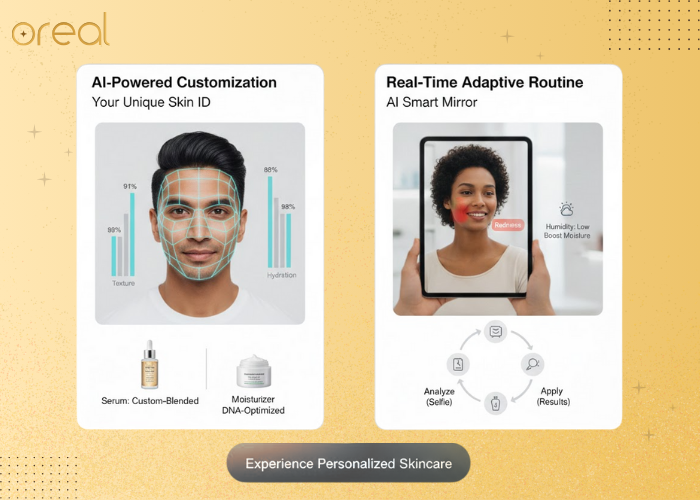
The application of “cutting-edge technology” in the skincare industry has predominantly referred to the use of artificial intelligence to analyze skin texture and type. The use of AI skin analysis tools has rapidly transcended the experimental phase and has become a necessity for the consumer and/or professional skin care expert. The more recent and sophisticated AI skin analysis tools can analyze skin conditions and provide assessments more accurately and cost-effectively than a typical dermatologist would provide.
In 2026, there are numerous AI skin analysis tools available in the market, each with its own capabilities, advantages, and disadvantages. Using the tools that provide skin assessments based on artificial intelligence can provide great value, while some others can be a waste of money.
What Makes AI Skin Analysis Tools Effective
In order to differentiate reliable skin analysis tools from the rest of the available options, there are a few factors to consider. Tools with the best quality use the latest in AI technology to keep customizing and updating their services based on their own assessments and on feedback from the users of their tools.
The best tools also use the latest in deep learning so that their AI systems continuously improve as they are exposed to increasingly larger sets of customer information. This enables the AI to provide increasingly accurate assessments. The best skin analysis tools will also utilize the largest sets of data, including images from thousands of individuals in order to more accurately assess their conditions.
Comprehensive evaluation capabilities assess multiple skin parameters at once, considering wrinkles and fine lines, dark spots and pores, texture and redness, hydration and elasticity. Single-dimension analysis results in an incomplete picture; only a multi-parameter assessment can provide insights that are truly actionable.
Personalized recommendations based on the specific individual analysis results set the exceptional tools apart from the basic ones. Rather than mere generic skincare advice, leading platforms prescribe particular ingredients, products, and routines related to detected concerns as well as characteristics of skin.
Top AI Skin Analysis Tools for Consumers
SkinVision
SkinVision deals with the early detection of skin cancer by using AI to review photos of moles and lesions for any characteristics that may be deemed worrisome. It does not act as a complete skincare tool but performs very well at the purpose it was designed for: identifying dangerous changes in the skin that need medical evaluation.
The application provides within seconds risk assessments, monitors overtime variation of moles and offers dermatologist consultations if necessary. For anyone interested in the prevention of skin cancer, SkinVision presents a valuable early warning system.
YouCam Makeup
Apart from its augmented reality makeup features, YouCam Makeup contains advanced AI skin analysis tools that check on the age of the skin by analyzing facial features and finding out skin concerns such as wrinkles and dark spots, then recommending personalized skincare routines.
The mixture of examination and virtual give-it-a-shot abilities makes YouCam especially captivating. Clients see both their current skin condition and how suggested items could further develop their appearance, making convincing inspiration for following ideas.
Proven Skincare
Proven uses its own AI to sift through more than 100,000 products and 8 million customer reviews, then builds skincare formulas just for you. You fill out a skin assessment, toss in some info about your environment and habits, and Proven comes back with recommendations tailored to you.
What really sets Proven apart? They don’t just match you with something off the shelf. They actually create custom formulas based on your specific needs, making sure you get the right mix of ingredients every time.
Neutrogena Skin360
Teaming up with FitSkin, Neutrogena’s Skin360 turns your phone into a skin analyzer. You attach a special device, and the AI checks your skin from all angles. It doesn’t just spit out numbers, either—it tracks how your skin changes over time, so you actually see how your routine is working.
What really sets this tool apart is how it tracks changes over time. With monthly scans, you get a clear, visual timeline—so you can actually see if your products and routines are working, or if something new pops up.
Professional AI Skin Analysis Platforms
VISIA Complexion Analysis
VISIA is the go-to for skin analysis in the professional world. Dermatologists, plastic surgeons, and med spas everywhere rely on it. The system uses advanced multispectral photography to capture everything, even what you can’t see on the surface.
It checks for spots, wrinkles, texture issues, pores, UV damage, bacteria, and vascular problems, and it does all this with impressive detail. The price tag is steep—$25,000 to $40,000—but for clinics offering serious skincare treatments, VISIA is a key part of planning and showing real results.
Observe 520x
Then there’s the Observ 520x. It uses a mix of light wavelengths—daylight, cross-polarized, parallel-polarized, true UV, and simulated Wood’s lamp—to reveal what’s happening in different layers of your skin. This makes it easier for professionals to spot problems that need attention and to keep track of progress as you go.
The system’s strength lies in revealing hidden damage and future concerns before they become visible problems, enabling preventive treatments rather than reactive interventions.
Canfield Vectra
Canfield Vectra creates three-dimensional facial imaging for precise analysis and treatment simulation. Plastic surgeons and dermatologists use this technology for procedure planning, patient education, and outcome documentation.
While primarily focused on cosmetic procedures rather than daily skincare, Vectra’s precision makes it invaluable for facilities offering advanced aesthetic treatments alongside skincare services.
Free AI Skin Analysis Tools Worth Using
Budget-conscious consumers can access quality analysis without subscription fees through several reputable platforms.
Olay Skin Advisor analyzes selfies identifying skin age and specific concerns, then recommends products from Olay’s line. While brand-focused, the analysis technology provides legitimate insights, and recommendations follow evidence-based skincare principles.
La Roche-Posay Skin Genius offers comprehensive AI skin analysistoolsevaluating wrinkles, firmness, radiance, and pores. The app provides personalized routines using La Roche-Posay products but also educates users about ingredients and skincare science.
Garnier Skin Coach powered by Mirada combines daily skin assessments with environmental data—UV index, pollution levels, humidity—to adjust recommendations dynamically. This environmental awareness makes it particularly valuable for travelers and people in variable climates.
Choosing the Right AI Skin Analysis Tool
Selecting appropriate tools depends on your specific needs, budget, and skincare goals. Consider these factors when evaluating options.
Accuracy Requirements: Casual users seeking general guidance can use free consumer apps confidently. Those addressing serious concerns or considering expensive treatments benefit from professional-grade analysis justifying higher costs.
Privacy Considerations: Review privacy policies carefully. Understand how platforms store, use, and share your facial images and personal data. Reputable tools implement strong encryption and allow data deletion, while questionable platforms may have concerning practices.
Integration Needs: If you prefer specific brands or already work with dermatologists, choose AI skin analysis tools compatible with your existing skincare ecosystem. Some platforms integrate with telehealth services, enabling professional consultations based on AI findings.
Budget Constraints: Free tools provide surprising value for initial assessments and basic monitoring. Paid subscriptions ($5-20 monthly) typically offer more comprehensive analysis, unlimited scans, and advanced tracking. Professional tools ($25,000+) suit clinical settings only.
Maximizing Value from AI Skin Analysis
Simply using analysis tools doesn’t improve skin—acting on insights does. Follow these practices for optimal results.
Consistent Conditions: Check your skin in the same spot, at the same time of day, and under the same lighting if you want to actually see what’s changing. Staying consistent cuts out all those random factors that can make your skin look better or worse than it really is.
Regular Reassessment: When you’re actively treating your skin or trying something new, looking once a month is enough. That gives you a good sense of progress without obsessing over every little change. Once your routine settles in and you’re just keeping things steady, checking every three months does the trick.
Honest Implementation: AI skin analysis tools You only get real value if you actually follow the recommendations. Half-hearted efforts mean half-baked results. Stick with what’s suggested for at least 6-8 weeks before you decide if it’s working.
Professional Consultation: AI analysis is handy, but it’s not a substitute for seeing a dermatologist. If something looks off or worries you, get a professional opinion. AI can help with cosmetic advice, but it can’t diagnose medical issues.
Conclusion
Technology keeps moving fast. These days, we’re seeing smart mirrors that give you instant feedback, wearable sensors that track your hydration and sun exposure around the clock, and predictive tools that show how your skin could age depending on what you do. Some systems even pull in your genetic data to offer advice that actually fits you.
All this means AI skin analysis tools are about to get a lot smarter and more useful. If you jump in early, you’ll get the benefits as soon as these new features roll out.
Frequently Asked Questions
Are AI skin analysis tools really accurate?
Quality tools achieve 85-95% accuracy for common concerns like wrinkles, dark spots, and texture issues. Accuracy depends on image quality, algorithm sophistication, and training data diversity. Professional-grade systems typically outperform consumer apps but cost significantly more.
Can AI tools replace dermatologist visits?
No. AI skin analysis tools excel at cosmetic assessments and routine skincare guidance but cannot diagnose medical conditions. Use AI for product selection and routine optimization, but consult dermatologists for suspicious changes, persistent problems, or comprehensive health evaluations.
Which free AI skin analysis tool is most accurate?
La Roche-Posay Skin Genius and Olay Skin Advisor both provide reliable free analysis. Accuracy differences between top free tools are minimal—choose based on which interface you prefer and whether you’re open to their product recommendations.
Do these tools work for all skin tones?
Modern platforms train on diverse datasets, including various skin tones, but accuracy can vary. Always choose tools that explicitly validate their technology across different demographics. Avoid platforms lacking diversity statements or testing transparency.
How often should I use AI skin analysis?
Monthly analysis works well when starting new routines or addressing specific concerns. Once routines stabilize, quarterly assessments suffice for tracking long-term progress. More frequent analysis isn’t necessarily better since skin changes occur gradually.
Are paid AI skin analysis tools worth the cost?
If you’re serious about skincare and want comprehensive tracking, unlimited scans, and detailed progress reports, paid tools ($5-20 monthly) deliver good value. Casual users find free tools perfectly adequate for basic guidance and monitoring.