


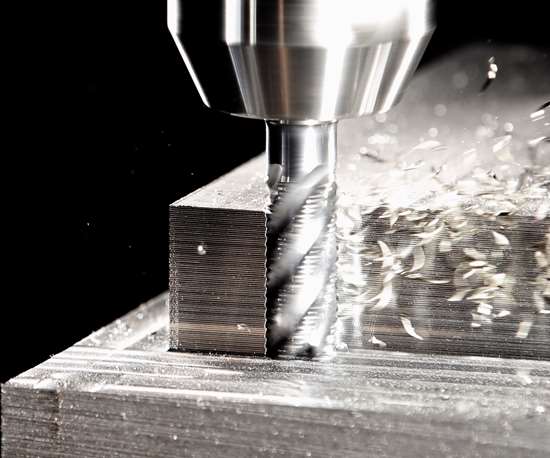
Understanding Numerical Control (NC): A Comprehensive Guide
Numerical Control (NC) automates machines by directing their mechanical actions with a program containing coded alphanumeric data. This data defines the relative positions between the work head (tool or processing element) and the work part (the object being processed). Manufacturers widely use NC systems, especially in machining, and they remain a crucial technology in modern production.
What is Numerical Control?
The operating principle of NC is simple: it controls the motion of the work head relative to the work part and manages the sequence in which these motions occur. While the first applications of NC were in machining, its principles now apply to various manufacturing processes.
Key Components of an NC System
An NC system consists of three main components:
- Part Program
The part program is a detailed set of commands for the processing equipment. It instructs the machine on how to move the work head relative to the work part. Coordinates are defined in the x-y-z axes, and additional instructions may include spindle speed, spindle direction, feed rate, and tool changes. A part programmer creates the program, ensuring it aligns with the technology of the processing equipment. - Machine Control Unit (MCU)
Modern NC systems use a microcomputer-based MCU, often referred to as Computer Numerical Control (CNC). The MCU stores and executes the part program by converting each command into specific actions by the processing equipment. It includes:- Hardware: Microcomputer, interfaces with equipment, feedback control elements Software: System software, calculation algorithms, translation software
- Processing Equipment
The processing equipment carries out the operations specified in the part program, transforming the work part from raw material into a finished component.
Coordinate Systems and Motion Control
NC systems use a coordinate system to specify positions. Typically, this includes:
- Three linear axes: X, Y, Z
- Three rotational axes: A, B, C (not always required)
Some machines, like simple plotters or sheet-metal presses, only need two axes (X-Y). Advanced machines, such as five-axis tools, use three linear axes plus two rotational axes for complex shapes.
Motion Control Types
NC motion control is classified into two types:
- Point-to-Point (Positioning Systems)
- Moves the work head or part to a programmed location without controlling the path taken.
- Once in position, a processing action, such as drilling or punching, occurs.
- Continuous Path (Contouring Systems)
- Simultaneously controls multiple axes, allowing the tool to follow a defined path.
- Essential for creating angular surfaces, 2D curves, or 3D contours.
- Used in milling, turning, flame cutting, and drafting machines.
Interpolation in Continuous Path Systems
Interpolation calculates intermediate points along the tool path:
- Linear Interpolation: For straight-line paths; coordinates and feed rate are defined.
- Circular Interpolation: For circular arcs; start, end, and radius or midpoint are specified. The system computes small line segments to approximate the curve.
Applications of NC
NC technology remains vital in modern manufacturing:
- Machining complex components
- Contouring in milling and turning
- Flame cutting and drafting
- Component insertion and automation in assembly lines
By precisely controlling motion and sequence, NC systems increase productivity, improve accuracy, and reduce manual labor.
Conclusion
Numerical Control (NC) revolutionized manufacturing by automating machine operations with precision. Modern CNC systems have expanded its applications, allowing manufacturers to produce complex, high-quality components efficiently. Understanding NC principles, components, and motion control methods is essential for engineers, programmers, and anyone involved in advanced manufacturing.