


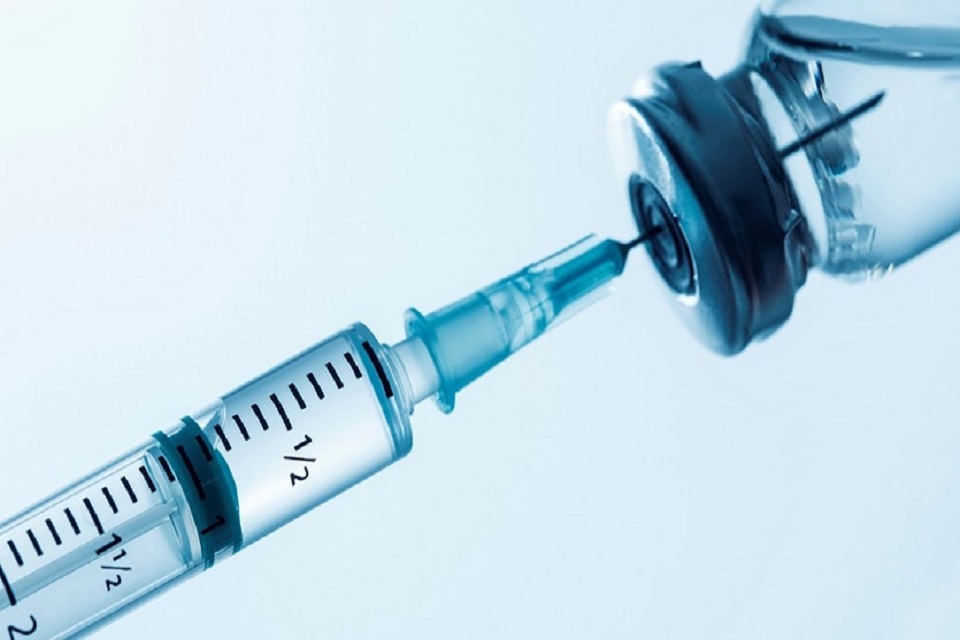
Researchers in the United Kingdom created a smart needle designed to enhance the ability to detect cancer more quickly. This technology will assist in the diagnosis of several diseases like lymphoma, and it could be a direct agent in decreasing the nervousness of most of the patients by reducing the time to get the desired results with a speedy diagnosis. Nowadays, doctors ask people with lymphoma to give a sample of cells and then perform a biopsy of the node to complete the diagnosis, as the procedure is time-consuming.
A research partner of the project at the University of Exeter Alex Dudgeon has said that the instantaneous detection could be a principal-agent in successful diagnosis and treatment of the cancer. Moreover, he has assured that this technology could revolutionize the speed of diagnosis of lymphoma. This technology could replace traditional diagnostic methods, providing instantaneous results that reduce patient anxiety and eliminate the need for needle-based diagnostic surgery. Furthermore, NHS states that using this technology will save a lot of time, reduce costs, and provide a more efficient patient experience.
How it would work
The writers at nursing assignment help quoted that the researcher of the University of Exeter said that this new device would be based on Raman Spectroscopy. It will direct a low power laser to the inspected parts of the body, and it would detect the issues in only seconds. Prof. Nick Stone, chief of the project at the University of Exeter, explains that the new smart needle will detect all changes in diseased tissue, and the Raman needle will measure changes in the cells. He says that scientists would be able to evaluate healthy tissue with the help of the tip of Raman smart needle.
The experts have developed that Raman sharp needle on the laser technology that acts as a probe to utilize light to find out the cancerous cells or tissues immediately. This technology has got the right potential to enhance the efficiency to diagnose the lymphoma. Scientist and researchers are working on new technology at the University of Exeter, University of Bristol and Gloucestershire Hospitals of NHS Foundation Trust.
Advancing Cancer Diagnosis with Fiber-Optic Laser Probes
The probe uses laser light, which scatters on the targeted body part. The light reflects differently from healthy and diseased tissues, helping scientists analyze the diseased tissue immediately. The current traditional methods have lots of dangerous as these could harm the neighbouring healthy tissues so it would eliminate the fears of damaging other tissues of the body.
The diagnosis process can take up two or more weeks to show the results. Charlie Hall, a neck and head expert of NHS Foundation Trust at Gloucestershire hospitals has encouraged this technology by addressing its future efficacy for speedy diagnosis of cancer in the head and neck of body of the patient.
Tests of technology:
The scientists have successfully tested this technology in a sample of 68 patients, and they have succeeded in carrying out the difference between the cancerous cells and healthy body cells. They are now planning a three-year trial of the probe, sponsored by the National Institute for Health Research, which will pave the way for patient clinical trials in a few years.
The prototype was built by Dr John day at the University of Bristol. He has promised to continue his experiments on the trial for further exploration. Moreover, he has also proposed that if this technology is successful for the diagnosis of lymphoma in patients, then it would be revolutionary for the detection of other types of cancerous tissues in the human body.
The researcher has said that the lymphoma is the sixth most common type of cancer among people in the United Kingdom as 50 % of people suffer from this disease and one in two patients die due to this deadly cancer. Now, doctors will use the new diagnostic technology to help people recover after immediate treatment.
The reaction of industries
Rophinder Gill, head of the Lymphoma Action charity, has praised this new technology. She has encouraged it by calling an exciting development for patients suffering from Lymphoma cancer. But she also pinpointed the pioneer trails. She has been reluctant to say anything before successful trials on the technology. The project is given one million dollar boost by NHIR (National Institute of Health Research).
This type of technology is also used or brain surgery as it is also under clinical trials in Australia. This technology will comprise a tiny screening probe which could enclose inside a smart biopsy needle helpful for brain surgery. The researchers at the University of Adelaide are working on these needles to detect at-risk blood vessels while they insert the needle into the human body. It will reduce the bleeding risks of brain surgery. The University of Western Australia and Sir Charles Gairdner Hospital are working collectively to this project.
Many significant problems researchers face while treating the cancer as one is late diagnosis. Most people do not know what type of cancer they are suffering form in their lives. Sometimes, people at later critical stage become aware of the disease, so it becomes impossible to treat patients at the third or last stage. But with the invention of smart needle, it would be easier for people to diagnose the disease or cancer in their lives at an earlier stage. The detection of cancer at a more initial step would be beneficial for its treatments. Hence people death ratio due to disease could be reduced with the help of this new detection technology.