


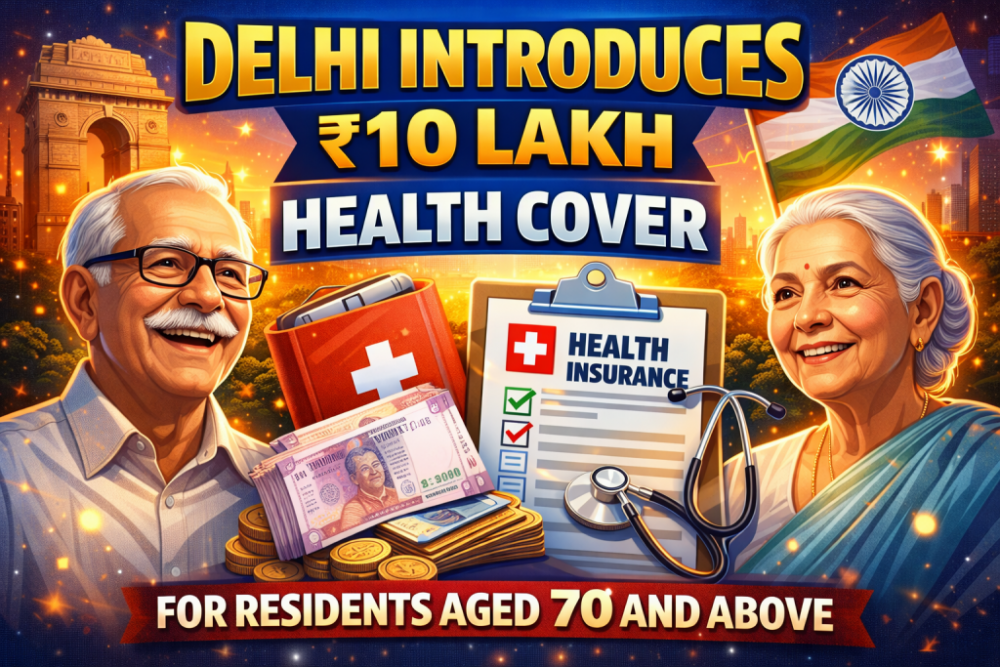
Healthcare security for the elderly has long been a concern in India, especially in urban areas where medical expenses continue to rise. Delhi established a health protection system which provides ₹10 lakh coverage for people who reach 70 years of age and older to enhance their social security benefits. The costs of chronic diseases and hospital stays and diagnostic assessments and extended medical care will deplete financial resources. Families find it hard to obtain proper health insurance for their senior members because of expensive premiums and restricted policy choices. The elderly population of Delhi will benefit from the expanded health insurance coverage which provides substantial financial relief.
Understanding the ₹10 Lakh Health Cover Scheme
The newly established health coverage system protects residents aged 70 and above with financial benefits that reach up to ₹10 lakh. The scheme aims to provide senior citizens with immediate medical access through its requirement to eliminate financial barriers for treatment. The cover is designed to support hospitalisation expenses, treatment costs, and other essential medical services that are commonly required in advanced age.
The government-backed initiative enables access for all people because it lacks age restrictions and medical underwriting requirements which many private policies impose. The program provides a safety net to protect elderly people who lack health insurance or possess inadequate coverage to handle their growing medical expenses.
Why This Initiative Matters for Senior Citizens
Senior citizens often develop multiple health conditions which require medical attention. Patients with diabetes or heart disease or arthritis or respiratory disorders or neurological conditions need ongoing medical supervision and treatment. Elderly patients require more time to recover in hospitals which results in higher expenses for their medical treatment.
When senior citizens lack sufficient health insurance, their families experience both treatment delays and financial difficulties. The health cover worth ₹10 lakh provides a financial solution which depends on its capacity to deliver dependable funding for health expenses. Senior citizens who use this service can receive medical care without any delays which results in better health results and enhanced life quality.
Reducing Dependence on Family Savings
All families face the financial burden of medical emergencies which force them to use their savings and sell their assets and borrow money. The situation develops into a long-lasting financial challenge for the affected individuals.
The health cover enables seniors to achieve financial independence through its introduction. The program reduces family responsibilities through its implementation which works with current health insurance policies. The system ensures caregivers receive protection because they do not have to worry about major medical costs.
Impact on Existing Senior Citizen Health Insurance Plans
The new development of ₹10 lakh coverage benefits senior citizens, but it does not eliminate their requirement for private health insurance policies. The system provides essential assistance to users. The majority of elderly people already possess a mediclaim or health insurance policy, but they can only get basic protection because they cannot afford superior plans. The new program will enhance existing private policies by increasing total coverage that users can access. A senior citizen can use government assistance to cover his medical expenses while his health insurance plan takes care of smaller costs, thus providing him complete protection during critical health situations.
Accessibility and Ease of Use
The major obstacle that insurance programs face centers around their difficulty to achieve universal access. Elderly people face obstacles to enrollment because they must deal with complex documentation requirements and face awareness deficits and experience procedural delays. The Delhi project enables eligible residents to access their benefits through a simplified process without facing any unnecessary barriers.
The success of schemes depends on two factors: enrollment process simplicity and precise coverage details. Direct access for seniors, especially those who live alone or have minimal assistance, makes a considerable impact through uncomplicated procedures.
Addressing the Rising Cost of Healthcare
Healthcare costs in India have experienced higher growth rates than the overall inflation rate during the past few years. The costs of diagnostic tests and specialist consultations and surgical procedures and post-hospitalisation care have reached higher price points. For elderly patients, these costs are often unavoidable and recurring.
The health cover of ₹10 lakh exists to match the increasing costs of healthcare services. The system requires a higher value of coverage because standard low-cost coverage does not meet current requirements. The scheme provides a higher sum insured because it needs to match actual medical expenses while understanding the healthcare requirements of elderly patients.
Encouraging Preventive and Timely Treatment
Adequate health insurance coverage enables people to access medical assistance at the right time. Senior citizens tend to pursue health checkups after they reach financial security. The approach enables healthcare practitioners to identify and treat early stage medical conditions before they develop into serious diseases that necessitate extensive medical care.
Elderly residents with access to complete health coverage tend to participate in routine medical examinations and adhere to their treatment schedules. The system benefits from this method because it helps people improve their well-being while it decreases the future demands placed on medical services.
A Step Toward Inclusive Healthcare Policy
The introduction of this scheme reflects a broader shift toward inclusive healthcare planning. The senior citizen population requires specific medical solutions because their numbers are increasing. Generic policies often fail to address age-specific challenges, making specialised initiatives essential.
The Delhi policy establishes an age threshold of 70 years because it recognizes that this group is most at risk. The system provides a model for other states to enhance their methods of supporting senior citizen healthcare services and health insurance programs.
Awareness and the Role of Families
The scheme provides significant advantages, but success depends on public knowledge about the program. Senior citizens generally do not show interest in discovering information about newly introduced health programs. Elderly residents depend on families and caregivers and community organizations to help them learn about their rights and responsibilities.
Seniors will benefit from better coverage when they understand how the health coverage system operates and which costs qualify for benefits and the process to obtain those benefits. The protection of healthcare services increases when people use their health insurance plans in conjunction with their current insurance coverage.
Limitations and the Need for Complementary Coverage
The ₹10 lakh insurance coverage provides extensive protection, yet certain aspects of coverage, hospital networks, and particular medical procedures still impose restrictions. Senior citizens with complex medical histories may require specialised care that goes beyond standard coverage.
The need for private senior citizen health insurance continues to exist because it offers essential services. A well-chosen personal health insurance policy can complement the government scheme by covering outpatient expenses, medicines, or services not included under the public cover.
Long-Term Benefits for Society
Healthcare security for senior citizens brings multiple advantages to society. The health and financial stability of elderly people results in less anxiety for their families, which leads to better work efficiency from adult family members. The healthcare system provides seniors with essential treatment, which lessens the future financial demands that public hospitals face.
The initiative demonstrates that health insurance functions as a social instrument which exists beyond its financial nature because it creates social advancement and public satisfaction.
A Positive Direction for Senior Healthcare
Delhi’s decision to provide a health benefit of ₹10 lakh which covers all residents who reach 70 years of age constitutes a beneficial measure which the government should implement without delay. The solution which the program offers to existing problems which elderly people experience provides essential support for those who are most in need of medical services.
The study shows that this program increases access to high-quality medical services but it does not replace the need for private health insurance which senior citizens require when they need complete coverage. The statement demonstrates how society must treat elderly people with respect while providing them equal access to medical services.
As medical expenses increase over time, these policies create substantial benefits for elderly people who depend on them. The scheme will successfully transform elderly healthcare throughout urban India when it achieves three objectives which include proper implementation and raising public awareness and delivering seamless support for existing health insurance systems