


Saying goodbye to someone you love is always an emotional challenge. Families have to make decisions they’ve never had to make. Families have to make decisions they’ve never made before and the options for cremation can be baffling. When you begin to think about cremation services PA, you will encounter both direct cremation and traditional cremation.
Although both options include cremation, the experience, expense, and type of ceremony are completely different. This guide goes through the options in an effort to help you make the best informed decision about cremation services for your family.
Understanding Cremation Services in Pennsylvania
Cremation has become increasingly popular across Pennsylvania. Families appreciate the flexibility, cost, and personalization of service they can receive through cremation versus traditional burial.
However, every cremation service is different. The difference, on the other hand, is the degree of ceremony and assistance that is provided prior to the cremation.
What Is Direct Cremation?
A Simple, No-Frills Option
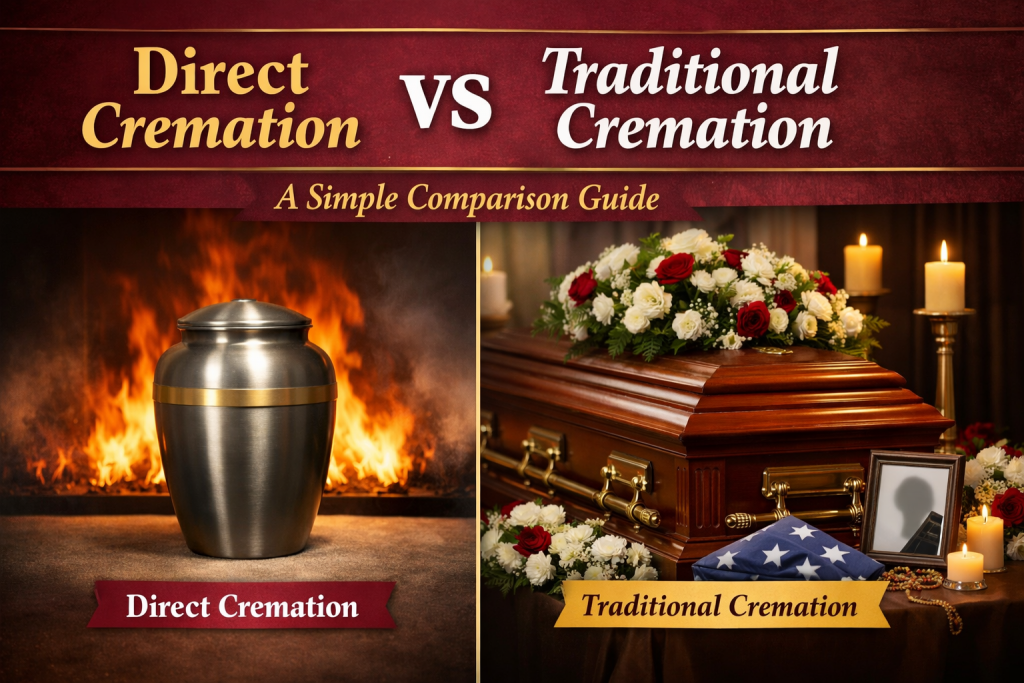
Direct cremation is the most basic type of cremation. The deceased is transported to the funeral home and then cremated, but this is done with no funeral service, no viewing, and no visitation.
No public viewing, no embalming, no casket, and no planned ceremony.
Why Families Choose Direct Cremation
Several families choose direct cremation because it gives them:
- Less expensive than other cremation options
- More rapid processing—usually takes only a couple of days
- Option to schedule memorial services at a different date later
- Easier to cope with everything during a very emotional time
This is especially typical of families who intend to scatter ashes at a later date, wish to have a private remembrance, or are going to have a celebration of life at another venue.
Is Direct Cremation Right for Everyone?
Direct cremation might be seen as too plain by families who appreciate ritual, religious, or other ceremonies as ways to come together soon after a death. There is no right or wrong answer as long as the decision made feels that it best honors the deceased.
What Is Traditional Cremation?
Ceremony with Cremation
Traditional cremation is where you have cremation together with some of the things that are traditionally part of a funeral. This may consist of:
- One or more viewings or visitation period
- Either a funeral service or a memorial service
- A ceremony that may be held at a church, funeral home, or at the gravesite.
- The cremation usually occurs after the service(s) have been conducted.
In some cases, the cremation occurs first, followed by a memorial service where the deceased’s urn is present.
Why Families Choose Traditional Cremation
Families usually select traditional cremation because it enables them to:
- Spend time with supportive friends and family members together
- Include religious or cultural customs that may be important to them or the deceased.
- Say goodbye in a structured, meaningful way
- Create lasting memories through ceremony
Direct Cremation vs Traditional Cremation: Key Differences
1. Cost Comparison
Cost is one of the biggest factors families consider when choosing cremation services in PA.
- Direct cremation is typically the most affordable option because it excludes services like embalming, viewing, and ceremony coordination.
- Traditional cremation costs more due to additional services, staff involvement, facilities, and memorial planning.
2. Timing and Planning
- Direct cremation happens quickly, often within days. Memorial services can be planned weeks or months later.
- Traditional cremation requires more coordination and planning before the cremation occurs.
3. Emotional Experience
This is where the difference becomes more personal.
Some families feel peace knowing everything is handled simply and privately, while others need the comfort of gathering, storytelling, prayer, and shared grief.
Neither option reduces the love or respect held for the person you lost.
How Funeral Planning Services Can Help
Whether you choose direct or traditional cremation, working with experienced funeral planning services makes a difference.
A trusted funeral home can:
- Pressure-free explain your options
- Legally handle paperwork
- Coordinate the cremation logistics
- Assist in planning the memorials or the celebration of life
- Emotional rather than logistical support for the family
Choosing the Right Cremation Services in PA
When selecting a provider, look for a funeral home that offers:
- Good prices
- Compassionate, experienced staff
- Flexible cremation options
- A strong local reputation
- Clear communication during every step
Final Thoughts: Making the Choice That’s Right for You
Choosing between a direct and a traditional cremation is not a question of better, but one of what is best suited for your family.
Both alternatives are ways of honoring the deceased and are equal in dignity. The difference comes in the preferences of the family to how they want to remember the loved one and how they want to process the grief.
The kind team of Devlin Funeral Home is dedicated to providing loved ones with the best care of their loved ones while staying within the family’s budget. Your loved one, along with their solid experience and fair planning for a funeral service, will be treated with the respect they deserve.
Frequently Asked Questions
Can we still have a memorial after direct cremation?
Yes. Many families choose direct cremation and hold a memorial service later, on their own timeline.
Is cremation accepted by most religions?
Many faiths now accept cremation, though traditions vary. A knowledgeable funeral director can help guide you.
What happens to the ashes?
Ashes can be kept, buried, scattered, or placed in a columbarium — the choice is entirely yours.