
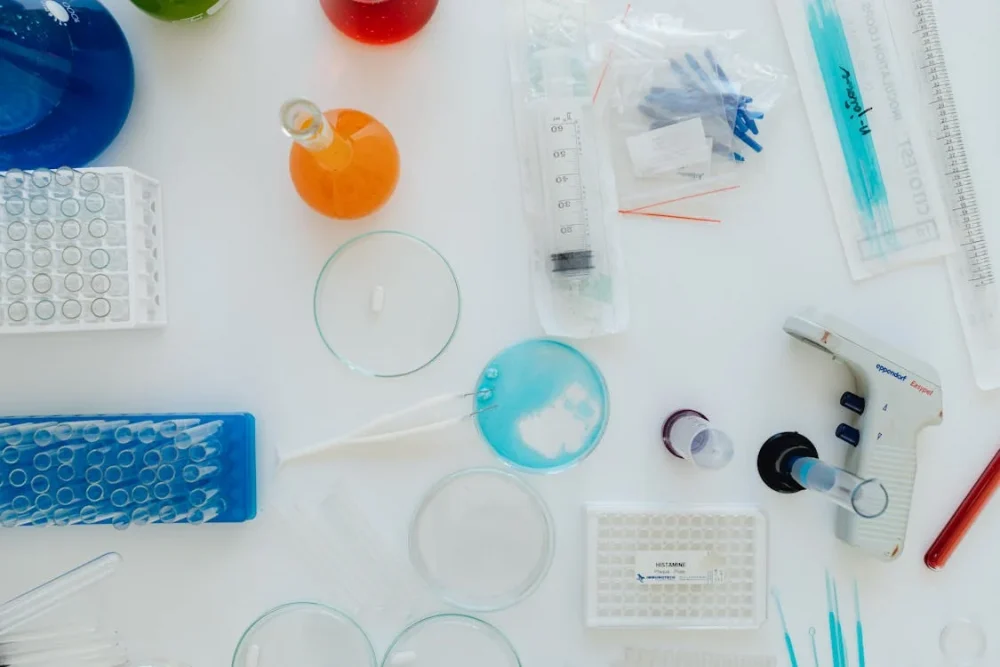
Cell line development is the foundation of contemporary bioprocessing and has special significance to industrial production, biotechnology, and the pharmaceutical industry. Whether recombinant protein or biofuels manufacturing, microbial cell lines are a cheap, highly scalable platform for biologics and other high-value commodity production. As increasingly more products have to be manufactured via biomanufacturing, developments in genetic engineering, synthetic biology, and automation are revolutionizing strain development and microbial cell line optimization.
This article covers trends currently redefining microbial cell line development, how to embark on the challenge of strain optimization, and what trends in the near future will have an influence on innovation here.
Significance of Microbial Cell Line Development
Microbial cells are employed largely for industrial and pharmaceutical bioprocessing because of the capability to grow with high growth rates, being genetically engineered, and low cost. The highest-listed microbial hosts employed are:
- Escherichia coli (E. coli) – Better ranked for processes related to recombinant protein synthesis.
- Saccharomyces cerevisiae (Yeast) – Employed in bioethanol and biopharmaceutical production.
- Pichia pastoris – Heterologous expression system used for production of high-level recombinant proteins.
- Bacillus subtilis – Conveninent because it secretes protein into the culture broth.
Microbial cell line development is a collection of processes including strain selection, genetic manipulation, metabolic design, and bioprocess optimization. Its goal is to increase productivity, stability, and scalability and reduce cost and utilization of resources.
Recent Advances in Microbial Cell Line Engineering
1. CRISPR-Cas9 and Genome Editing
CRISPR gene editing has transformed the microbial line cell development process by virtue of its potential to make precise, targeted DNA changes. Scientists can, through the process, obtain:
- Knocking out undesired genes for enhanced yield.
- Insertion or substitution of genes for enhanced metabolic processes.
- Stress-resistance and industrial bioprocess-compatible cells.
Designer yeasts created by the assistance of CRISPR, for instance, are designed with higher ethanol yield, and therefore it is cost- and more efficient-effective to produce biofuels.
2. Designer Microbes and Synthetic Biology
Synthetic biology goes one step further than creating microbial cell lines in the course of designing new genetic circuits and pathways. The technology allows:
- Designer metabolic pathways to highest product yield.
- Design of microbial factories for biochemicals.
- Large-scale value-added production of drugs and enzymes.
Genetically altered yeast cultures are, for example, used today to synthesize opioids and other complex molecules which were earlier sourced from plants involving more time and production expenses.
3. Optimization by Machine Learning and AI
Machine Learning and Artificial Intelligence also facilitate accelerating development of microbial cell lines by strain optimization. AI algorithms can:
- Predict optimal gene modifications needed to optimize yield.
- Improve conditions of fermentations with big data.
- Decrease trial-and-error testing and time and material waste.
AI will suggest the best way to improve the performance of a microbial cell line and optimize it sooner and more accurately based on genetic and metabolic data.
4. Automation and High-Throughput Screening
- Automation and high- throughput screening have revolutionized screening and testing of microbial strains. Techniques such as:
- Microfluidics – Allows high-speed screening of millions of microbial variants in incredibly tiny fluidic channels.
- Robotic Systems – Automates media preparation, picking, and manipulation of data.
- Fluorescence-Activated Cell Sorting (FACS) – Improves the desired traits in microbial cells at high speed.
All of these technologies allow scientists to test and generate microbial cell lines on an unimaginable scale in advance, accelerating the development process in reality.
Challenges in Microbial Cell Line Development
Despite advancements in technology, problems are being confronted in the field of microbial cell line development:
1. Genetic Instability and Metabolic Burden
Gene insertion in microbes is metabolically taxing to the cell, decreasing productivity and growth rate. Secondly, gene alteration can be unstable at a specific level, making the product yield heterogeneous.
Solution: Researchers are pursuing gene circuit balance and adaptive lab evolution to stabilize engineered strains.
2. Scalability and Industrial Conformity
Optimized microbe strains that have been lab-designed are not necessarily going to perform best under conditions of scale industrial process. Nutrient delivery, oxygen transfer, and pH can all reduce performance.
Solution: Performance is forecast and controlled through real-time measurement and modeling of the bioprocess in bulk fermentation.
3. Regulatory and Safety Considerations
GMMs for biomanufacturing will need to meet rigorous safety and environmental regulation requirements.
Solution: Gene drive suppressor systems and biocontainment solutions are among the biosafety engineering solutions reducing risk.
The Future of Microbial Cell Line Development
The future of microbial cell line development will be defined by artificial intelligence, automation, and biotechnology convergence. Some of the most significant trends are:
1. Microbial Strain Improvement Biofoundries
Biofoundries—gene editing-enabled robot labs—are on the horizon to become a strain improvement disruptor. Biofoundries use robotics, artificial intelligence, and synthetic biology to screen and produce microbial cell lines at high throughput.
2. Green Bioprocessing
Growing concern over sustainability is creating microbial cell lines that are genetically engineered to capture carbon, recycle waste to product, and produce biodegradable plastics. These technologies will replace fossil fuels and minimize the green footprint of biomanufacturing.
3. Personalized Biomanufacturing
While precision medicine makes the treatment patient-specific, the targeted biomanufacturing has the potential to make possible the engineering of personalized-tailored-microbial strains that can yield personalized pharma-ceuticals, food, and fine chemicals.
4. Blending Quantum Biology
Quantum biology studies that were conducted in the last few years discovered that metabolic reactions of microbes could be maximized with the assistance of quantum computers. The new procedure will essentially result in simulating biological reactions to a larger degree than was possible up to now.
Conclusion
Microbial line cell evolution is leading the gene engineering, AI, and automation-fostered revolution in bioprocessing. Microbial strains will be efficient, eco-friendly, and resilient with new technologies that are being developed, which will transform pharma into renewable energy industries.
With AI-optimization completing the blanks, synthetic biology, and biofoundries, the future of innovation of microbial cell lines bioprocessing never seemed so bright with intelligent, speed-up, and sustainability-focused bioprocessing solutions—towards a new generation manufacturing biotechnology-led.

