


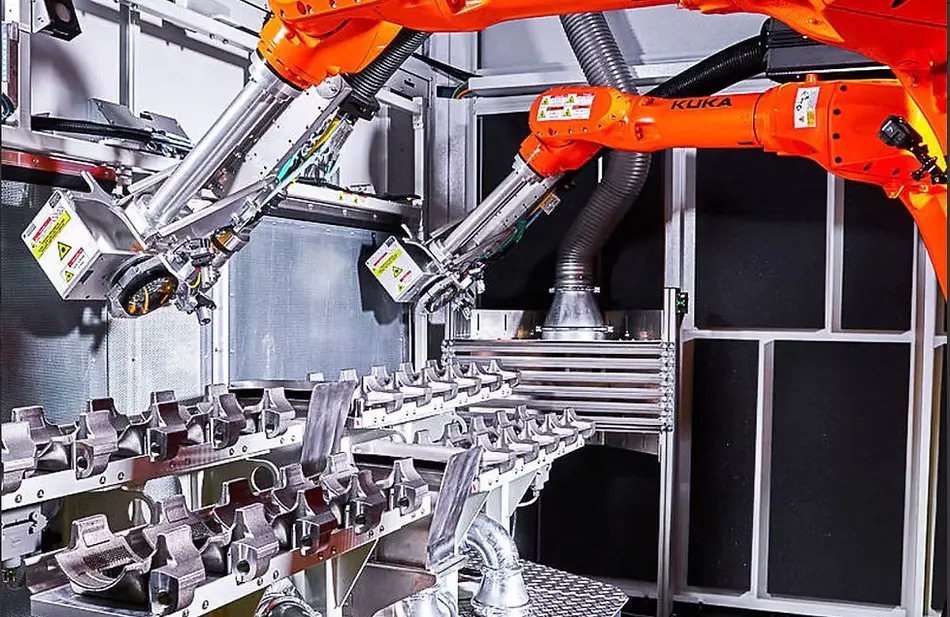
Industrial cleaning often hides an overlooked problem: the waste created after cleaning is finished. Mobile laser cleaning service approaches this issue from a fundamentally different angle. Instead of cutting, grinding, or dissolving contaminants, energy is selectively applied where contamination exists.
That difference raises a crucial question—how does this method change what remains afterwards? Understanding the waste pathway explains why secondary residue drops so sharply and why cleanup workflows become simpler over time. Mobile laser cleaning service does more than clean surfaces; it alters the entire waste equation.
What is Secondary Waste in Industrial Cleaning?
Secondary waste is the term given to those byproducts that are created during the cleaning process, thus not being the removed contaminants by themselves.
Sludge, spent chemicals, abrasive dust, wastewater, and disposable media most of the time need to be collected, treated, and disposed of in a regulated manner. Conventional methods produce wastes at different stages—application, removal, filtration, and containment.
The cost, risk of handling, and burden on the environment are increased at each stage. To cut down on secondary waste is to have a process that addresses the root cause of the problem rather than merely improving the disposal methods.
Why Conventional Methods Multiply Waste Streams?
Mechanical and chemical cleaning rely on contact or reaction. Abrasives fracture contaminants, but also erode base material, producing mixed debris. Chemical agents dissolve surface layers, creating contaminated liquids that must be neutralized.
Even controlled blasting spreads particulate matter beyond the target area. These methods were effective in the past, yet they inherently generate compound waste streams that persist long after cleaning has stopped.
How Laser Surface Cleaning Works at a Physical Level?
Laser surface cleaning operates through photothermal and photomechanical effects. Short, controlled pulses heat contaminants faster than the underlying substrate. The bond between the unwanted layer and the surface breaks, causing the contaminant to vaporize or detach as fine particles.
Because no external media is introduced, the process limits what can become waste. Laser surface cleaning, therefore, focuses on removal, not replacement with another material.
The Role of Precision in Waste Reduction
Precision determines waste volume. Laser systems target microns, not millimeters. Energy parameters adjust to match surface composition, ensuring contaminants are removed without substrate damage.
This selectivity avoids over-cleaning, which often creates excess debris. When paired with localized extraction, the removed material is captured immediately. Less spread means less clean up, fewer filters, and reduced secondary handling.
Why Dry Cleaning Eliminates Liquid Waste?
Liquid-based methods inevitably generate wastewater. By contrast, laser cleaning is a dry process. No solvents, acids, or rinsing agents are applied. The absence of liquids eliminates evaporation losses, leaks, and contaminated runoff. Facilities no longer manage tanks, drains, or neutralization steps.
Over time, this dry workflow significantly cuts disposal frequency and regulatory oversight.
Energy Control Versus Material Consumption
A 100W laser cleaning machine relies on electrical energy rather than consumables. Abrasives and chemicals are depleted with every use, increasing waste volume and supply costs.
Energy, however, is converted directly into cleaning action without leaving residual matter behind. This shift from material consumption to energy control redefines efficiency while stabilizing waste outputs across repeated operations.
Reduced Cross-Contamination on Complex Surfaces
Irregular geometries often trap blasting media or chemical residue. Laser cleaning follows surface contours without embedding foreign material. As contaminants are removed, they are isolated rather than redistributed.
This containment reduces secondary waste caused by re-cleaning or post-process rinsing. Cleaner surfaces remain cleaner after treatment, shortening overall cleaning cycles.
Simplified Containment and Filtration Requirements
Secondary waste management usually demands multi-stage filtration systems. Laser cleaning concentrates removed material into fine particulates that are easier to capture.
Filtration units can be smaller, and disposal volumes remain predictable. Because the substrate stays intact, filters collect only the target contaminant, improving classification accuracy during disposal.
Operational Benefits That Compound Over Time
Lower waste output affects more than disposal costs. Storage space, transport frequency, labor hours, and compliance documentation all decrease. As processes repeat, these savings compound.
The cleaning workflow becomes more predictable, enabling tighter scheduling and reduced downtime. Waste minimization thus becomes a strategic advantage rather than a single operational improvement.
Environmental and Regulatory Implications
Reducing secondary waste directly supports stricter environmental standards. Fewer hazardous byproducts lower reporting thresholds and inspection risks. Compliance shifts from constant mitigation to inherent process control.
As regulations continue to tighten, methods that inherently limit waste provide long-term stability instead of reactive adjustments.
Conclusion
Secondary waste has long been treated as unavoidable, yet process design proves otherwise. Mobile laser cleaning service changes how contamination is removed, captured, and contained, reducing byproducts at every stage. By relying on precision energy rather than consumable media, the method reshapes cleaning economics and environmental impact simultaneously.
The real question is no longer whether waste can be managed, but why processes that generate less waste were not adopted sooner. Mobile laser cleaning service points toward that cleaner operational future.