


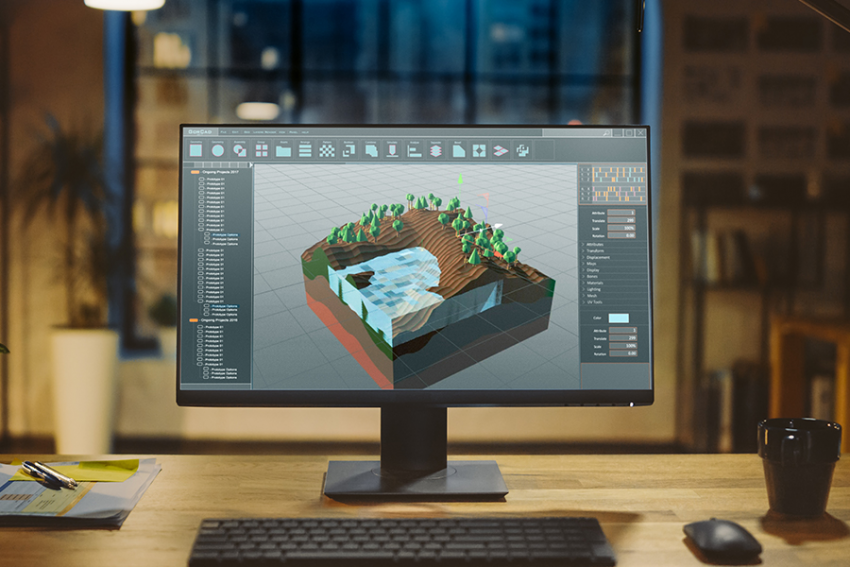
Catching customer interest and correctly communicating a product’s value is crucial in the highly competitive market of today. Here is where the ability of 3D design for product visualisation changes everything. 3D design provides unmatched flexibility, cost-efficiency, and creative freedom that surpasses conventional photography. Long before a physical prototype is ever constructed, it lets companies develop photorealistic photos, engrossing animations, and interactive experiences. Using a professional 3d modelling service helps businesses to simplify their marketing, improve designs with accuracy, and greatly shorten time-to-market, hence creating a closer bond with their customers and spurring business success.
Virtual Models Allow Prototype and Iterate
The ability to design and improve virtual prototypes is the most important benefit of 3D design visualisation. This removes the considerable time and expense related to physical prototyping. In a digital environment, designers can play with forms, materials, and mechanisms to create quick iterations based on stakeholder input. Early in the development process, potential defects can be discovered and fixed to avoid costly changes during manufacturing. This nimble strategy not only speeds up the design process but also encourages more creativity as teams are given free rein to investigate innovative ideas devoid of the limitations of physical model-making, hence producing a more polished and market-ready final product.
Early photorealistic marketing asset creation
Businesses create stunning, high‑fidelity marketing materials with 3D design long before production begins. These photorealistic renderings generate buzz and drive pre‑orders to test market interest. Companies use them in online catalogues, social media campaigns, and commercials.
Unlike conventional photoshoots, 3D design removes limitations. Designers achieve perfect lighting and composition every time. They can place products in any setting, from a minimalist studio to a rugged outdoor location.This feature lets marketing efforts run concurrently with product creation, so that it establishes a strong market presence and builds excitement that fuels early sales and brand interaction.
Show off customisation and personalisation
Modern customers look more and more for items made specifically for their preferences. Showing a great range of real-time customisation possibilities calls for 3D design visualisation. Interactive configurators on websites enable consumers to view their own creation come to life immediately by altering colours, materials, finishes and parts. This streamlines the decision-making process in addition to improving user involvement, therefore lowering purchasing inertia. Businesses may successfully market personalisation as a major value proposition by visually showcasing the possibilities, demanding premium prices and boosting customer happiness by providing a product that feels distinctly their own from the first.
Improve E-commerce Using 360-Degree Perspectives
For online buyers, static product images can frequently not be enough. Driven by 3D models, 360-degree spin views let consumers examine an item from every direction as they would in a real store. Fostering openness and trust, this interactive encounter helps one to thoroughly grasp the design, texture, and other features of the item. Giving viewers control over their perspective helps to keep them interested in your product page for longer, therefore drastically lowering cart abandonment and bounce rates. This basic yet strong function immediately solves online shopping constraints, which results in greater conversion rates and fewer product returns.
Design affordable product animations
Though traditional video creation can be extremely expensive and logistically challenging, three-dimensional animation provides a very inexpensive alternative for creating energetic promotional material. Once you create a 3D design, you can animate it to highlight product features, demonstrate usage, or tell a brand story in ways live‑action cannot. You can quickly change the animation, plot, or soundtrack without reshooting. This adaptability allows the creation of high-impact video material for trade show presentations, online advertisements, and television commercials at a fraction of the time and cost, hence maximising marketing budget effectiveness.
In conclusion
3D design for product visualization was once a luxury. Today it is vital for business success. Businesses use it for concept development and agile prototyping. The approach also enables affordable marketing and improves customer experiences.
This technology transforms the product life cycle by allowing clearer communication and reducing physical waste. It generates interactive content that engages audiences and helps companies connect more deeply with customers. As a result, they build trust and increase sales.
Adopting 3D visualization is critical for companies that want to innovate. The practice helps them compete effectively and ensures they deliver exceptional value in a digital world.