


Introduction
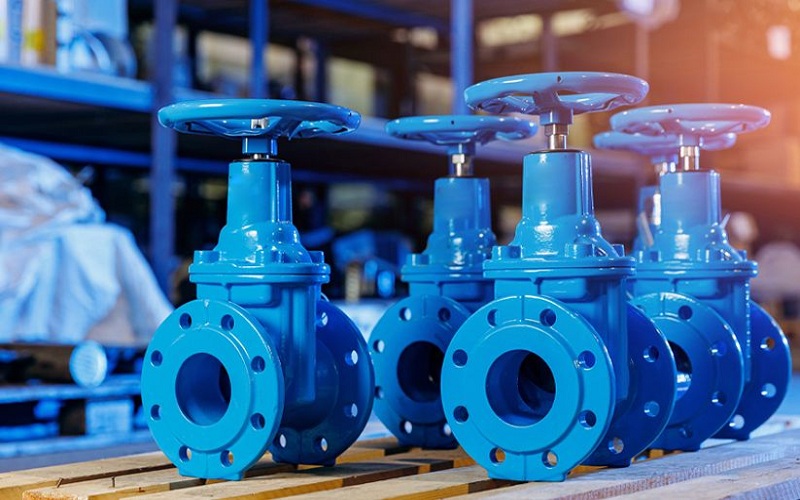
In the recent decades, India has made incredible progress in the field of Industrial Engineering and Precision Manufacturing. One of the areas that this project is making strides in can be clearly seen in valve manufacture. From a situation where India used to order valves from overseas for applications in oil, gas, water, defence and power projects, it is now a provider of recognized origin for industrial valves at the international level where India has arrived as an alternate source of economically priced reliable industrial. As a result of quick industrialization, newer technologies, improved supply chains and an increased focus on global quality standards, the valve manufacturing industry in India is transforming like never before.
From Small Provider to Global Supplier
During the early history of valve manufacturing in India, small workshops used to manufacture simple gate, globe and check valves for local water works projects and agriculture. Emphasis was definitely more on cost than accuracy or engineering. But the liberalisation of India’s economy and greater involvement of global players produced a sea change. The oil & gas, petrochemical, refineries, pharmaceuticals, food processing, power generation and shipbuilding industry required special valve types to meet their requirements for even corrosive high pressure and high temperature applications. This demand pushed Valve manufacturer India manufacturers to invest in high end equipment, metallurgy and certifications.
Technological Advancements Driving the Change
One of the key drivers for today’s valve manufacturing in India is revolutionizing production lines through technology. CNC machining, automatic welding technology, the precision of casting tires and accurate detection equipment’s are used in key components of our products. Modern CAD-CAM systems have redefined the work procedure from valve design in manual drafting through to 3D simulation whereby engineers can optimize stress distribution, flow behaviour and sealing performance before physical prototypes are made. Contemporary surface finishing and heat-treatment methods also help to improve the corrosion resistance, wear resistance and fatigue life that are essential qualities in mission-critical industrial valves, which international buyers look for.
Industry 4.0 and Smart Manufacturing
Is India the new frontier for digital valve manufacturing? The growth of Industry 4.0 in India is casting a shadow on traditional mechanical accuracy of Indian valve factory floors. Predictive maintenance based on the data can lead to automated production monitoring and smart factory software which can contribute to more smooth production with fewer breakdowns or stops. Some manufacturers have beginning to produce digital and automated valves with sensors and control systems for remote actuation and flow adjustment. These technologies are being increasingly applied across water, smart cities, chemical and LNG facilities. The integration of IoT-fueled monitoring in valves is a win-win, adding years to products’ lives while boosting energy efficiency and safety in today’s connected industrial ecosystems.
Growing Export Capabilities
The situation of the Indian valve manufacturers has become more and more rising in Middle East, Europe, Africa, Southeast Asia, North America and more. The confluence of technical ability, price competition, material understanding and adherence to API/ASME/ISO standards has made India shift from import dependent to export competitive. “Some of the large EPC contractors and OEMs from anywhere in the world now go straight to India because lead times are shorter and there is more flexibility. Adapted valves for projects are a significant discriminator and the Valve manufacturer India suppliers are able to compete well against the famous international labels.
Rising Demand from Domestic Industries
And export levels are even while India’s own market is growing fast. A surge in new infrastructure megaprojects, desalination plants, refineries wastewater treatment plants and renewable energy applications is creating never before seen demand for industrial flow control. The government’s efforts have led the core sector industries to locally procure valves instead of sourcing from abroad, reinforcing India as the manufacturing capital.
Sustainability and Material Innovation
Sustainability is also a key aspect driving growth of valve manufacturing in India. Material quality and yield, scrap rates, and low-emission foundry and machining technology are being enhanced by manufacturers. Type investments in high-end materials duplex steel, super alloys and special corrosion resistant grades have allowed Indian valve producers to cater to demanding service conditions like downstream chemicals, marine installations and hydrogen fuel systems. These transformations are leading to the environmental and performance advantages.
Future of Valve Manufacturing in India
In future, the prospects are excellent for industry of valve in India. Emerging trends such as industrial automation, smart water management, and the rapid growth of the chemicals and energy industries will drive the market. Supportive government initiatives toward decarbonization will also play a key role. Manufacturers that combine innovation, continuous quality improvements, data-driven intelligence, and digital supply chain management will lead the next phase of growth. Global customers are driving demand for long-life, competitively priced, and value-engineered solutions, positioning India as a leading source of high-performance industrial valves.
Conclusion
The development of the downstream industry, particularly valve manufacturing in India, is a testament to the country’s capabilities, technology adoption, and market readiness. It shows how local manufacturers can transform to serve global customers. What began with commodity valves has now become a world-class manufacturing ecosystem. The industry provides precision-engineered, certified, and project-specific valve solutions. Both domestic and export markets are expanding. Industry experts expect the industry to grow steadily, as manufacturers focus on product innovation, quality control, and smart manufacturing.
Read More : Surgical Hand Gloves Manufacturer in India