


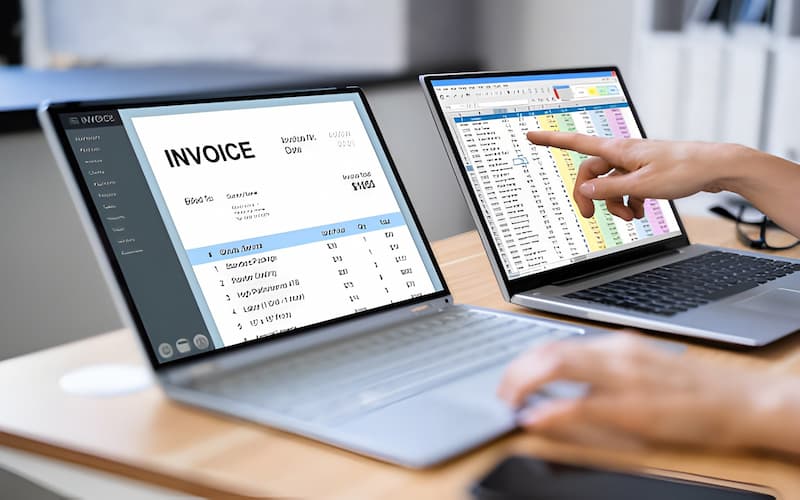
Digital transformation is an ongoing trend in Saudi Arabia, with businesses in the country rapidly switching to electronic invoicing to simplify the tax compliance and operational efficiency. The process of migrating to a new e-invoicing platform may be complicated particularly where there is a need to transfer historical financial information in an accurate and secure manner. This guideline will discuss a step-by-step process of data migration to E-invoicing, providing a real-life experience on how to ensure that your organization can go through the process and remain in line with the rules and regulations of E-invoicing in Saudi Arabia.
Understanding the Importance of E-Invoicing Data Migration
E-invoicing data migration is the process of moving invoice records, transaction details, and financial information from an old system to a new platform. This guarantees continuity, compliance and availability of historical financial information that might be needed in audits or analysis of business.
All registered businesses in Saudi Arabia must implement e-invoicing as required by ZATCA. Correct data migration is a key step for compliance. Businesses may lose data, make compliance mistakes, and be out of operation without an adequate migration plan.
Step 1: Conduct a Comprehensive Data Audit
Frankly speaking, the first step before starting E-invoicing data migration is to audit the existing data. Determine which historical records are important to keep- Invoices, credit notes, customer information and tax records are usually important. Check the validity of every dataset and eliminate duplication or old information.
A data audit assists you in defining the boundary of migration as well as making sure that validated information is transferred only and not dirty information to the new system. The step can also serve in avoiding discrepancies that may be influencing E-invoicing in Saudi Arabia compliance.
Step 2: Define Migration Objectives and Compliance Requirements
Every business has its own demands in the process of switching to a new e-invoicing system. Be clear on objectives: will it be to reduce reporting accuracy, make sure that you comply with ZATCA Phase 2 integration, or move invoice management functions centrally?
It is important to have knowledge of E-invoicing in the compliance laws of Saudi Arabia. ZATCA mandates that all electronic invoices contain forced data fields, digital signatures as well as that invoices have to be kept in particular forms. It will help to avoid post-migration problems by matching your migration plan to these requirements.
Step 3: Choose the Right E-Invoicing Platform
To choose an effective e-invoicing solution is crucial to a successful migration. Businesses are advised to use systems that are compliant to ZATCA, scalable and those that can facilitate real-time integration of data.
Quickdice ERP platforms streamline e-invoicing. They provide powerful data migration solutions and full integration with ZATCA specifications. Using Quickdice, companies can safely migrate and manage large volumes of past invoice data without interruption.
Step 4: Prepare and Map Your Data
After choosing the place where you will migrate to, process your datasets. This involves:
- Data mapping: Map the old data fields with the relevant fields in the new e-invoicing system.
- Validation rules: Use the formatting and structure validation that is based on ZATCA standards.
- Testing: Conduct small batches of migrations in order to test that invoices, dates, and amounts are properly aligned.
Through the test migrations, your business can find the possible mistakes in advance and refine the mapping process. Quickdice ERP has automated data validation and mapping programs to facilitate a smooth flow of data and integrity in the migration process.
Step 5: Execute the E-Invoicing Data Migration
once the tests and validation have been completed, perform the complete E-invoicing data migration. Migration can be done in stages in case of large volumes of historical data to reduce the disruption.
Have copies of both old and the new datasets during the execution. Make sure that there is a verification of records that have been migrated against the source data. At this stage, one will also be uploading supporting documents and setting up tax codes according to the e-invoicing framework of ZATCA.
Step 6: Test, Validate, and Verify Compliance
The aspect of post-migration testing is essential to ensure that all past information is transferred and kept within the framework. The following checks are to be conducted:
- Compare old and new invoice data of a sample.
- Check tax figures, details of customers and invoice numbers.
- Make sure that the digital signatures and invoice dates comply with the E-invoicing in Saudi Arabia.
It is possible to automate compliance checks and create a report that will confirm that all invoices are in compliance with the ZATCA Phase 2 e-invoicing through the use of tools built into systems such as Quickdice ERP.
Step 7: Train Your Team and Optimize the System
An effective E-invoicing data transition cannot be complete without making sure that your employees have become acquainted with the new system. Undertake training to get your finance and compliance departments familiar with new working processes, data access methods, and reports.
Also, keep case track of performance of monitor systems after the migration and take user feedbacks. Continuous optimization ensures proper operation, allowing your business to maximize the benefits of the new e-invoicing infrastructure.
Common Challenges in E-Invoicing Data Migration
Although it is obvious that the shift to a new e-invoicing platform has a set of benefits, business organizations tend to face some challenges:
- Data inconsistency: This may cause financial error through missing or duplicate records.
- Integration problems: Old systems cannot be easily compatible with a new ERP system.
- Compliance breaches: The discrepancy between data format and retention requirements by ZATCA.
Careful planning and implementation of a trusted solution like Quickdice ERP can address these challenges, facilitating integration and ensuring all aspects of migration comply with Saudi Arabia’s e-invoicing standard
Why E-Invoicing Data Migration Matters for Saudi Businesses
E-invoicing in Saudi Arabia has become a part of financial transparency and efficiency due to the digital economy initiative in the Kingdom. Movement of your historical invoice information will guarantee:
- Compliance related to the e-invoicing of the ZATCA.
- Business continuity, the ability to access the important financial records.
- Improved reporting and analytics, which allow making smarter decisions.
- Centralized and well-structured data allows streamlined audits.
Be it a small business or a big company, a strategic direction towards E-invoicing information migration will provide the basis of future success in the changing digital environment of Saudi Arabia.
Conclusion:
Migrating historical data to a new e-invoicing system is a key step toward digital compliance and operational efficiency. A smooth transition is possible through a systematic process. This includes data auditing, mapping, testing, and compliance checks.
Using advanced solutions like Quickdice ERP, Saudi businesses can simplify migration, reduce risks, and ensure full ZATCA compliance. A reliable compliant platform keeps financial information safe. It also allows organizations to capitalize on the future of e-invoicing in Saudi Arabia.