


Every room carries a flow between walls and furniture. That flow breaks when bulky elements stand out or distract from the structure. Flush doors help maintain that line across spaces without calling attention to themselves. They allow the walls and fittings to stay connected. This keeps the interior balanced without forcing large changes to layout or finish.
Flush doors support consistent design without extra framing or heavy panels
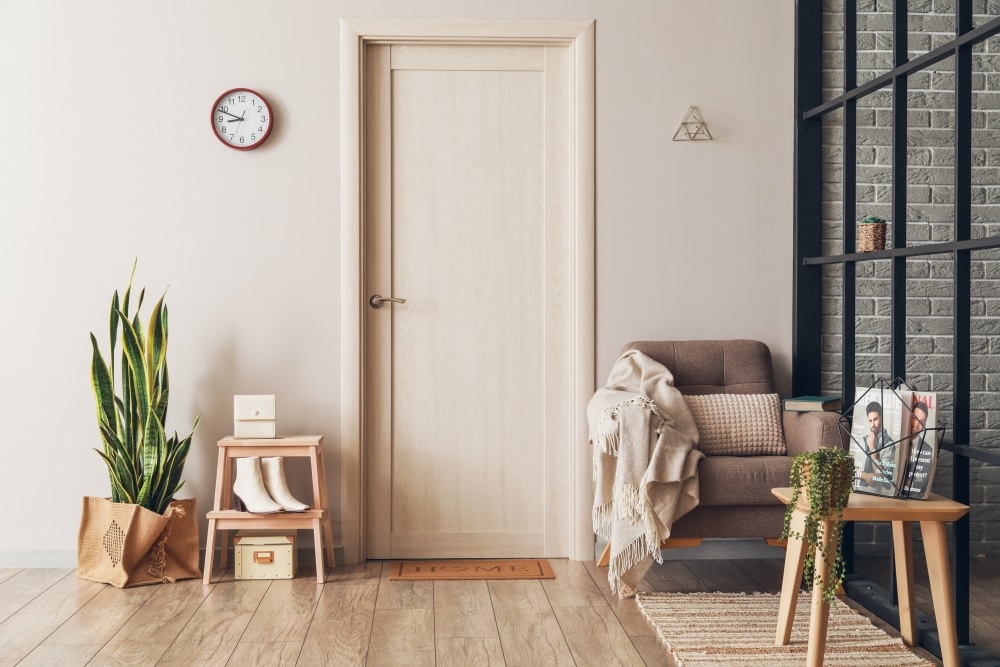
Unlike traditional door panels that use raised edges or carvings flush doors come with a flat surface that blends into the frame. This flat surface allows wall finishes to continue without being blocked. Flush doors create smooth transitions between rooms. This function supports open-plan designs where space must remain quiet and easy to read.
Minimal design does not mean weak structure or low material quality
Flush doors are built with a solid core or a hollow board based on room needs. The strength comes from even pressure across the surface not from visual bulk. Flush doors support daily use without bending or creaking. This keeps them useful for both high-use zones and low-traffic rooms across homes and offices.
Doors for modern interiors must work without drawing focus or wasting floor space
Flush doors do not push out into the room. They stay aligned with the wall and do not require added arch frames or edge trims. This keeps the area neat and helps furniture sit closer to the doorway. In compact flats or rooms with limited space flush doors help avoid crowding around corners or entry points.
Surface finish on flush doors helps match walls along with wardrobes and panels
Flush doors come ready for laminate or veneer or paint. The flat surface holds the finish well without cracking or bubbling. This lets designers carry a single colour or grain across walls and furniture. Doors for modern interiors often use matching tones across multiple surfaces. Flush doors support this by giving one clean base.
Cleaning and maintenance stay simple even with daily use across multiple zones
A flat surface without grooves or corners is easier to wipe down. Flush doors do not collect dust or stain easily. They resist minor scratches and stay stable across dry or humid zones. This makes them useful in bedrooms and kitchens along with corridors or utility areas. The flat face avoids dent marks from bags or shoes.
Installation works well with standard tools
Flush doors are of standard size and weight. They can be attached to the majority of frames without additional support or tailor-made. This saves time in the set up and eliminates future door sag or lock shift. Modern interior doors should remain balanced and quiet. Flush doors can be used to achieve both of these objectives when carefully installed.
Flush doors do not limit surface design or hardware choice
The flat design allows for basic or custom handles based on user needs. Flush doors also take well to hidden locks or smart security devices. The edge stays straight which allows for multiple hinge types and faster door movement. This is useful when fitting flush doors into mixed-use buildings or shared living spaces.
Common reasons people choose flush doors for modern interiors
- Flat surface supports laminate or paint without bubbles or edge lift.
- Core holds shape across daily use and room temperature changes.
- Design avoids visual clutter in compact or open-plan homes.
- Matches with wall panels and furniture finish across rooms.
- Easy to clean and resistant to minor knocks or pressure.
Doors that do not try to impress often end up working best
Modern interiors are built on function and space control. Flush doors support that principle without adding complexity or visual bulk. The surface stays ready for change. The core stays balanced during use. The door fits the plan and lets the rest of the room carry the visual weight. That is what makes flush doors the better fit for real modern spaces.
Flush door ranges from CenturyPly support these needs with materials built to stay strong across real use and design shifts. The surface holds polish. The structure holds weight. The design stays aligned with how homes are used today.