


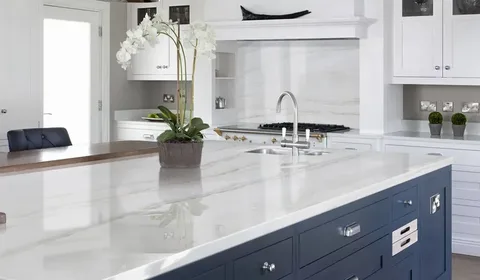
When it comes to choosing a countertop material that will stand the test of time, quartz has become one of the most popular options for homeowners. Known for its combination of beauty, functionality, and low-maintenance properties, quartz countertops are engineered to be incredibly durable, making them a smart investment for your kitchen or bathroom. Whether you’re renovating or building a new home, understanding the factors that contribute to quartz countertops’ long-term durability will help you make an informed decision.
In this article, we’ll delve into the reasons why quartz countertops offer long-term durability, highlighting their resistance to damage, ease of maintenance, and other essential qualities that make them a top choice for homeowners.
What is Quartz?
Before exploring durability, it helps to understand what quartz is. It also helps to know how it differs from granite and marble. Manufacturers create quartz countertops from natural quartz crystals, resins, and pigments. They mix these materials and press them into large slabs. This process makes quartz an engineered stone.
Granite and marble come directly from the earth. In contrast, manufacturers produce quartz with a controlled blend of ingredients. This improves strength and durability.
Quartz countertops have a consistent appearance. They show fewer natural imperfections than granite or marble. The manufacturing process gives better control over the final look. This makes quartz a versatile and customizable option for homeowners.
Key Factors That Contribute to Quartz Countertop Durability
1. High Resistance to Scratches
One of the primary reasons homeowners love quartz countertops is their impressive scratch resistance. Quartz is made from one of the hardest minerals on Earth, and when combined with resins and polymers, it creates a surface that can withstand heavy use without showing signs of damage.
Why Quartz is Scratch-Resistant:
- Composition: Quartz countertops are composed of 90-95% natural quartz, which is a mineral harder than most other common countertop materials. This gives quartz countertops an advantage when it comes to resisting scratches from knives, cookware, and other kitchen tools.
- Engineered Surface: Unlike natural stone countertops that may have hidden cracks or weaknesses, quartz countertops have a uniform structure, making them more resistant to scratching and chipping over time.
2. Stain Resistance
Another important factor in quartz’s durability is its resistance to stains. Quartz countertops are non-porous, meaning they do not absorb liquids like water, wine, coffee, or oil. This property helps prevent staining, which is a common issue with porous materials like granite or marble.
How Quartz Prevents Stains:
- Non-Porous Surface: The resin used in quartz countertops creates a smooth, non-porous surface that prevents liquids from seeping in. This makes it much easier to clean up spills without worrying about permanent discoloration.
- No Sealing Required: Many natural stone countertops, such as granite and marble, require regular sealing to prevent stains. Quartz, on the other hand, does not need sealing, which reduces maintenance time and keeps the countertop looking new for longer.
Quartz countertops handle heat well, which makes them suitable for busy kitchens with hot pots, pans, and baking trays. Although no surface is completely heatproof, manufacturers engineer quartz to tolerate everyday heat exposure.
Why Quartz Resists Heat:
Polymer Resin: Manufacturers use resin that withstands moderate heat. This makes quartz more heat-resistant than laminate and other solid surface materials.
Resistance to Thermal Shock: Quartz manages rapid temperature changes without cracking or warping, which helps it perform reliably in kitchens where temperature shifts happen often.
Important Considerations:
- Use Trivets or Hot Pads: While quartz is heat-resistant, it’s still a good practice to use trivets or hot pads under hot cookware to prevent any potential damage. Prolonged exposure to high heat can cause the resin to weaken over time.
4. Resistance to Chipping and Cracking
Unlike natural stone countertops, which may crack or chip if heavy objects are dropped on them, quartz is a more durable material that is highly resistant to chipping. Thanks to the combination of quartz crystals and resin, quartz countertops provide an extremely solid surface that can withstand impacts better than many other materials.
Why Quartz is Less Likely to Chip or Crack:
- Engineered Composition: The manufacturing process of quartz countertops ensures that they are evenly mixed with resin, making them less prone to breaking or chipping compared to materials that may have weak spots or flaws in their natural composition.
- Impact Resistance: The resin in quartz countertops helps absorb impacts, reducing the risk of chipping if something heavy is dropped.
5. Low Maintenance Requirements
One of the biggest selling points of quartz countertops is their minimal maintenance needs. Unlike granite and marble, which require periodic sealing to maintain their appearance and protect them from stains, quartz countertops do not need sealing. The non-porous surface makes cleaning quartz incredibly easy, which is why it’s a popular choice for busy households.
A countertop supplier delivers strong and beautiful countertop materials for any project. They ensure good quality at reasonable pricing.
How Quartz Saves Time and Effort:
- Easy to Clean: Quartz countertops are resistant to stains and bacteria, which means you can clean them with just soap and water. A damp cloth is usually all you need to wipe up spills, making cleanup simple and fast.
- No Special Care: Unlike other materials that require special cleaners or periodic maintenance, quartz is highly resistant to damage and does not need any specific care routine beyond regular cleaning.
6. Resistant to Bacteria and Germs
Quartz countertops are naturally resistant to bacteria, mold, and mildew. This makes them an excellent choice for kitchens and bathrooms, where cleanliness is essential. The non-porous nature of quartz prevents bacteria from entering the surface, making it more hygienic than porous materials like marble or granite.
Why Quartz Is Hygienic:
- No Absorption of Liquids: Since quartz countertops don’t absorb liquids, there is no place for bacteria to thrive. This helps create a safer environment in the kitchen, especially when dealing with raw meat or spills that can harbor harmful germs.
- Easy to Sanitize: The smooth surface of quartz makes it easy to wipe down with regular cleaning products, and it doesn’t require any harsh chemicals to maintain its cleanliness.
7. Color Consistency
Unlike natural stone materials, quartz countertops are engineered to offer consistent colors and patterns. If you want a countertop that matches your kitchen’s design without the variations seen in natural stone, quartz provides a more uniform appearance.
Why Consistency Matters:
- Customizable Colors: Quartz countertops are available in a wide range of colors and patterns, including options that mimic marble, granite, and other natural stones. The ability to choose from a variety of colors ensures that your countertop matches your aesthetic preferences.
- Predictable Appearance: Since quartz is engineered, there are no unexpected variations or flaws in the material. This makes it easier to achieve a consistent, cohesive look for your kitchen or bathroom.
8. Long Lifespan
The durability of quartz ensures that it lasts for many years with minimal maintenance, making it a long-term investment. Whether you’re remodeling your kitchen or upgrading your bathroom, quartz countertops are likely to remain beautiful and functional for decades.
Why Quartz Lasts Long:
- Sturdy Construction: The engineered nature of quartz makes it less likely to wear down compared to natural stones, which can develop cracks or chips over time.
- Reliable Material: Quartz offers consistent performance throughout its lifespan, maintaining its appearance and strength long after installation.
Conclusion
Quartz countertops are designed to last. They combine natural strength with advanced engineering. They resist scratches, stains, and heat. They also require less maintenance than materials like granite or marble. The non-porous surface makes quartz a great choice for families. It handles daily use without sacrificing style or performance.
Quartz resists chips and cracks. Its surface is easy to clean. This makes it a low-maintenance and highly durable option. It is also visually appealing. Whether renovating a kitchen, upgrading a bathroom, or building a new home, quartz countertops deliver durability, beauty, and practicality.