


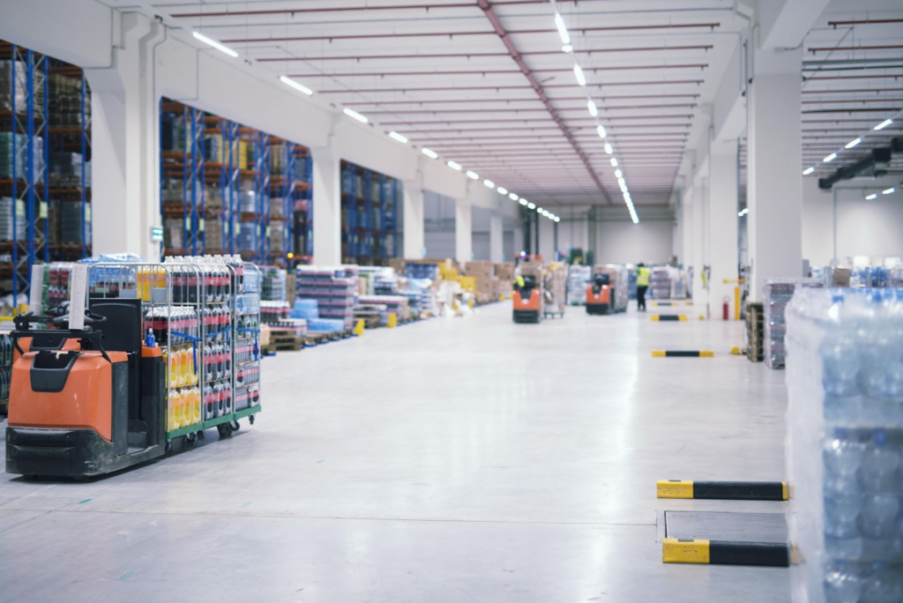
The future of smart warehouse technology is likely to be characterized by increased automation, greater connectivity, and more advanced analytics. As technology continues to advance, we can expect to see warehouses that are more efficient, more productive, and more responsive to changing customer needs.
Smart warehouse technologies have transformed the way modern warehouses operate. That said, here are some of the smart warehouse technologies you need to start using:
Automated Storage and Retrieval Systems (AS/RS)
These are systems that can store and retrieve goods from high-density racks using automated cranes or shuttles. They can save space, time, and labor costs in the warehouse.
Internet of Things (IoT) Sensors
IoT sensors can be used to monitor warehouse conditions such as temperature, humidity, and air quality. This can help prevent damage to products and improve the overall efficiency of the warehouse. This is a network of connected devices and sensors that can collect and exchange data about the warehouse environment, such as temperature-controlled warehouse, humidity, lighting, and security. They can also enable remote monitoring and control of smart warehouse technologies.
Autonomous Mobile Robots (AMRs)
AMRs can be used for a variety of tasks such as material handling, order picking, and transportation. They can navigate around the warehouse and work alongside humans, reducing the need for manual labor. These are robots that can move around the warehouse and perform tasks such as palletizing, depalletizing, transporting, and sorting out goods.
Warehouse Management Systems (WMS)
WMS is a software system that can help manage inventory, track shipments, and optimize warehouse operations. It can also integrate with other technologies such as AS/RS and AMRs. These are software applications that can integrate with various smart warehouse technologies and provide real-time visibility, control, and optimization of warehouse operations.
Augmented Reality (AR)
AR can be used to assist warehouse workers in tasks such as order picking and inventory management. It can provide workers with real-time information and improve their productivity.
Predictive Analytics
The use of predictive analytics helps improve inventory levels and estimate demand. This technology can also be used to identify potential issues and prevent them from occurring in the future.
RFID Tags
These are digital tags that can store and transmit data about the products, such as their location, quantity, and expiration date. They can be scanned by RFID readers or wearables to track and manage inventory.
Collaborative Robots (cobots)
These are robots that can work alongside human workers and assist them with tasks such as picking, packing, loading, and unloading. They can also learn from human feedback and adapt to changing situations.
By using these smart warehouse technologies, you can improve the efficiency and productivity of your warehouse operations, reduce costs, and provide better service to your customers.
How to Implement Smart Warehouse Technologies?
To implement smart warehouse technologies in your warehouse, you need to follow some steps, such as:
- Assess your current warehouse operations and identify the areas that need improvement or automation. You can use key performance indicators (KPIs) such as inventory accuracy, order fulfillment rate, labor productivity, and customer satisfaction to measure your warehouse performance.
- Research the available smart warehouse technologies and choose the ones that suit your warehouse needs, budget, and goals. You can consult with experts or vendors to get advice on the best solutions for your warehouse.
- Plan and design your warehouse layout and processes to accommodate the new technologies. You may need to reconfigure your storage space, aisles, racks, and workstations to optimize the flow of goods and information. You may also need to update your network infrastructure, security systems, and power supply to support the new technologies.
- Implement and integrate smart warehouse technologies with your existing systems and software. You may need to install hardware, software, sensors, tags, and other devices in your warehouse. You may also need to integrate smart warehouse technologies with your enterprise resource planning (ERP), warehouse management system (WMS), or other systems to ensure data accuracy and visibility.
- Train and educate your warehouse staff on how to use the new technologies. You may need to provide manuals, tutorials, demonstrations, or workshops to help your staff learn how to operate the new devices, software, and systems. You may also need to monitor and evaluate their performance and provide feedback and support.
- Test and evaluate the effectiveness and efficiency of smart warehouse technologies. You may need to run simulations, trials, or audits to check if the new technologies are working as expected and delivering the desired results. You may also need to collect data and feedback from your staff and customers to measure the impact of the new technologies on your warehouse operations.
These are some of the steps you can take to implement smart warehouse technologies in your warehouse. Some examples of smart warehouses in action are Amazon, DHL, Alibaba, Ocado, Nike, etc.
Benefits of Using Smart Warehouse Technologies
Here are some of the benefits of implementing smart warehouse technologies:
- Increased productivity and efficiency – as they can help you speed up your warehouse processes, reduce errors and delays, and optimize your resources and workflows.
- Improved customer service and satisfaction – can help you meet your customer expectations and demands, such as fast delivery, low prices, and high quality.
- Reduced operational costs and risks – Smart warehouse technologies can help you save money and minimize losses by reducing labor, energy, and maintenance costs, as well as preventing theft, damage, and spoilage.
- Enhanced data visibility and analytics – can help you collect and analyze large amounts of data from your warehouse operations, such as inventory levels, order status, performance metrics, and customer feedback.
In conclusion, the future of smart warehouse technologies is promising and exciting, as they will enable businesses to improve their warehouse performance and competitiveness, while also meeting the changing needs and expectations of their customers and society.
Codot Logistics is a third-party logistics (3PL) provider that specializes in managing transportation and logistics needs for businesses of all sizes. With its headquarters in Dubai, Codot Logistics has a global network of partners that allows us to provide logistics services worldwide.
Codot Logistics offers a range of integrated logistics support, including air and ocean freight forwarding, warehousing and distribution, customs clearance, and transportation management. We also offer specialized services such as project logistics, temperature-controlled transport, and hazardous materials handling. We are a reliable, innovative, and customer-focused logistics provider that offers a range of logistics services and solutions to businesses of all sizes. If you are looking for smart logistics services, feel free to call us at +971 4 852 1463.