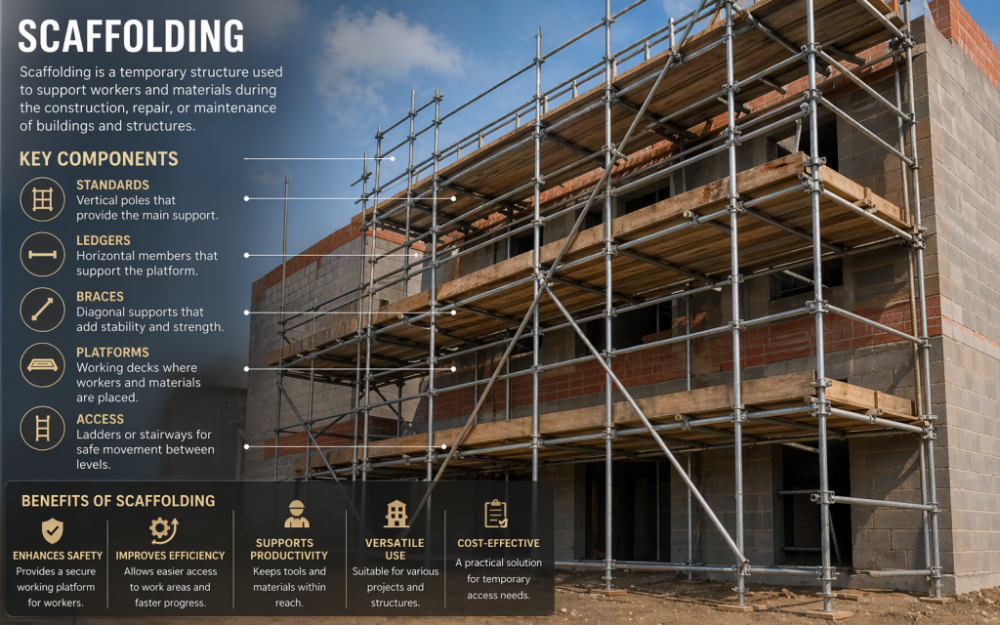
Construction projects depend heavily on safe and well planned scaffolding systems. With a well-organized method and a construction scaffolding management system the teams are able to manage the safety costs and productivity more easily. At Quickdice we are concentrating on assisting the teams in having a better result by monitoring meaningful scaffold usage measures that enhance decision making onsite.
Lack of proper monitoring can easily lead to underutilization of scaffolding or over utilization or even unsafe scaffolding. This is why tracking of performance is important at each phase of a project. Defined scaffold usage metrics help managers understand equipment usage, identify delays, and improve team communication so the project runs smoothly.
Essential Metrics for Efficient Scaffold Usage in Construction Projects
1. Scaffold Utilization Rate
Scaffold utilization rate shows how effectively teams use installed scaffolding. High utilization indicates efficient planning and strong resource management, while low utilization signals poor scheduling or idle structures. Monitoring this metric helps teams minimize waste and ensures they only use scaffolding where it adds real value to the project.
2. Inspection Compliance Rate
Inspection compliance rate measures how often teams check scaffolding against safety regulations and project requirements. Regular inspections help identify weak areas early and prevent them from developing into serious issues. It is one of the most valuable scaffold usage metrics since it does not allow disregarding safety. High compliance minimizes accidents enhances responsibility and ensures the site is in compliance with the regulations.
3. Scaffold Downtime
The time that the scaffold is in place but is not active in working is termed as scaffold downtime. The high downtime usually implies lack of coordination among the teams or delay in the execution of the project. Following this indicator is useful to reveal workflow gaps and better scheduling. Minimizing downtime will mean that scaffolding will be used in real work rather than lying idle on the site.
4. Installation and Dismantling Time
This measure is used to monitor the rate of scaffolding construction and deconstruction. The installation process may slow down the whole project, in case it is too long. Efficient teams complete scaffold setup quickly without compromising safety. Monitoring this performance helps managers improve crew efficiency and enhance project planning. Quick installation and de-installation result in a more efficient workflow and utilization of project time.
5. Incident and Safety Violation Rate
Measurements of incident and safety violation rates capture accidents that are near misses and safety rule violations related to the use of scaffolding. Good safety culture and strong training is reflected by a low rate. High rate is an indicator of a requirement of more supervision or more improved procedures. It is necessary to monitor this indicator to ensure the safety of workers and a safe construction site.
6. Load Compliance Efficiency
Load compliance efficiency ensures teams use scaffolding within safe weight limits. Overloading can cause structural failures and endanger lives. This metric helps teams allocate tools, materials, and workers correctly. Adhering to load limits improves stability, safety, and overall scaffold performance on-site.
7. Material Loss and Damage Rate
Material loss and damage rate tracks how often scaffold components are lost, stolen, or damaged. High losses increase project costs and reduce efficiency. Monitoring this metric helps teams improve inventory control and promote careful handling of equipment. Effective material management will result in reduced costs and increased equipment life.
8. Productivity per Scaffold Section
Productivity of a scaffold section is used to measure the amount of work done in a particular scaffold section. Good planning and flow of work is high productivity. Poor layout or movement restrictions could be indicated by low productivity. This measure assists in enhancing the design of the site and scaffold contributes to a quicker and more effective construction process.
9. Cost per Scaffold Usage Hour
Cost per hour of scaffold usage takes into account the total cost of using scaffold over time including the cost of renting the scaffold and its maintenance. It is among the most feasible scaffold usage metrics to manage budgets. Tracking it assists in saving needless expenses enhance planning and provide a greater financial efficiency throughout the project.
10. Maintenance Frequency and Condition Score
Maintenance frequency and condition score test the frequency of scaffolding service, and the scaffold safety level. The timely maintenance of the equipment avoids failures and enhances safety. A high condition score indicates sound equipment whereas a low condition score indicates the risks. Monitoring this will make sure that scaffolding remains in good working state during the project.
Conclusion
The management of scaffold does not only entail installation but constant monitoring and upgrading. With the right scaffold usage metrics construction teams can work towards the improved safety, waste minimization and enhanced productivity. Teams use these insights to ensure each scaffold structure contributes meaningfully to the success of the project.
A disciplined approach to monitoring performance improves planning, ensures smooth implementation, and reduces operational risks. By regularly evaluating the performance of scaffolds, teams will achieve safer workplaces and more effective construction operations. In the long run this enhances better project deliverables and quality of delivery in all construction phases.