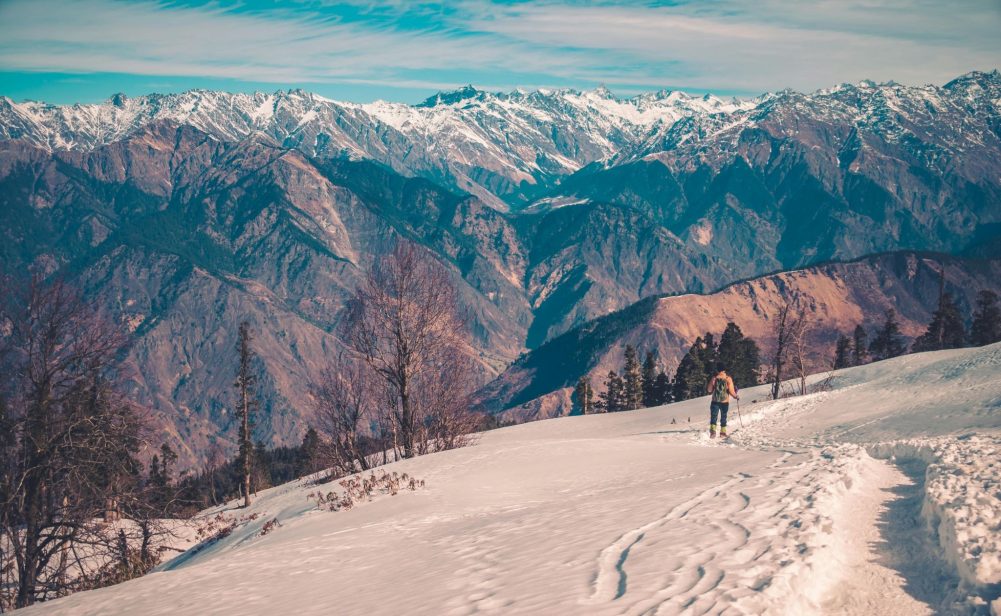
The Kedarkantha Trek and skiing in Gulmarg give two very different Himalayan winters. Gulmarg feels fast, loud, and packed with adrenaline. Kedarkantha feels quiet, cold, and deeply personal. Both trips involve snow, mountains, and brutal early mornings. But the mood changes completely once you arrive. That surprises people.
Many travelers assume both adventures offer the same type of winter trip. The photos look similar online. White landscapes. Snow-covered trees. Thick jackets. Smiling people holding trekking poles or skis. Reality feels different on the ground. One trip teaches you balance on steep snowy slopes. The other teaches patience during long uphill walks through frozen forests. One keeps your heart racing. The other slows your thoughts down completely. So which one should you choose?
Skiing in Gulmarg Feels Intense Right Away
Gulmarg does not ease people into winter slowly. The moment fresh snow hits the valley, the entire town shifts around skiing. You notice it fast. Ski boots line hotel entrances. Snowboards lean against café walls. Local guides discuss powder conditions before breakfast. Even small tea stalls start filling with people carrying helmets and ski poles.
The mountains dominate everything here. Wide ski slopes cut through pine forests while fresh powder covers rooftops and roads. During heavy snowfall, visibility drops suddenly and the entire town feels wrapped inside clouds. Then the sun breaks through for ten minutes and the landscape changes completely. That unpredictability becomes part of the excitement.
The Gondola Changes the Entire Experience
Gulmarg Gondola is not just another cable car ride. It changes how people see Gulmarg completely. The first phase already feels high for many visitors. Then the second phase climbs even further into rough mountain terrain where the snow feels untouched after fresh storms. Beginners usually go quiet during the ride up. Not from fear. From scale.
The mountains suddenly look massive once the gondola rises above the tree line. Skiers below start looking tiny against the white slopes. Wind hits harder near the upper station. Breathing feels colder too. And yes, phones come out instantly for photos. Every single time.
Learning to Ski Looks Funny at First
Most beginners struggle badly during the first few hours. That is normal. Skis slide apart unexpectedly. People fall while standing still. Turning feels awkward because the body naturally wants to lean backward on steep snow. Bad move. Local instructors repeat the same correction constantly. Lean forward. Trust the skis. Bend your knees. Beginners resist that advice at first because steep slopes trigger panic naturally.
Then the body adjusts slowly. One clean downhill run changes confidence immediately. Suddenly beginners start asking for longer slopes instead of easier practice areas. Sound dramatic? Spend one afternoon near the beginner section in Gulmarg. The emotional shift happens fast.
Kedarkantha Trek Feels Slower From Day One
Kedarkantha creates the opposite mood almost immediately. The trek starts quietly and stays that way for most of the journey. That slower pace matters.
Trekkers begin from small mountain villages where daily life still moves steadily without much noise. Wooden houses sit beneath pine forests while smoke rises slowly from kitchen chimneys during cold mornings. Then the trail enters deeper forest sections.
Snow absorbs sound in strange ways. Footsteps grow softer. Wind through tall pine trees becomes louder than conversations. After a few hours, people naturally start walking in silence without even planning to. The mountains do that sometimes.
Juda Ka Talab Feels Like a Different World
Juda Ka Talab changes the emotional tone of the trek completely. The campsite sits inside dense forest beside a frozen lake that stays partly covered in snow during peak winter.
Most trekkers remember this night clearly.Temperatures fall sharply after sunset. Trek leaders move between tents checking whether people layered properly before sleeping. Wet socks hanging near campfires release steam slowly into the cold air.
Then dinner arrives. Simple food tastes better at altitude. Hot dal and rice feel oddly comforting after walking through snow for hours. Trekking groups start talking more openly around campfires because phones barely work up there anyway. That disconnect feels healthy for many people.
The Summit Morning Tests Everyone
Kedarkantha summit day starts brutally early. Most groups wake around 2 or 3 AM depending on snow conditions. Nobody enjoys that alarm. Trekkers pull on frozen jackets and stiff trekking shoes while headlamps cut through darkness outside the tents. The climb begins slowly through steep snow sections where breathing becomes heavier with altitude.
Then the ridge appears. This is usually the moment people stop complaining about the cold. The horizon starts glowing orange while massive Himalayan peaks slowly catch sunlight across the distance. Clouds sit far below some sections of the trail during clear mornings.
The silence feels huge there. Even loud trekking groups become quiet near the summit because the view demands attention naturally.
Skiing in Gulmarg Feels More Physical
Skiing attacks your legs quickly. Beginners feel this within hours. The constant balancing burns muscles people rarely use during normal life. Falling repeatedly adds another layer of exhaustion because getting back up on snow takes effort each time.
And the cold drains energy faster too. Strong sunlight reflecting off snow also surprises many first-timers. Cheap sunglasses become a terrible mistake after long hours outside. Headaches hit hard once eye strain starts building. Local ski guides warn people about this constantly. Some still ignore it.
Kedarkantha Trek Feels More Mental
Trekking creates a different type of fatigue. The challenge builds slowly across several days instead of hitting instantly like skiing. Long uphill sections test patience more than strength sometimes.
People often start the trek feeling energetic and talkative. By the second day, the mountain settles everyone into a slower rhythm. Simple tasks like removing gloves or opening water bottles become annoying in freezing weather.
Then small comforts start mattering more. Warm tea feels important. Dry socks feel luxurious. Sunlight during lunch breaks feels genuinely valuable after cold morning climbs. Why does this happen? The mountains strip daily life down to basics very quickly.
Budget Changes the Decision for Many People
Skiing in Gulmarg usually costs far more once everything gets added properly. Flights to Kashmir already raise the budget for many travelers. Then come ski rentals, instructors, gondola tickets, waterproof gear, gloves, goggles, and winter jackets strong enough for deep snow conditions.
The extra spending never stops fully. Good ski gloves alone cost more than many beginners expect. Renting cheaper equipment sometimes creates problems later because badly fitted boots hurt after long sessions on snow.
That ruins the fun fast. Kedarkantha stays cheaper overall because most trekking companies include tents, meals, guides, and transport together inside one package.
Still, trekkers underestimate winter clothing constantly. Cotton socks inside snow camps become wet quickly and stay wet for hours. Miserable feeling.
Weather Decides Everything in Both Trips
Winter mountains ignore travel plans regularly. That truth hits both Gulmarg skiers and Kedarkantha trekkers eventually. Heavy snowfall sometimes shuts roads near Gulmarg for hours or even longer. Gondola operations pause during bad visibility or strong winds. Skiers wait impatiently inside cafés checking weather updates every few minutes.
Trekkers face different problems. Fresh snowfall during Kedarkantha can slow summit climbs or change trail conditions completely overnight. Trek leaders adjust timings constantly based on weather reports and snow depth. Good guides matter here. A lot.
Food Feels Better in the Cold
Cold weather changes appetite completely during both trips. Gulmarg cafés fill with people ordering hot kahwa, Maggi, and butter-loaded meals after ski sessions. Nobody counts calories seriously in deep winter there. Nor should they.
Kashmiri food fits the weather perfectly. Hot rogan josh, steaming rice, and thick noon chai feel even better after spending hours outside in snow. Local bakery shops selling fresh bread during freezing mornings become impossible to ignore.
Kedarkantha food stays simpler but hits differently. Trekkers eat basic meals for several days straight, yet nobody complains much once temperatures drop below freezing. Hunger grows quickly after long climbs at altitude. Even plain soup tastes incredible then.
So Which Adventure Fits You Better?
Choose skiing in Gulmarg if movement excites you more than silence. The trip feels energetic from the first morning until the final run down the slopes. Every day brings speed, rashes, improvement, and adrenaline. Choose Kedarkantha if you want the mountains to slow life down for a few days. Trekking gives more space to think, notice details, and disconnect from noise back home.
Neither trip feels better universally. Some people need adrenaline to feel alive. Others need quiet forests and long mountain walks instead. Most travelers already know which type they are once they imagine both experiences honestly. That answer matters more than any online ranking.