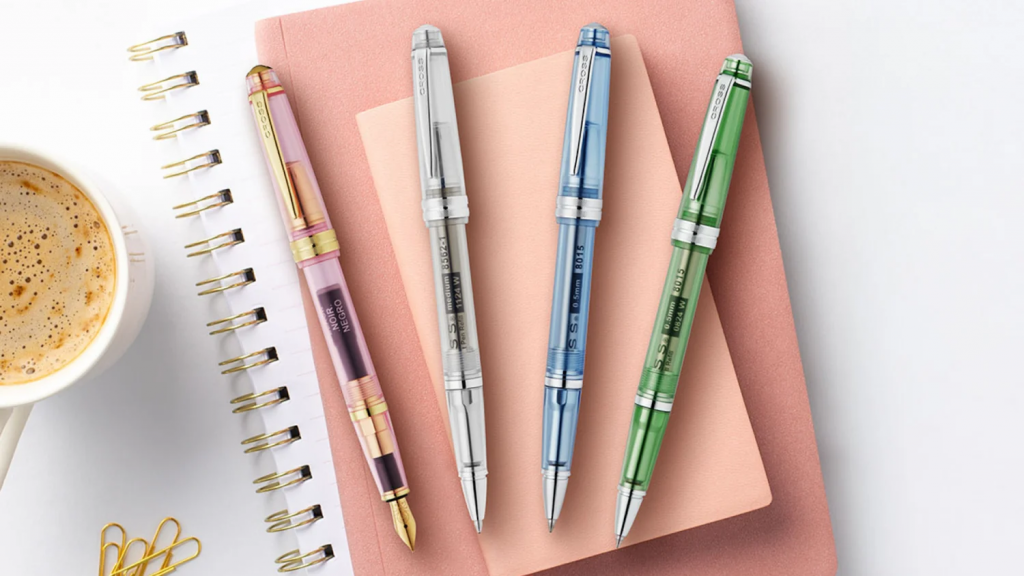
The beginnings of writing are a significant part of a child’s early learning. Practice with the correct writing instrument should make it easier to practise and help develop skills of control, grip, and hand coordination when using a writing instrument. Children’s writing pens come in various shapes, sizes, inks, and grips, and it all comes down to an age- and ability-dependent choice. A good beginner’s pen should be light, easy to hold, and smooth so that too much pressure is not placed upon the paper. The following characteristics may also assist in developing good patterns of handwriting: a non-slip grip, controlled ink flow, and a comfortable barrel. Familiarity with these features facilitates the choice of a pen that is appropriate for early writers.
What Do You Think About the Kind of Pen a Young Writer Uses?
A comfortable writing instrument can help promote routine writing practice with young children as they develop their fine motor skills.
In general, children’s pens should be made to fit a more or less natural hand posture such that sufficient pressure is not required. A larger barrel can help beginners handle it more easily as their fingers may fit it better. A soft grip can also have a benefit in that it helps lessen slipping during extended writing periods.
Things to Take Into Account
There are several facets that can make a new pen easier and more comfortable to use:
- Textured or rubberized grip: Can help prevent finger slipping.
- Lighter weight: A lighter pen is usually easier to control by small hands.
- Good barrel size: A larger barrel may be better for developing fingers.
- Frequent use: A hard-wearing pen will have no problems during a school session or practice.
What Makes Ballpoint Pens Good for Kids?
For handwriting practice, a fine or medium tip is good. Very fine tips will need more control, and very wide tips will make it hard to form small letters. A smooth ballpoint pen that is easy to grip with a comfortable feel can be a practical compromise between grip and control.
Gel Pens for Older Children
The second type contains gel pens that can be used by older children.
Gel pens have water-based writing ink, which can often deliver a smooth writing stroke. Gel ink could be useful for children who already have developed control of their handwriting, as it requires less pressure than some ballpoint pens.
Gel ink does not, however, dry as quickly and might cause smudging on some sorts of paper. For this reason, gel pens are more useful for children who are not learning to write in the earliest stages.
Rollerball Pens and Smooth Writing
It would be nice to have a rollerball pen and smooth writing, but it is not always a reality.
Rollerball pens have an ink-based line and are also very smooth. Lighter writing pressure can work well for longer writing blocks.
The main concern is ink control. Occasionally, liquid ink does bleed and form a bigger print on absorbent paper. A rollerball is thus more appropriate for kids who are already familiar with pen control and the pressure of their handwriting.
Pens as Per the Skill and Age Levels
The ideal pen may change with progress in writing.
Early Writers
A heavy writing instrument with a comfortable handle will offer greater manageability.
Developing Writers
A medium-size ballpoint or similar smooth pen may be able to help with forming letters more accurately.
Confident Writers
Once handwriting is improved, confident writers can have a smoother writing experience using gel or rollerball pens.
Different tip sizes and writing styles can be introduced for older school children depending on their writing preferences, needs, and school’s requirements.
A person’s age should not be the only criterion. There are also several factors such as hand size, hand grip, handwriting development, and writing pressure.
Practical Suggestions to Improve Handwriting Skills
Good handwriting does not just happen by itself—there is more to it than the writing hand. Practice sessions, when short, can be more manageable than a long practice session, as a long session can fatigue the hand.
Common Mistakes to Avoid When Selecting a Beginner Pen
There are many common mistakes to keep an eye on when selecting a beginner pen, so here are a few to watch out for.
There are some simple pitfalls that can make writing more challenging:
- Taking a pen decision based upon appearance alone.
- Giving a young child a thick writing pen with a heavy metal body.
- Selecting a very thin barrel that is hard to grasp.
- Using an ink that fails to write properly or requires deep pressure.
- Failing to respect the school’s guidelines on appropriate ink colors.
- Choosing a pen that is too difficult for a child’s motor skills.
- Giving conventional design principles more weight than comfort and control.
The Benefits of Bachaa Party for Children’s Learning
Bachaa Party offers a great place for families to go for children’s everyday learning and school needs. Sometimes, a selection geared toward the younger population makes it easier to explore stationery, school supplies, writing tools, and more. Comfort, ease of use, suitability for age, and design are still important for handwriting development.
Pens for children should enable them to write easily without causing them to experience undue challenges in their practice. Children will be able to build confidence, coordination, and improve their handwriting through regular handwriting activities and appropriate stationery.
Bachaa Party makes it a convenient, kid-friendly place to shop and get all the kids’ needs in one place.