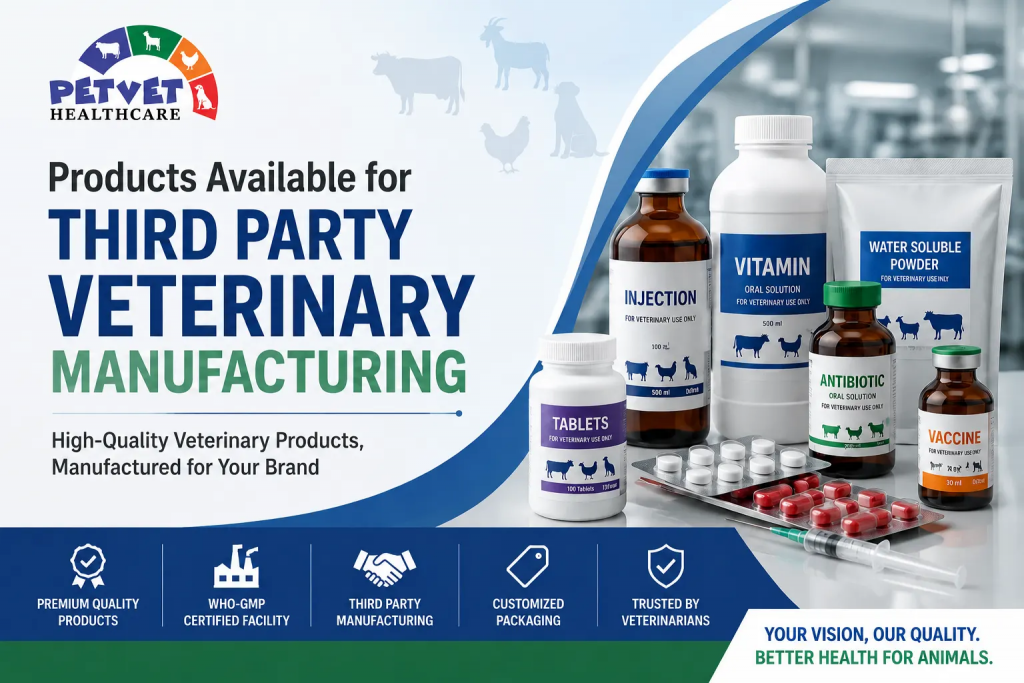
A third party veterinary medicine manufacturer produces animal medicines on behalf of another company, which then sells them under its own brand name. This lets entrepreneurs, distributors and marketing companies launch a veterinary brand without building a factory. The right partner combines licensed, GMP-compliant production with flexible formulations and transparent communication.
What Is Third Party Veterinary Manufacturing?
Third party manufacturing (also known as contract manufacturing) is the process of one business (the brand owner) outsourcing the manufacturing of medicines to another business (the manufacturer). Formulation support, sourcing of raw materials, manufacture, quality testing and packing are all done by the manufacturer. The company’s owner is interested in marketing, sales and customer relationships.
The drugs are branded and feature the brand owner’s design; information on the drug’s manufacture, as mandated by regulation, is indicated on the label. This model is common across pharmaceuticals and is increasingly popular in animal health.
Why More Businesses Choose This Model
Lower capital investment
Building a licensed facility involves land, equipment, cleanrooms, skilled staff and regulatory approvals. Partnering with an existing manufacturer converts that heavy investment into a manageable production cost.
Faster launch
With an established partner, a brand can go from idea to market in a shorter time, since infrastructure and processes already exist.
Brand ownership
You decide the brand name, logo, packaging design and pricing. Over time, the brand becomes your business asset.
Focus on growth
Without plant management to worry about, you can spend time building relationships with veterinarians, dealers and farmers.
Who Should Consider a Third Party Manufacturer?
- Entrepreneurs entering the animal health industry
- Existing distributors who want their own brand rather than reselling others
- Veterinary doctors planning a product line for their clinics
- Marketing companies expanding their portfolios
- Pharma companies adding a veterinary division
Product Types Commonly Made Under Contract
Third party veterinary manufacturers typically produce:
- Injections: antibiotics, anti-inflammatories and pain relief formulations
- Boluses: calcium, appetite and antibiotic boluses for cattle and buffaloes
- Feed supplements: liver tonics, mineral mixtures, multivitamins, electrolytes, calcium and gels
- Companion-animal products: formulations for dogs and cats
Availability differs from one manufacturer to another, so always confirm which dosage forms a partner can produce reliably.
Seven Criteria for Choosing a Third Party Veterinary Medicine Manufacturer
1. Licences and compliance
Ensure that the firm is having a valid manufacturing license as per the Drugs and Cosmetics Act, 1940, and rules and the plant is operating in compliance with GMP norms. Do not accept statements without copies of documents.
2. Quality control
Learn about the testing of raw materials and finished batches, record maintenance and the tracking of deviations.
3. Formulation flexibility
Will the manufacturer be able to provide standard formulations and talk about custom compositions? You can stand out from the crowd with flexibility.
4. Packaging options
Packaging that attracts, protects and complies with brand image and product stability.
5. MOQs and timelines
Small and mid-sized brands need realistic minimums and predictable delivery schedules.
6. Transparency in pricing
Ask for a paper quote in which you can see the details of the cost so it doesn’t come as a shock
7. Communication and support
Quick responses, easy to understand record keeping and the ability to explain processes are good indicators of a reliable partner.
step by step process of working with a manufacturer-
- First inquiry: List of products, target species and market.
- Product Selection – choose products from the manufacturer’s requirements portfolio or consider custom requirements.
- Quotation and terms: examine price, minimum quantities and payment terms.
- Artwork and label approval: provide the brand name, logo and design, followed up by the regulatory text.
- Production: The manufacturer produces the batch under supervision, which is checked for quality.
- Dispatch: products are made, and then sent to your address.
- Reorder and scale: repeat orders and new products follow as your business grows.
Risks and How to Reduce Them
| Risk | How to reduce it |
| Inconsistent quality | Choose GMP-compliant partners, order trial batches |
| Hidden costs | Insist on itemised written quotes |
| Delays | Agree timelines in writing |
| Weak documentation | Ask for batch records and product specifications |
| Over-dependence on one supplier | Build a good relationship and plan stock levels |
Petvet Healthcare’s Third Party Manufacturing Service
Petvet Healthcare is a veterinary manufacturer based in Ambala Cantt, Haryana, and operates under WHO-GMP and cGMP norms, according to the company. Its third party veterinary medicine manufacturing service is designed for businesses that want to launch their own brand of veterinary products, supported by modern packaging and quality raw materials.
You can review the available formulations in the product list and see packaging examples in the product gallery. The PCD franchise option may be more appropriate if you’re looking at the option of establishing an existing brand rather than developing your own.
Third Party Manufacturing vs PCD Franchise
| Feature | Third party manufacturing | PCD franchise |
| Brand ownership | Yours | Manufacturer’s |
| Setup effort | Higher (design, approvals) | Lower |
| Investment | Moderate | Lower |
| Long-term asset value | Higher | Lower |
| Speed to start | Moderate | Fast |
Frequently Asked Questions
What is a third party veterinary medicine manufacturer?
It is a company that manufactures veterinary medicines for another business, which sells them under its own brand.
Do I need my own factory to sell veterinary medicines under my brand?
No. Third party manufacturing exists precisely so you can launch without a plant, provided your manufacturer holds the required licences.
Can I customise packaging?
Generally yes. Most manufacturers accept brand names, logos and label designs, subject to regulatory requirements.
Is third party manufacturing suitable for small businesses?
Yes, especially when the manufacturer offers practical minimum order quantities and supports smaller batches.
Conclusion
A third party veterinary medicine manufacturer can turn a business idea into a real brand quickly and economically, but the partner you choose determines your product quality and reputation. Check licences, test quality practices, compare terms and start with a trial order. To discuss your brand plans, reach out through the Petvet Healthcare contact page.