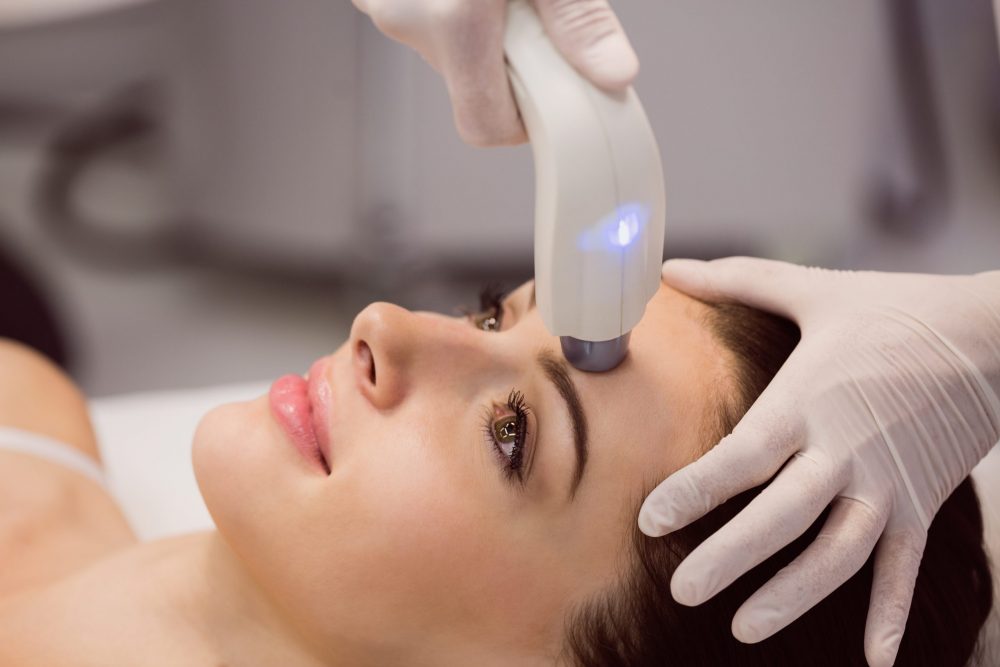
If you’ve been reading about laser skin treatments for pigmentation, tattoos, acne scars, and skin rejuvenation, you might already be familiar with the existence of Pico lasers and Q-switch lasers. At first, they might seem exactly alike, obviously a type of laser technology, to target pigmentation, and commonly utilized for aesthetic dermatology purposes. However, it seems there remains quite a lot of confusion between Pico lasers and Q-switch lasers, and which one would be more suited for you.
“In our clinic, we receive many patients complaining about confusion after reading various views about certain lasers on the internet,” explains dermatologist Dr Geetika Srivastava. “The reality is, neither laser can truly be termed as ‘universally best,’” she adds.
Now, let’s simplify all the facts for you, so you can make an educated decision about which one to go for!
What Is a Q-Switch Laser?
The Q-switched laser is an established laser technology with a history of use spanning decades in dermatological circles. It operates through nanosecond pulses of laser to penetrate the skin to target pigment particles.
How Q-Switch Laser Works
Q-switch lasers work on the principle of the photothermal effect, where heat is an important aspect. The laser pulse heats and breaks down pigment particles like ink or melanin. These particles are then removed by the human immune system.
Common Applications of Q-Switch Laser
- Tattoo Removal
- Freckles and sunspots
- Birthmarks
- Melasma (with caution)
- Carbon laser facial
Advantages and Disadvantages of Q-Switch Laser
Pros
- Demonstrated technology with a long safety record
- More affordable than the Pico laser
- Effective for superficial pigmentation
Cons
- Uses more heat, increasing the risk of post-inflammatory hyperpigmentation (PIH)
- Requires more sessions
- Longer downtime for sensitive or darker skin tones
What Is Pico Laser?
The Pico laser is new and more advanced; it follows Q-switch lasers as a big upgrade in technology. It delivers the energy in picoseconds, or about 100 times faster than nanosecond pulses.
How Pico Laser Works
Pico laser treatments do not work on the basis of heat; they work on the photo-acoustic effect. The process involves breaking up the pigment into very fine particles under pressure, with no heating-up, hence making their removal by the body easier.
Common Applications of Pico Laser:
- Stubborn pigmentation and melasma
- Multicolored tattoo removal
- Acne scars
- Skin rejuvenation
- Collagen stimulation and texture improvement
Pros and Cons of Pico Laser
Pros
- Minimal heat damage
- Fewer treatment sessions needed
- Faster recovery time
- Safer for darker skin tones
- Improves skin texture in addition to pigmentation
Cons
- Higher cost per session
- Not always necessary for mild skin concerns
Pico Laser vs Q-Switch Laser: Key Differences at a Glance
| Feature | Pico Laser | Q-Switch Laser |
| Pulse Duration | Picoseconds | Nanoseconds |
| Heat Damage | Very minimal | Moderate |
| Sessions Needed | Fewer | More |
| Downtime | Short | Longer |
| Cost per Session | Higher | Lower |
| Safety for Dark Skin | Better | Higher PIH risk |
| Tattoo Removal | Faster & more effective | Slower |
Pico Laser vs Q-Switch Laser: Which Is Best for Your Concern?
Tattoo Removal
For instance, if you are trying to compare the pico laser vs Q-switch laser in terms of tattoo removal, you may end up, in most cases, with the help of the pico laser, since it is more effective, particularly in the case of stubborn or multicolored tattoos, where the laser ‘breaks’ the tattoo particles into smaller particles for
The Q-switched laser may still be effective for the removal of older tattoos with black ink.
Winner: Pico laser
Pigmentation and Melasma
Blistering is difficult, but it is very challenging with darker skin. Q-switch lasers can be used for surface pigmentation but can have the problem of rebound pigmentation because of heat.
Pico laser is usually preferred because it has more gentle and deeper action on pigment, thus making it safe and effective for melasma and recurrent pigmentation.
Winner: Pico laser
Acne Scars and Skin Rejuvenation
Here, Pico lasers have a clear advantage over the Q-switch laser. While Pico lasers stimulate collagen production, Q-switch lasers do not affect scar remodeling.
Winner: Pico laser
Pico Laser vs Q-Switch Laser Cost Comparison
One of the biggest deciding factors for many people is cost.
- Q-switch laser: Lower cost per session
- Pico laser: Higher cost per session, but fewer sessions needed
Though Q-switch laser treatment may appear relatively cheaper at first, overall costs may sometimes come close to or even surpass those incurred through Pico laser treatment.
Side Effects and Safety: Which Laser Is Safer?
Both lasers are safe when performed by an experienced dermatologist, with a different risk profile.
- Q-switch laser: Higher risk of redness, downtime, and post-inflammatory pigmentation
- Pico laser: Less heat, less downtime, and lower pigmentation risk
For individuals with sensitive or darker skin, the Pico laser is often considered the safer choice.
Pico Laser or Q-Switch Laser: Which One Is Best?
If we’re answering the question honestly—Pico laser vs Q-switch laser: which is best?—the answer is:
- Pico laser is generally the better and more advanced option
- Q-switch laser still has a role for mild concerns and budget-conscious patients
“Best” doesn’t mean “newest” for everyone—it means most appropriate for your skin.
Who Should Choose Pico Lasers?
- People with stubborn or recurrent pigmentation
- Darker skin tones
- Acne scars or uneven skin texture
- Those who want faster results with fewer sessions
Who Should Choose a Q-Switch Laser?
- Mild pigmentation or freckles
- Older black-ink tattoos
- Patients on a tighter budget
- Those advised specifically by a dermatologist
Common Myths About Pico Laser vs Q-Switch Laser
Myth 1: Pico laser works in one session.
Truth: Multiple sessions are still required.
Myth 2: Q-switch laser is outdated and unsafe.
Truth: It’s still effective when used correctly.
Myth 3: A stronger laser means better results.
Truth: Precision matters more than power.
Final Thoughts: How to Choose the Right Laser for You
For instance, any decision between surgery of pico laser or Q-switch laser should not be based solely on advertising issues; the best results are achieved by careful skin analysis, proper expectations, and professional skills of the dermatologist who will perform the surgery.If not, you should consult a trained expert who is able to determine your skin type and guide you on which treatment is best suited to your skin with a safe and effective use of this technology.