Since the arrival of COVID-19, the practice of remote work has become quite common around the world. However, it may be both beneficial and challenging for the employers. Whether remote work benefits the company or not primarily depends on employee engagement and the company’s productivity. In addition to this, remote employees must also engage themselves in the workplace by taking part in meetings and other work-related activities.
In this blog, we will discuss the future of remote work, along with some strategies for employee engagement and how remote employees can effectively engage with the workplace. So, what are we waiting for? Let’s dive into it!
Why do employees prefer remote work?
Employees prefer remote work for many reasons. Some of them include:
Flexibility:
Firstly, one of the main reasons why employees prefer remote work is that it provides flexibility to the workers. Employees can set their working hours according to their own preferences. This allows them to focus on other commitments as well. Additionally, students who have to balance studies with a job can benefit from remote work.
Time-saving:
Moreover, working remotely can help you save time. It allows you to avoid long hours of traveling, thereby saving you time. In addition, you can spend that commute time on other productive things.
Cost-saving:
Besides that, remote work also helps you save money by avoiding spending money on fuel, public transport, and lunch.
Reduced stress:
In addition to this, working remotely allows you to avoid unnecessary office drama and arguments. Moreover, employees also work without any pressure, which enhances the quality of their work.
Enhanced productivity:
Lastly, it helps enhance the productivity of an employee. When employees work remotely, they are able to avoid distractions in the workplace. As a result, their productivity increases.
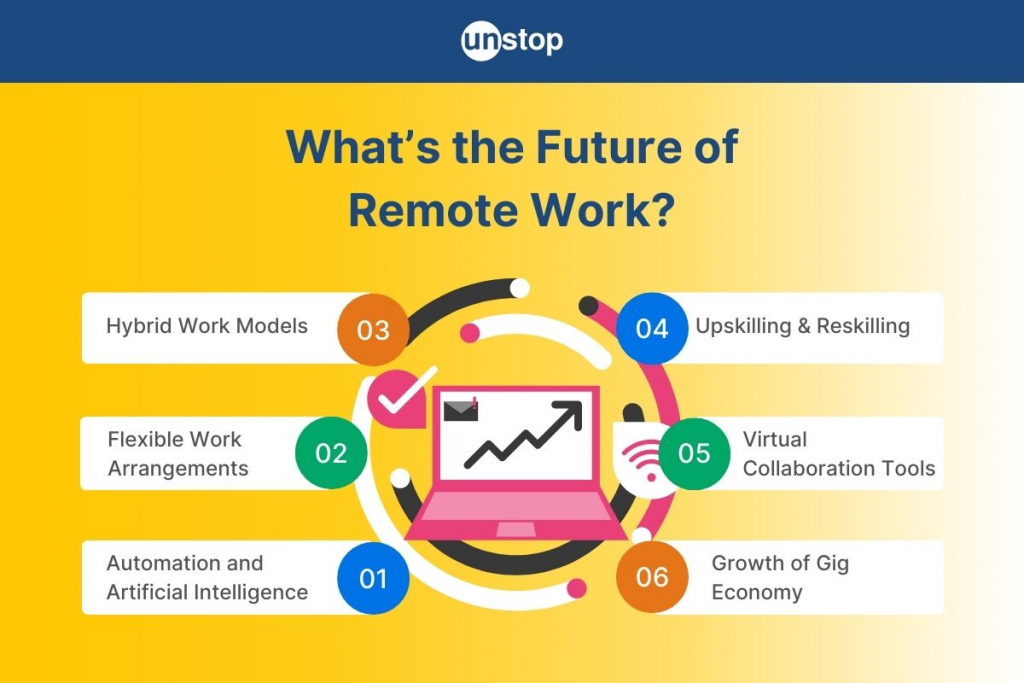
What is the future of remote work?
“Global research shows that remote work is likely to transition into a more hybrid work approach. Before the pandemic, only 15-16% of companies had remote workers. But by late 2022, stats indicate that most of the companies expect to permanently use some kind of hybrid model, accounting for the evolving work landscape.”(AMZScout)
Though many companies want their employees to return to the office, remote work remains in trend. However, to satisfy their workers, employers have given them the option of hybrid work. Hybrid work allows employees to balance their work and personal life. The employees are required to work 2-3 days remotely, and on the remaining days, they must come to the office. Though it is not as beneficial as the remote option, it’s a better initiative from the employers. In addition, the hybrid option also satisfies the employees, as the employers consider their comfort as well.
Challenges of remote work
While employees get countless benefits by working remotely, they also face some challenges, as do recruiters.
The following are some challenges of working remotely:
Maintaining employee engagement:
Firstly, one of the most common challenges of working remotely is maintaining employee engagement. When employees won’t meet their colleagues, they might feel disconnected from their team. This can lead to negative effects during teamwork projects.
Lack of interaction:
In addition, when an employee works remotely, they don’t interact with their team members. As a result, they are unable to share their ideas and thoughts with others. Similarly, if they are stuck on a work-related issue, they might not seek their coworker’s help due to a lack of interaction. Besides that, a lack of communication often leads to improper work.
No work-life balance:
Moreover, working remotely impacts your work-life balance. Many employees who work remotely are unable to take proper breaks. As a result, they burn out easily. This is because remote work often lacks work-life balance. Mostly MBA students prefer remote work but managing it is tough, and that is where students should seek MBA Admission Essay Help to aid with not only with admission but also along the journey.
What is employee engagement?
Employee engagement means involving the employees in the things of the workplace. It allows them to share their ideas, issues, and connections with others in the workplace. Employers are required to build a connection with their employees, motivate them, and develop a sense of passion for their jobs. This can have a positive impact on the performance of the employee, which can lead to enhanced productivity. Though it can be easier to manage in a physical work culture, maintaining it in a remote culture can be a bit hard for employers.
How can you engage remote employees?
Engaging remote employees can be quite challenging for employers, which can lead to a reduced retention rate of workers. Thus, it is essential to engage them and let them feel valued in the remote work culture as well.
Here are some ways you can engage your remote workers:
- Allow them breaks during their working hours
- Schedule team lunches
- Ask your employees to work in teams
- Celebrate birthdays and work anniversaries of your remote employees as well
- Ask them to share their issues with the HR or manager
Why employee engagement matters for remote workers?
According to Maven Clinic, “Research shows that employee engagement is a key factor for productivity, retention, and overall employee success.”
Employee engagement matters for remote workers because it boosts productivity, enhances their morale, and leads to a higher retention rate of employees. Without employee engagement, these workers might feel lonely and disengaged from their team. As a result, their performance might be affected.
Here are a few reasons why employee engagement matters for remote workers:
Prevents isolation:
First and foremost, employee engagement prevents isolation among the remote workers. Many of these workers complain of feeling lonely and isolated. Therefore, to avoid this sense of loneliness among these remote employees, you need to engage them in social gatherings and conversations with other employees.
Higher employee retention:
In addition to this, when you engage your employees efficiently, your company will have a higher retention rate. This is because employees feel valued and connected with the company when you engage them. As a result, they are more likely to stay with the company for a longer time.
Boosts productivity:
Apart from this, engaged employees are more likely to complete and submit their work on time. This boosts the productivity of both the employee and the company.
Improves communication:
Besides that, employee engagement also improves the communication between employees. If the employees are engaged with each other, they might not feel shy to share their doubts and ideas with each other. Apart from that, effective employee engagement also allows workers to share their issues with their employers.
Maintains a positive work culture:
Furthermore, employee engagement helps maintain a positive work culture. This prevents workplace dramas and unnecessary hatred among other employees. Due to this, workers get engaged with each other and build a friendly bond. As a result, work culture remains positive.
Strategies for employee engagement
Here are some effective strategies that you need to implement for employee engagement:
Encourage a remote-friendly culture:
Firstly, you need to encourage a remote-friendly culture in your company. You must focus on the outcome provided by your workers instead of the working hours. This will allow you to build trust among the employees. As a result, employees might also work overtime to provide you with the desired outcome.
Invest in advanced technology:
In addition to this, you must invest in advanced technology to ensure that your remote workers do not face any difficulty with the work. You can invest in digital tools to enhance the work quality of our employees. Besides that, you can provide your employees with modern communication and collaboration tools, like Slack and Microsoft Teams, which allow them to share information and feedback easily. However, you need to tell your employees that these advanced tools are just fr their assistance and that they should not depend on them for their work.
Provide training to the workers:
Apart from that, you must provide training to your workers. Train them on how they can use the digital tools to enhance the quality of their work and keep engaged with other employees. Additionally, tell them how they will submit their work and how they can discuss their issues with others.
Provide flexibility:
Besides that, one of the most vital strategies for employee engagement is to provide flexibility to your workers. If you don’t want your employees to work remotely, you can allow hybrid work for them. This will satisfy both the employee and the employer. In addition to this, if an employee is late for the submission, first ask them about the reason. If the reason is valid, you can provide them extra time; however, if the reason is irrelevant, then you can give them a warning, but spare this time.
Appreciate your employees:
Furthermore, take out your time and appreciate your employees. This will help them feel more confident, and they are more likely to perform better than before. You can also offer rewards and bonuses for employees with good performance and proper attendance. However, if an employee is not performing well, you need to encourage them instead of scolding them. This will motivate them to do better in their work.
How can remote employees engage themselves in the workplace?
Indeed, employers are responsible for engaging employees who work remotely in the workplace to maintain a healthy environment. However, such employees also have to take their part in engaging themselves with others.
The following are some ways through which remote workers can engage in the workplace:
Communicate with others:
Firstly, to engage yourself in the workplace, you need to communicate with your coworkers. Even if you are working remotely, you can text or call them to discuss the project or any other work-related matter. Besides that, if any of your teammates is not well, consider visiting them, as it will help develop a close bond.
Take part in meetings:
In addition to this, make sure to take part in meetings. If you are a remote employee, your meetings might be conducted online. Thus, it is vital to keep a stable internet connection so that you won’t get interrupted by network issues. However, it is essential to understand the difference between participating and annoying your managers. You must make sure that you are asking only relevant and work-related queries. Additionally, speak once the manager is done with their speech; don’t interrupt them in the middle of their speech.
Share your ideas and issues:
Apart from this, another effective way to engage in your workplace is to share your ideas and issues with your coworkers. If you are working with your colleagues and you have any idea regarding the work, consider sharing it with them via text or voice call. However, it is vital to understand that implementing that idea is totally their choice, and you can’t force them to work on that idea. Similarly, if you have any issues related to the workplace, you must share them with your manager. On the other hand, if you have any problems with an employee, share them with HR.
Participate in extracurricular activities:
Moreover, you must participate in the extracurricular activities in your office. Though you are a remote employee, if there is a team lunch or a team gathering, you must be present with your team. This will help you develop a friendly bond with your coworkers. Furthermore, if there is a wellness program in the workplace, you must attend it to show your participation in the work culture.
Appreciate your coworkers:
Along with this, you must appreciate your coworkers for their good work. This will motivate them, and they might start respecting you more. In addition to this, if any of your coworkers receive an award, get a bonus, or a promotion, you must congratulate them. This will show them that you are not jealous of their success.
In a nutshell!
All in all! Remote work has become increasingly common among employees over the past few years. However, employers must implement effective strategies to enhance employee engagement. In addition to this, employees must also strive to engage with others to benefit themselves, as well as the workplace.
This brings us to the end of our guide. We hope that this blog will help you implement these strategies to engage employees and boost the productivity of your company.