You’re shipping across heat, humidity, and long delivery routes. Boxes get stacked. Dropped. Pressed. You already know that.
The question is simple. Do you want your product arriving like it survived, or like it barely made it?
Here are eight practical ideas that make paper wrapping more than just filler.
8 Ways Paper Wrapping Improves Protection and Presentation for E-commerce Packaging
1. Layered Cushion Wrap Instead of Plastic Bubble
Plastic works. But it looks cheap. And customers notice.
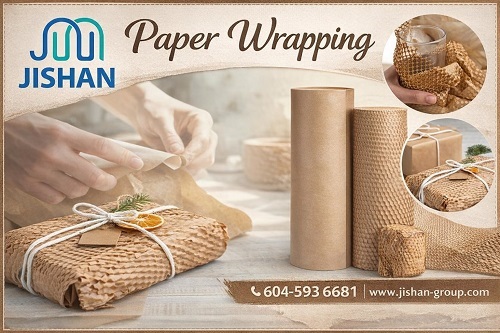
Layered kraft paper wrapping absorbs shock surprisingly well. Fold it properly and it cushions edges. It also looks intentional.
When customers open the box, they see care. Not plastic waste.
That difference matters more than you think.
2. Custom-Branded Paper Wrap for First Impressions
You don’t need loud colours. A simple printed logo on paper wrapping works.
When someone opens your box and sees neat, branded wrap, it feels premium. Even if the product is affordable.
Presentation creates perceived value. Always.
Companies like Jishan Berhad have leaned into sustainable packaging supply because brands now care about both look and impact. It’s no longer optional.
3. Crumpled Paper Void Fill Instead of Foam
Empty space kills products during shipping.
Instead of foam peanuts or random fillers, crumpled paper wrapping locks items in place.
It’s simple:
- Fill the corners
- Support the base
- Prevent side movement
The box should not rattle when shaken. Try it. If it moves, fix it.
4. Hybrid Wrapping With PCR Stretch Film
Here’s where practicality meets sustainability.
PCR stretch film (post-consumer recycled film) helps secure bulk items or pallet loads. It reduces plastic impact compared to virgin film.
Use paper wrapping inside the box. Use PCR stretch film for stabilising grouped packages during transport.
You protect products and still show responsibility.
Customers pay attention to this now.
5. Moisture-Resistant Paper Layers for Malaysian Climate
Malaysia isn’t dry. Paper alone can absorb moisture.
Smart brands now use treated or coated paper wrapping that resists humidity without looking glossy.
It keeps the natural look. It protects better.
That small adjustment prevents damaged outer packaging, especially during rainy seasons.
6. Folding Techniques That Lock Corners
Corners take the hardest hits.
Instead of random wrapping, fold paper tightly around edges like gift wrapping, but tighter.
Good folding:
- Protects corners
- Prevents tearing
- Reduces internal shifting
This costs nothing extra. It just requires intention.
7. Paper Seals That Replace Extra Tape
Too much tape feels messy.
Use paper seals or branded stickers to hold wrapping in place. It keeps the unboxing clean.
A neat open experience matters. You want customers thinking, “This looks good,” not struggling with layers of plastic.
8. Reusable Paper Wrapping That Extends Brand Life
Some businesses now design paper wrapping thick enough to be reused.
Customers reuse it for storage or gifting. That keeps your brand around longer.
You’re not just shipping. You’re entering their space.
That’s subtle marketing.
Why Paper Wrapping Works Better Than You Think
You might think paper is old-school. It isn’t. It’s evolving.
Paper wrapping now:
- Absorbs shock
- Enhances presentation
- Supports sustainability goals
- Reduces plastic use
- Improves unboxing experience
And when combined with smart use of PCR stretch film for bulk transport, it becomes a balanced solution.
You don’t need extremes. You need consistency.
A Simple Question to Ask Yourself:
When your customer opens the box, does it feel thoughtful?
If not, your packaging is doing the bare minimum.
What Customers Notice First (Even If They Don’t Say It)
You think customers care only about the product. They don’t.
They notice:
- If the box feels loose
- If items shift inside
- If wrapping looks rushed
- If materials feel cheap
They may never email you about it. But they remember.
Good paper wrapping removes doubt the moment the box opens.
Returns Cost More Than You Think
Damaged goods don’t just cost replacement money. They cost time. Reputation. Reviews.
Ask yourself:
- How many returns happened because items moved inside the box?
- How many negative comments mentioned packaging?
Proper paper wrapping reduces impact damage. Pair that with smart use of PCR stretch film for grouped shipments, and you reduce transport stress before the box even reaches the courier.
Less movement equals fewer problems.
It’s not complicated.
Sustainability Is No Longer a “Bonus”
Five years ago, eco-friendly packaging felt optional. Now it’s expected.
Customers read labels. They look for recycled content. They notice excessive plastic.
Using paper wrapping inside the box and PCR stretch film for outer stability shows balance. You protect the product without overdoing plastic.
That quiet signal builds trust.
Small Details Create Repeat Customers
Neat folds. Clean seals. No messy tape.
These small things cost almost nothing. But they change how your brand feels.
And in e-commerce, feeling matters.
If you want, I can also add a sharper closing paragraph to tie everything together more strongly.
Final Thought
E-commerce in Malaysia is competitive. Fast shipping is expected. Good presentation is remembered.
Paper wrapping improves both protection and perception. It’s practical. It’s adaptable. It works in real-world conditions.
Brands that understand this don’t overcomplicate things. They refine details.
That’s usually what separates forgettable packaging from memorable delivery.
Key Points
- Paper wrapping protects edges and absorbs shock
- It improves presentation instantly
- Crumpled paper prevents internal movement
- PCR stretch film supports sustainable bulk transport
- Smart folding and sealing elevate unboxing
FAQs
Is paper wrapping strong enough for fragile items?
Yes, when layered and folded correctly.
How does PCR stretch film differ from regular film?
It uses recycled material and reduces plastic impact.
Does paper wrapping increase packaging costs?
Not significantly. Smart design often offsets material savings.