Living in a Dubai apartment, you get used to the AC being on. Not just during summer. Not just at night. All the time, for most of the year. And because it runs so constantly, it also gets neglected more than almost any other appliance in the home.
Here’s the reality: in Dubai, where the temperature regularly pushes past 45°C, an under-maintained AC doesn’t just struggle — it gives up entirely. Usually right when you need it most.
This checklist breaks down what every apartment resident in Dubai should check, fix, or watch for, sorted by type of task and when you need to do it. Whether you’re a DIY type or you call in the pros, just knowing what’s actually required is the first step to keeping cool.
Why Dubai Apartments Have Unique AC Demands
Most AC advice floating around online is aimed at people living in mild climates. It doesn’t fit Dubai at all. In places where summers are gentle, one annual checkup is fine. Here, that’s not even close.
Here’s why the environment is so demanding. First, dust. Sandstorms and ambient construction dust in the UAE are among the worst in the world for air filters. A filter that might last three months in Europe can clog within four to six weeks in certain parts of Dubai, especially if your apartment faces a construction site or a sandy road.
And let’s not forget the marathon operation. In July and August, your AC runs nearly non-stop. That means weeks of your compressors, fan motors, and refrigerant circuits working at full tilt, way more than they were ever meant to.
Add humidity to the mix, especially in spots like Dubai Marina, JBR, and Jumeirah Beach. For months, these areas get humid enough for mold and bacteria to thrive inside your AC and ducts. That musty late-summer smell? That’s where it comes from.
So when you see guidance saying “service your AC every 3 to 4 months,” that’s not overcaution. It’s what Dubai’s operating environment actually requires.
The Full AC Servicing Checklist for Dubai Apartments
Filter Cleaning and Replacement
Start here. Filters are the most frequently neglected component and the easiest to address.
Most split unit filters in Dubai apartments should be cleaned every 2 to 4 weeks during heavy use months. That’s a task residents can do themselves, gently removing the filter panel, rinsing the filters under cool water, and allowing them to dry fully before reinserting. Don’t skip the drying step. A damp filter going back into a unit causes more problems than it solves.
What filters can’t do is catch everything. Dust that bypasses the filter accumulates on the evaporator coil over time, and that’s a job for a technician, not a rinse under the tap.
Evaporator Coil: Inspect and Clean
Inside your indoor unit, the evaporator coil handles the actual cooling. When it’s covered in dust or gunk, it stops transferring heat efficiently. So your AC runs forever but never actually cools the room. Sound familiar?
Cleaning it isn’t just about popping off a cover. A good service visit will include checking and lightly cleaning the coil. But if you haven’t had a pro clean it in over a year, or if your cooling isn’t getting better with just a filter change, it probably needs a chemical clean. In that case, a technician will use a special solution to dissolve all the built-up grime — no harm to the coil itself, just a much better result.
It takes longer and costs a bit more, but sometimes it’s exactly what your system needs.
Drainage Lines: Check for Blockages
Every cooling cycle produces condensation — water that’s supposed to flow out through a drainage line. If it gets blocked, at first water collects in the tray, then it spills over and starts dripping from your unit. That drip is all-too-common in Dubai’s summers.
During a professional tune-up, the technician flushes out and checks these lines. If you spot water under your AC or dripping, don’t just hope it’ll stop. It won’t, and water damage to the ceiling or walls isn’t cheap to fix.
Refrigerant Level Check
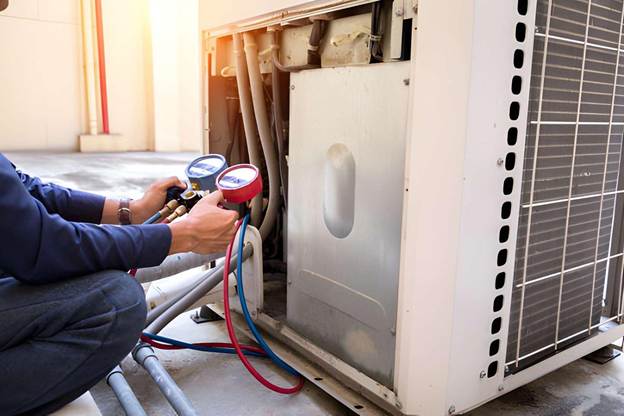
Refrigerant is what makes your AC cold in the first place. If the closed loop starts leaking, performance drops off — no matter how clean the filters are or how shiny the coils look. Also, low refrigerant means your compressor is working way harder, which shortens its life.
You can’t check refrigerant yourself. A licensed pro uses special gauges for that. But you can spot trouble: rooms that take forever to cool, ice on the pipes or indoor unit, or a faint hissing near the outdoor unit. Any of these, call a technician.
For professionally handled AC Repair that includes refrigerant diagnostics, using certified HVAC technicians matters. Dubai’s extreme operating conditions mean low refrigerant issues progress faster here than in milder climates.
Outdoor Condenser: Keep It Clear
The outdoor box gets overlooked, but it fights the hardest elements — sand, blazing sun, and whatever else ends up out on your balcony or roof. For the system to work right, the condenser fins need to stay clear and air needs to move freely.
If you can reach your outdoor unit, keep the area around it tidy. No furniture, storage, or random junk. Blocked airflow forces harder work and drives up energy bills.
A pro will inspect and clean the condenser fins and check the wires and connections — these often take a beating from desert heat and humidity.
Thermostat Calibration
A thermostat that’s even a little off will keep your AC running too long or shutting off before your space cools down. Calibration is a quick check during professional maintenance, but if your place always feels warmer or cooler than the set number, mention it to your technician.
Duct and Fan Coil Treatment (for Ducted and Multi-Zone Systems)
Some apartments, especially bigger or newer ones, have ducted AC. These systems use hidden ductwork, which collects dust, bacteria, and in muggy spots, mold.
Duct cleaning is separate — it takes special gear and is a job for the pros. Every one to two years is a good rule for most homes, but do it sooner if you notice dust from the vents or worsening allergies. A technician can also apply an anti-microbial spray afterward to help slow down future buildup.
When to Service Your AC in Dubai: A Timing Guide
When you service is just as important as what you do. Here’s how to keep up:.
Every 2–4 weeks: Clean your air filters yourself — especially during dust storms or peak summer.
Every 3–4 months: Bring in a technician to check coils, drainage, wiring, refrigerant, and thermostat.
Every 6–12 months: Full deep-clean — chemical coil cleaning, maybe duct inspection. Go more often if you have pets or your apartment’s always full.
Pre-summer (March–May): Book the big service before 40°C arrives and it’s hard to get an appointment. Wear-and-tear from last year shows up now, and technicians are easier to schedule.
Post-summer (October–November): Follow-up check after the stress of summer. Catches issues before they get expensive next year.
What a Professional AC Service Should Include
If you’re paying for a service, demand more than a quick filter rinse. For Dubai apartments, a full AC maintenance should check cooling levels, clean filters, inspect the evaporator coil, flush the drainage line, check refrigerant, inspect wiring, check the condenser, and end with a written report.
That last one is more important than you’d think. Keeping service reports builds a record, so if something’s wearing out, you’ll know — no nasty surprises mid-summer.
Warning Signs That Shouldn’t Be Ignored
Lots of people spot warning signs and just brush them off. Bad idea.
Water dripping from the indoor unit? That means a blocked drain or icing up. A stale, musty smell from your vents? Mold, either in the unit or the ducts. AC running forever but never cooling enough? Probably coil gunk, refrigerant trouble, or both. Rattling noises? Usually a loose part. A sudden DEWA bill jump without using the AC any more than usual? Your system’s probably straining. Don’t ignore this stuff — book a technician before it goes from nuisance to disaster.
Apartment vs. Villa: What’s Different
Villas have more AC upkeep — bigger ducted systems, rooftop units, sometimes VRF/multi-zone setups needing expert care. But apartment dwellers still have plenty to look after.
Most apartment residents in Dubai are responsible for the split AC units inside their place — not the building management. Shared areas are covered, but what’s in your living room or bedrooms is yours to maintain (always double-check with management if unsure). Too often, people skip maintenance, then argue over repair bills with landlords or building staff — avoid the headache and look after your units.
Companies like GeeM Home, with decades in Dubai and big teams of certified techs, often run regular service plans for apartments because once-a-year visits aren’t enough here.
The Cost of Skipping Maintenance
The numbers speak for themselves. A standard AC service in Dubai apartments costs somewhere between AED 150 and 350. Burn out your compressor from neglect, and you’re looking at AED 1,200–2,500. Emergency callouts in July? Even more.
The hidden drain? A dirty, tired AC sucks up 20–30% more electricity for the same cooling. Over a whole summer, that extra on your DEWA bill is serious money.
In the end, preventive maintenance doesn’t just save you from breakdowns and emergencies — it keeps your bills lower and your apartment cool, all summer long.