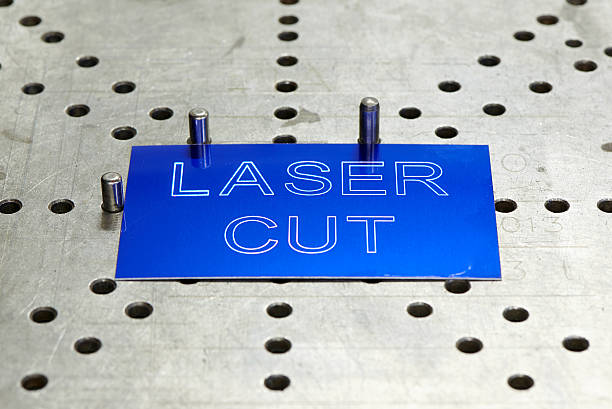
Aluminum is a highly versatile and popular material in manufacturing, signage and personalization. A laser cut aluminum plate became an excellent choice whether you are designing industrial tags, ornamental plaques, or even business cards of the highest quality. You will find a smooth, durable, and sleek look that is difficult to match.
However, how on earth do you get a metal sheet of paper into a finely cut masterpiece? This detailed guide will explore the world of laser engraving aluminum and the technology, the process and the machines you will require to help you get the job done.
What is a Laser Engraved Aluminum Plate?
A laser engraved aluminum plate is an aluminum material permanently etched with a focused beam of light. Laser engraving, in contrast to the old-fashioned method of mechanical engraving, where one works with a material physically, creating a bit with a metal tool, heats the material with the laser and alters the surface.
The choice of aluminum is preferred in this procedure as it is light, corrosion resistant and responds well to various forms of laser sources. The uses are inexhaustible, beginning with aerospace identification tags, and going down to personal, custom plates to honor an occasion, such as a memorial plate.
How Laser Engraving Aluminum Works
Learning the process of laser engraving of aluminum is the initial step towards perfecting the art. It is based on the principle of the subtraction or surface transformation.
1. Thermal Ablation
The laser beam melts the aluminum surface in high power environments. This forms a profound groove or engraving which can be felt by your finger. This is typical of industrial plates which should be legible in spite of years of wear and tear.
2. Surface Oxidation (Marking)
Occasionally, it is not to dig deep but to make a high-contrast mark. Using the frequency and speed of an aluminum laser engraving machine, it is possible to create a dark oxide layer on the surface.
3. Coating Removal
Most of the engraved aluminum that you look at is actually anodized aluminum. Here, the laser does not necessarily cut the metal, it just removes the colored dye layer leaving the natural silver aluminum underneath. This provides a high contrast, beautiful appearance.
How to select the appropriate Laser Engraver in Aluminum.
When you wish that you can laser engrave aluminum you cannot just use any machine. The type of equipment you select will be completely dependent on the kind of aluminum you are dealing with.
Fiber Lasers: The Industry leader.
The gold standard is a fiber laser engraver of aluminum. The fiber lasers have a wavelength (1064nm) which is a wavelength that is totally absorbed by metals.
Advantages: Very fast, permanent, has the ability to engrave raw (bare) aluminum.
Cons: Increased start up cost.
CO2 Lasers: Excellent when working on Anodized surfaces.
A CO2 aluminum laser engraver can typically not mark bare aluminum since the metal bounces the light off. Nevertheless, a CO2 laser can create beautiful effects provided that the aluminum is anodized or sprayed with a marking paint (such as CerMark).
Diode Lasers: Do it yourself Laser.
Small business and hobbyists can now enter with modern high-power diode lasers (20W+) that can mark aluminum that has been treated.
How to make a laser engraved aluminum plate step-by-step.
Ready to start? These are the steps that will enable you to finish with high quality each time.
Step 1: Material Selection
Choose bare aluminum, anodized aluminum or powder coated aluminum.
Bare Aluminum: Industrial tags; fiber laser is needed.
Anodized Aluminum: Ideal in the decorative work; can be lasered with virtually any laser.
Step 2: Preparing Your Design
Draw your design using a vector program (such as Adobe Illustrator, CorelDRAW, or LightBurn). Make sure that your text is turned into paths and the pictures are very high-quality. With a laser engraved aluminum plate, black and white graphics are the best.
Step 3: Surface Cleaning.
The laser beam can be interfered with by fingerprints and oils. Clean your plate using denatured alcohol or lint-free cloth and then put it into the machine.
Step 4: Focusing on the Focus.
Precision is key. With a laser that is out of focus by only a millimeter, the mark will be blurred or weak. Use your machine’s focal tool to set the exact distance between the laser head and the plate.
Step 5: Dialing in the Settings
All aluminum laser engraving machines are different. Generally:
In case of Fiber Lasers: Deep engraving of Fiber Lasers is to be done using high power and medium speed.
With Anodized Aluminum (CO2): Lower power and high speed should be used so that the edges of the coating are not melted.
Step 6: The Engraving Process.
Frame a frame to make sure that your design is framed on the plate. Be satisfied then begin the work. Always wear laser safety glasses!
Laser Engraved Aluminum Plates have various applications.
What makes this particular service in such demand? Due to the use of aluminum plates in virtually all sectors of the economy.
1. Industrial Nameplates and Tags.
Machines in the manufacturing sector need VIN plates, serial numbers, and safety warnings. Laser engraved aluminum plate is impervious to chemicals, heat and UV light and therefore the best option in harsh conditions.
2. Branding and Signage
Brushed aluminum is commonly used as door signs and logo displays in high end offices. The engraved anodized aluminum with its silver on black appearance screams professionalism.
Learn more; How to Choose the Best Laser Cutter for Signage
3. Personalized Gifts
The hobbyist market of laser engraving aluminum is booming, including custom luggage tags, and engraved photos on metal.
4. QR Codes and Data Matrix.
Owing to their accuracy, lasers can be used to engrave small, scannable QR codes on aluminum tags to manage inventory.
Tips on Maintenance of your Aluminum Laser Engraving Machine.
In order to maintain your aluminum laser engraver in its optimum condition, you need to maintain a schedule of maintenance:
Lens Cleaning: The Dust of Aluminum is reflective. When it lands on your lens, the laser may reflect and break the module. Clean the lens after every couple of hours.
Exhaust Ventilation: Although aluminum is not a source of the toxic smoke such as PVC, the particles are fine and may clog your machine after some time.
Bed Leveling: Make sure your bed is completely flat so the focus is the same on the entire plate.
What are the Reasons of Preferring Lasers to the old-fashioned ones?
You may be asking yourself why you want to laser engrave aluminum as opposed to using conventional methods of chemical etching or mechanical milling.
Speed: Lasers are able to finish complicated designs within seconds.
Detail: Lines can be etched with a laser less than 1/10 of a human hair.
No Consumables: You do not have to use ink as you would in printing. Mechanical engraving requires you to change drill bits, unlike with mechanical engraving.
Consistency: After saving your settings, the 1 st plate and the 1,000 th plate will be the same.
Professional Insights: Best Practices.
With the help of industry experts at OneLaser, it is the balance between Frequency and Power that is the key to a perfect finish.
With a fiber laser, a high frequency can create a smoother, whiter cut, and a low frequency can create a darker and deeper cut into the metal. The first time in your life using an aluminum laser engraver, it is strongly advised that you do a power grid test on a scrap piece of material to determine which piece of the alloy is the sweet spot.
Frequently Asked Questions (FAQs)Is it possible to engrave raw aluminum with a CO2 laser?
Technically, no. A CO2 laser beam is reflected by bare aluminum. But you can apply a spray marking such as CerMark or LaserBond. The laser heats the spray onto the metal forming a permanent black mark.
Can laser engraving on aluminum be permanent?
Yes. Laser engraving does not leave behind the material as in screen printing or stickers. It will not dry, wear, or come off with time.
Which is the best aluminum to engrave?
Laser work is generally done on anodized aluminum (6061 grade or 5005 grade) due to the high contrast between the colored coating and the silver core.
Conclusion
Production of a good laser engraved aluminum plate is an art and science. Selecting the appropriate laser engraver to work with aluminum and learning the peculiarities of the material, you can create the objects that will be not only beautiful but also incredibly strong.
Laser engraving aluminum is a skill that is worth learning, whether you are interested in beginning a side hustle or improving your industrial marking abilities. Modern aluminum laser engraving machines have become more available than ever with their precision, speed and versatility.
To get more technical guides and up-to-date with laser technology, just make sure to keep abreast with the industry leaders and see what your equipment can do. Happy engraving!