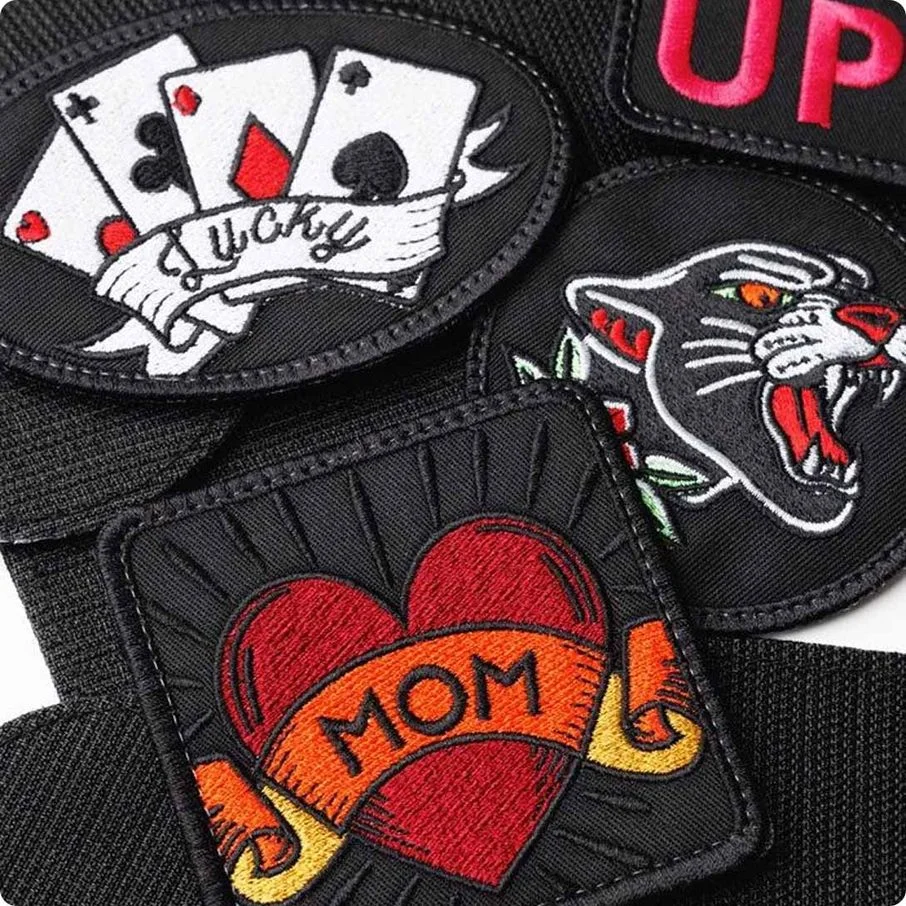
When choosing the right custom patch manufacturer in Canada, buyers need to consider different approaches. Wondering why? Because you can’t make the final decision based only on the lowest quote. The best option depends on your patch’s purpose, artwork, quantity, fabric of the patch, and the order deadline.
When finding the right maker, first determine the required components and materials before comparing suppliers. A jacket patch has different requirements than a club badge, team uniform, or corporate order. Canadian suppliers vary in quantities, materials, backing, proofing, production times and shipping. Make a checklist of the requirements, then compare the makers based on the checklist.
What Should Individuals Consider Before Contacting a Custom Patch Maker?
Choosing the right patch manufacturer is no less than a task. A helpful distinction is between production capability and marketing language, which helps buyers determine some factors. This includes what is being promised, what is being offered, and what needs confirmation before spending any funds on production. When requesting quotes, keep these key elements in mind.
- ● Where will the patch be used?
- ● How many do you need?
- ● If you reorder it will you?
- ● What size and shape does it need to be?
- ● When is it going to be delivered?
Take the fabric into account as well. A personalized jerseys may require different stitching options than sportswear, bags, or outdoor products. This is a useful precaution against a common error. It is selecting a supplier before designing a project around its capabilities.
What is the Best Style of Patch for a Particular Application?
One great way if you want your outcomes to look finished and polished is precisely telling the service provider what kind of style you want. The design should match the setting.
- ➔ For traditional badges, names and logos, embroidered patches are ideal.
- ➔ Finer lettering can be achieved with woven patches.
- ➔ Printed patches are good for photographs or gradients.
- ➔ For water resistance and flexibility, PVC can be useful.
Don’t select emblems based on looks only. Ask how it will be worn, washed, and handled. The supplier is responsible for describing the material that will be suitable for that use. A hiking club will want outdoor durability, whereas a school group will want something easy to apply with a prominent emblem.
How Does the Strategy for Finding the Right Patch Maker Differs?
What Should Sports Teams and Clubs Check?
The team orders must be consistent. Ask whether the manufacturer can replicate colours, size, and stitching across the whole batch. If names or numbers change, be sure to determine whether changes impact price.
What Do Sports Club Need to Check When Ordering Patches?
– Attachment method
– Wash guidance
– Size consistency
– Colour matching
– Reorder process
The team may need additional batches of custom patches for the next season. Inquire if the supplier retains approved artwork and production information. This also applies to some customized fabrics as well. Make sure that the backing material is appropriate for the material type and how it will be used. Some heat applications applied to the outfits are not suitable for certain patch fabric synthetics.
How Do Businesses Choose Patches for Branding and Uniforms?
It is important that businesses evaluate a maker as a production partner. The patch for a corporation is responsible for the company branding, used by employees whenever they wear it. There are a number of small colour, border or lettering issues that start to become apparent in uniforms.
Before ordering from the supplier, obtain a digital proof, patch measurements, thread or colour information, and backing recommendations. This is followed by a discussion of the production. Attention should be paid to proofing. Although there may be differences in the amount of modifications permitted and the approval process, digital proofs are a normal practice for Canadian vendors.
What Are Ways That Individuals and Small Groups Compare Suppliers?
When you need a small order of custom patches, the process of filtering out manufacturers changes. Keep the minimum order quantity in mind when creating artwork for a small order. Canadian minimums are from zero up to 10 or 25 pieces.
If you are working on a personal project, use the search term custom patches canada no minimum to find suppliers. But also verify quantity restrictions, setup fees, proof fees, and shipping. The small minimum helps only if you can pay for the entire order. Do not just compare the starting price, but compare the ending price.
Do Organizations Need a Different Strategy When Choosing a Manufacturer?
When it comes to choosing patch makers for large organizations, the strategy goes beyond thinking about the first order delivery. A company, charity, school, or organization may need multiple designs. Look at suppliers and compare them on the basis of repeatability, not for one good sample. Make a scorecard on some characteristics.
- ● Quality control
- ● Quantity flexibility
- ● Reorder support
- ● File storage
- ● Delivery coverage
- ● Communication
- ● Pricing by quantity
Ask multiple manufacturers for the same data. This levels the comparison and highlights differences accurately.
What Questions Can Be Used to Determine a Reliable Supplier?
Promotional claims are not enough when looking for custom patch makers in Canada. When claims are backed up by practical questions, they look more convincing and genuine.
Find out from the service provider what will happen if they are not able to precisely match the approved colours. Find out when the manufacturing clock begins as well. If you are unsure, find out if shipping is included in the quote.
Better communication and clear answers really become helpful at this point. It is better for a supplier to tell you what they can and cannot do, because it provides more information.
How to Verify Quality in Advance of a Big Order?
➔ Ordering a huge custom patch batch and letting it determine product quality is certainly not the right approach.
➔ Order a sample or small quantity before ordering a large batch. Compare it with the accepted proof.
➔ Check factors like edge cleanliness, letter readability, colour, stitch density, backing, and shape.
➔ When possible, look at the sample on the garment. A patch might appear appealing on its own, but feel bulky or stiff once applied.
What Should You Examine Before Paying?
Most of the time, the quotes patch makers give buyers are not the final price. Verify the quantity, size, shape, material, backing, artwork version, production time, shipping and total cost. Check for any taxes or additional fees. Read policies related to artwork rights, cancellations, damaged goods and replacements. Keep the approved proof on file until the order is received.
FAQs
Can I order custom patches in very small quantities?
Yes. There are some Canadian suppliers that have a minimum order policy, and some that allow very small batches of orders. Check the requirements before creating artwork.
What kind of artwork file should be used for custom patches?
A vector file is useful because it can be resize the artwork quite easily. Many suppliers also accept common image formats, so confirm which ones they accept before you submit your image.
Can embroidered patches be washed?
They may be, but it depends on construction and attachment. At this point, buyers should follow the washing instructions provided by the manufacturer.
What time is the best to order custom patches for an event?
Make sure to reserve time for artwork approval, production, and shipping. If you need a turnaround for an important event, include a buffer rather than the shortest turnaround.
Can I use a patch design created by someone else?
Only with permission or if rights are required. Artwork and logos may be the property of another individual or organisation.
Final Determinations That Demand Attention
People can make it easier to decide who to use as a patch supplier in Canada by comparing the correct elements. It includes purpose, materials, application, quantity, proofing and delivery. Small buyers want flexibility and value, while teams need consistency. Businesses and organisations should consider reorders and quality control. Don’t take anything on trust simply but ask specific questions and test it if it is possible. This puts supplier selection in the hands of the buyer.