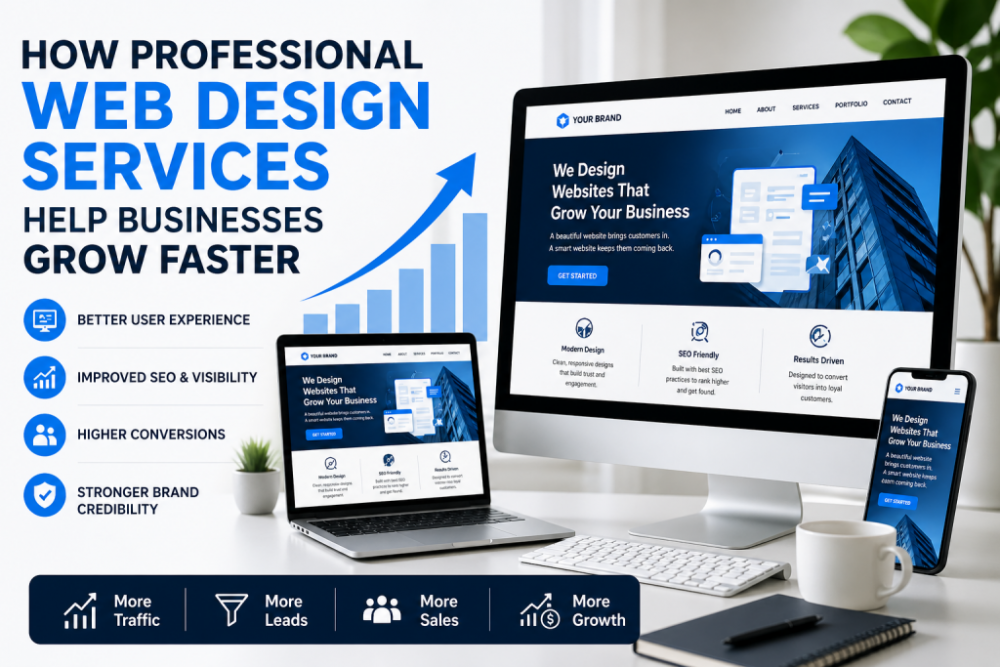
There was a time when having any website at all was enough to look credible. Just being online meant something. Those days are long gone.
Today your website is competing with thousands of others in your industry. And the difference between a business that grows online and one that just exists online often comes down to one thing. How the website is built and what it is built to do.
The Website Is Not a Brochure Anymore
A lot of business owners still think of their website the way they think of a printed brochure. You put your information on it, it looks nice, people read it. Done.
That is not how it works anymore. A website today is expected to do things. Guide a visitor from curiosity to contact. Answer questions before they are asked. Build trust without a single conversation happening. Load fast, work on a phone, and make the next step obvious.
When a website does all of that well, it is one of the hardest working parts of the business. When it does not, it is just a page sitting on the internet that nobody does anything with.
First Impressions Happen Before Anyone Reads Anything
This is the part most people genuinely do not appreciate. Research shows users form an opinion about a website in around 50 milliseconds. That is not enough time to read a headline. It is barely enough time to register that a page has loaded.
In that moment the brain is doing something very fast. It is asking whether this place looks legitimate. Whether it feels like a real business. Whether it is worth staying or better to go back to Google and try the next result.
That split second judgment comes entirely from the visual. The layout, the colors, the spacing, whether things feel clean or cluttered. None of it is conscious. It just happens. And if the impression is wrong, nothing else on the page gets a chance.
What Professional Design Actually Changes
Here is where the confusion usually starts. People hear professional web design and think it means making something look more attractive. That is part of it but it is not the point.
Navigation Nobody Has to Think About
Good navigation is invisible. A visitor lands on your site, finds what they need quickly, understands where they are, and knows what to do next without any effort. They do not notice the navigation at all because it just works.
Bad navigation is very visible. Pages that should be easy to find are buried. Menu labels are clever instead of clear. The thing the visitor actually came for is three clicks away. Every extra click is friction and friction costs you visitors who were genuinely interested.
A professional designer thinks about this from the very start. Not as an afterthought.
Speed Is a Design Decision
Most people think slow websites are a technical problem. They are actually a design problem more often than not. Heavy images that were never compressed. Fonts loaded from multiple servers. Page elements that do not need to be there. These are all design choices and they all add weight.
Google measures page speed and uses it as a ranking signal. Users notice it too even when they cannot name it. A page that takes four seconds to load loses a significant portion of visitors before they see anything. That is not a technical issue you fix after launch. It is something that gets built in from the beginning when the design is done properly.
Mobile Is Not a Version. It Is the Main Thing.
More than half of all web traffic now comes from phones. In some industries it is closer to 70 or 80 percent. If your website works well on a desktop but feels awkward to use on a phone, you are losing the majority of your visitors before they get anywhere near a decision.
Responsive design is the minimum. But real mobile design goes further. It thinks about how someone uses their thumb instead of a mouse. How content needs to be reorganized for a smaller screen. How forms need to be shorter and simpler. The most important information needs to come first because people scroll less on phones than on desktops.
Templates and website builders handle this inconsistently. Professional design handles it deliberately.
The Business Growth Part Is Not Abstract
People say good design helps businesses grow and it sounds vague. It is not vague at all when you look at what it actually affects.
Credibility is the first one. A Stanford study found that 75 percent of people judge a company’s credibility based on its website design. Not reviews. Not years in business. The design. For someone who does not know you yet, your website is the main signal of whether you are trustworthy.
Conversion rate is the second one. A conversion is when a visitor does the thing you want. Fills out a form, makes a purchase, books a call. The design of your pages directly affects how often this happens. Button placement, how trust signals are displayed, how much information appears before the call to action. All of this is measurable. A well designed page can convert at three or four times the rate of a poorly designed one with the same number of visitors coming to it.
That math matters. More conversions from the same traffic means more business without spending more on getting people to the site.
Why the Market You Are In Matters for Design
Web design is not the same everywhere and this catches businesses off guard sometimes.
A business serving customers in California is operating in one of the most digitally sophisticated markets in the world. The people landing on that website have seen exceptional digital products. Their bar for what feels credible and professional is genuinely high. A design that works fine somewhere less competitive can feel underwhelming here.
This is exactly why businesses in that market look for Web Design Services in California specifically. Not just because of geography but because a team working in that market understands what the local audience expects and what the competition looks like. That context shapes better decisions throughout the entire design process.
Getting It Right the First Time Is Worth More Than People Realize
Redesigning a website is expensive. It disrupts the business, takes time, and often means starting over on things that should have been right the first time. Businesses that invest properly in design upfront avoid that cost entirely.
A well built design system also grows with the business. New pages, new services, new products all fit into an existing framework without creating inconsistencies. A rushed design breaks down as content is added. And broken looking websites quietly damage credibility every day they stay live.
The businesses growing fastest online right now are not necessarily the ones spending the most on marketing. They are the ones whose websites are actually built to convert the traffic they already have.
That is the honest version of how design connects to growth. No mystery to it at all.
Author Bio
Dheeraj Sharma SEO specialist focused on helping businesses improve their online visibility and rankings. With expertise in Web Design Services in California, he creates strategies that drive traffic, increase conversions, and support long-term business growth.