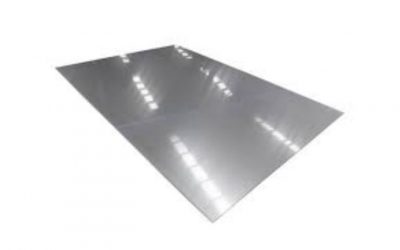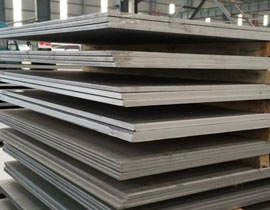
Inconel 625 plate is a nickel-based alloy used across some of the most demanding industrial environments in the world. It holds up well against corrosion, oxidation, and extreme temperatures, which is why it keeps showing up in critical applications across oil and gas, aerospace, marine, and chemical processing. If you’re sourcing this material for the first time or trying to understand whether it fits your project, this guide covers everything you need to know. Bhansali Enterprise, a trusted Inconel 625 Plate Manufacturer, supplies this material to industries across the globe with full traceability and mill certification.
What is Inconel 625 Plate?
Inconel 625 plate is a nickel-chromium-molybdenum alloy. This combination of three main elements gives it much higher strength and corrosion resistance than most common stainless steels can achieve in severe service conditions. Its value lies not only in its chemistry but also in its versatility. Manufacturers form the plate into components for pressure vessels, heat exchangers, and structural parts used in corrosive or high-temperature environments. Engineers widely use it in marine, chemical, and aerospace applications. The material comes in various thicknesses, and producers supply it as either hot-rolled or cold-rolled plate depending on the intended application
Chemical Composition of Inconel 625 Plate
The performance of Inconel 625 comes directly from its elemental composition. Nickel (Ni) is the base element, giving the alloy its base level corrosion resistance and ductility at both high and low temperatures. Chromium (Cr) adds surface protection against oxidising environments, particularly at high temperatures. Molybdenum (Mo) strengthens the matrix and resists pitting and crevice corrosion in chloride-rich environments. Niobium (Nb), combined with a small amount of tantalum, stabilises the alloy and raises its mechanical strength without needing heat treatment. Together, these elements make the plate suitable for conditions where most other alloys begin to fail.
Key Properties of Inconel 625 Plate
- Excellent corrosion and oxidation resistance: Performs in acidic, alkaline, and salt-rich environments where most metals degrade quickly
- High strength at elevated temperatures: Retains mechanical integrity up to around 980°C, making it suitable for high-heat industrial systems
- Resistance to pitting and crevice corrosion: Particularly useful in seawater and chloride-heavy environments where localised corrosion is a common failure mode
- Good weldability and fabrication properties allow it to be welded without preheating while retaining mechanical strength in the heat-affected zone.
- Resistance to stress corrosion cracking: Holds up in environments that would cause stress-related failure in lower-grade alloys, including those involving hydrogen sulphide or chlorides
- Fatigue strength: Maintains performance under cyclic loading conditions, which matters in components subject to pressure fluctuations or vibration
Advantages of Inconel 625 Plates
- Long service life in harsh conditions: Reduces replacement frequency and downtime compared to lower-grade alloys
- Low maintenance requirements: Once installed, it requires minimal intervention even in corrosive or thermally aggressive environments
- Performs well across a wide temperature range: Suitable for cryogenic applications as well as high-temperature systems, making it versatile across industries
- High reliability in critical applications: Consistent mechanical performance means fewer unexpected failures in mission-critical systems
- Accepted under international standards: Meets ASTM, ASME, and other major certifications required for pressure-rated and high-integrity applications
Industrial Applications of Inconel 625 Plates
- Oil and Gas Industry: Used in pipelines, wellhead components, offshore platforms, and subsea equipment where exposure to seawater, hydrogen sulphide, and high pressure are constant concerns
- Marine Industry: Suitable for ship propeller shafts, underwater fasteners, seawater handling systems, and offshore structural parts where chloride corrosion is unavoidable
- Aerospace Industry: Found in aircraft exhaust systems, thrust reverser components, turbine shrouds, and heat shields that operate under extreme thermal and mechanical stress
- Chemical Processing: Used in reactor vessels, heat exchangers, and pipe fittings that handle aggressive acids, alkalis, or organic solvents at elevated temperatures
- Power Generation: Applied in nuclear reactor components and thermal power plant systems where high-temperature performance and radiation resistance are required
- Flue Gas Desulphurisation: Used in scrubbers and ducting systems handling sulphur-rich flue gases, where standard stainless steel corrodes within a short time
Inconel 625 Plate vs Other Alloys
| Property | Inconel 625 | Stainless Steel (316L) | Inconel 718 | Hastelloy C-276 |
| Corrosion Resistance | Excellent | Moderate | Good | Excellent |
| High-Temperature Strength | High | Moderate | Very High | High |
| Pitting/Crevice Resistance | Excellent | Limited | Good | Excellent |
| Weldability | Good | Excellent | Moderate | Good |
| Cost | Moderate-High | Low | High | Higher |
| Best Suited For | Corrosion + heat combined | General use | High-stress structural | Aggressive chemical environments |
Stainless steel 316L is more affordable and fine for general use. It falls short in high-chloride or high-temperature environments. Inconel 718 provides higher tensile strength. It has less corrosion resistance than 625. Hastelloy C-276 is excellent in some chemical environments. It costs more and is harder to source.
Welding and Fabrication of Inconel 625 Plate
Inconel 625 plate is comparatively easy to weld when set against many other high‑performance alloys. It works well with TIG (GTAW), MIG (GMAW), and shielded metal arc welding (SMAW) techniques. ERNiCrMo-3 is the preferred filler metal, as its chemistry closely matches the base alloy and helps avoid dilution-related problems in the weld area. Preheating is generally not required, but controlling inter-pass temperature carefully is important to prevent excessive heat buildup. Depending on service conditions, post-weld heat treatment may or may not be necessary. The alloy retains its mechanical strength and corrosion resistance within the heat-affected zone, which is a major reason engineers widely use it in welded and fabricated assemblies.
How to Choose the Right Inconel 625 Plate
Start by assessing your application needs. Key parameters include working temperature, chemical or seawater exposure, and required pressure ratings. These factors determine the choice of plate thickness and surface finish. For high-temperature operation, hot-rolled plates generally perform better.
Cold-rolled plates are more suitable for precision assemblies and applications requiring tight dimensional tolerances.Check that the material complies with relevant industry standards. Examples include ASTM B443 for plate applications and ASME Section II for pressure vessel use.Verify mill test certificates and third-party inspection reports as part of standard practice.Choosing a reliable Inconel 625 Plate supplier is critical. The supplier should provide full documentation, traceability, and consistent quality across batches. Reliability matters more than price in critical applications.
Conclusion
Inconel 625 plate is a practical choice for industries that deal with corrosion, high temperatures, or both at once. Its combination of mechanical strength, chemical resistance, and fabrication flexibility means it fits a wide range of applications without requiring special handling or excessive maintenance. In harsh conditions where long-term reliability is crucial, this material is among the most dependable choices.
Bhansali Enterprise provides Inconel 625 plates with complete certification and consistent quality, supplying customers in the oil and gas, aerospace, marine, and process industries around the world.