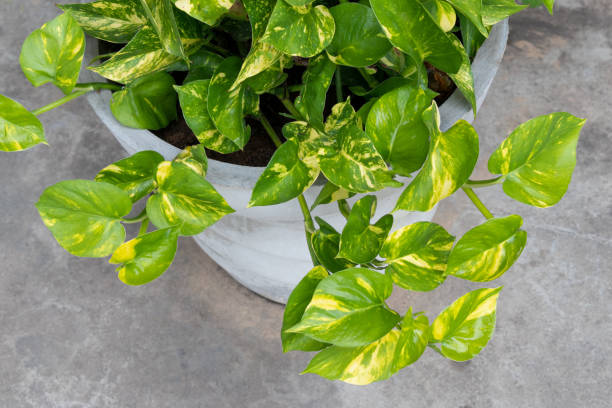
If you’ve spent any time around Indian homes, offices, or even hospital waiting rooms, you’ve almost certainly encountered it — trailing from a high shelf, growing in a glass bottle on a desk, or climbing a moss pole in a corner. No other houseplant has achieved quite the same level of quiet ubiquity across the country, and the reasons go well beyond superstition or trend-following. This plant earns its place through a combination of genuine practicality, cultural resonance, and a level of adaptability that most houseplants can’t match.
The money plant — known botanically as Epipremnum aureum — has become one of the most widely grown indoor plants in Asia, and its popularity in Indian homes specifically reflects something real about how well it fits into the rhythms of domestic life here.
The Practical Case for Growing It Indoors
Before the cultural significance, there’s a straightforward practical argument.
NASA’s Clean Air Study identified Epipremnum aureum as one of the more effective houseplants for filtering indoor air pollutants. The compounds it targets — formaldehyde, benzene, and xylene — are commonly present in homes due to furniture, synthetic fabrics, cleaning products, and building materials. In sealed, air-conditioned environments, where ventilation is limited, this filtering effect becomes particularly relevant.
Beyond air quality, the presence of any living greenery indoors has documented psychological benefits. Studies on biophilic design — the incorporation of natural elements into built environments — consistently show reductions in stress markers, improvements in concentration, and better mood outcomes in spaces that include plants. For home offices and study spaces, this translates into a measurable, if quiet, advantage.
The plant also contributes moisture to dry indoor air through transpiration, acting as a gentle natural humidifier — something especially noticeable in rooms where air conditioning runs continuously during summer months.
Indoor Benefits That Go Beyond Decoration
The money plant’s indoor benefits extend into several practical dimensions that are worth understanding:
Air filtering — As noted, it actively works on several common indoor pollutants, making it one of the more functional houseplants you can own.
Low light tolerance — Most flowering plants and many foliage plants need good natural light to thrive. This one handles genuinely dim conditions — offices without windows, interior rooms, north-facing spaces — far better than almost any other species.
Humidity contribution — Particularly useful in air-conditioned homes where indoor air becomes uncomfortably dry.
Rapid growth as visual feedback — The plant grows visibly and quickly when conditions are right, which provides an intuitive signal that your indoor environment is healthy and well-suited to plants generally.
Where to Place It for Best Results
The plant adapts to a wide range of conditions, but placement still matters for optimal growth and appearance.
Bright indirect light produces the fastest growth and the best leaf variegation — particularly important for the golden and marble queen varieties, whose yellow and white patterning fades in very low light conditions. A spot near a window that receives filtered sunlight is ideal.
In lower light conditions, the plant will still grow, but more slowly and with predominantly green leaves. This is perfectly acceptable for purely decorative purposes, though the variegated varieties lose some of their visual interest.
For those wanting to buy money plant online and start growing it at home, a well-established plant with visible root development will settle into a new environment more reliably than a freshly cut propagation, particularly for first-time growers who are still learning the plant’s rhythms.
Avoid placing it in direct harsh sunlight, which scorches the leaves, or in draughty spots near air conditioning vents, which dries out the foliage. Both conditions cause leaf browning that recovers slowly.
Growing in Water vs Soil — A Practical Comparison
Both methods work genuinely well, and the choice comes down to lifestyle and preference.
Water propagation is elegant and low-effort. A healthy cutting placed in a clean glass or bottle will develop roots within one to two weeks and can live indefinitely in water alone. Change the water every seven to ten days to prevent stagnation and add a small piece of charcoal to keep it clear. This method is ideal for people who tend to overwater soil-grown plants, for spaces where a pot isn’t practical, and as a purely visual element — the visible root system in glass has its own aesthetic appeal.
Soil growing produces more vigorous results over time. Plants in well-draining potting mix develop more robust root systems, produce larger leaves, and grow faster than their water-grown counterparts. Use a mix of garden soil, coarse sand, and compost, and water only when the top inch feels dry.
Timing and Tradition — When to Buy
The question of whether you should buy a money plant for yourself or only receive it as a gift is one of the more persistent pieces of folklore around this species. The practical answer is that the plant grows exactly the same regardless of how it arrived in your home — self-purchased plants thrive just as well as gifted ones.
Auspicious timing, according to various traditional beliefs, favours Thursday for bringing a new plant into the home, as this day is associated with Jupiter and prosperity. Whether or not you follow this, it’s a detail that reflects how deeply embedded this plant is in Indian domestic culture — few houseplants come with their own recommended day of the week.
Conclusion
The money plant has earned its popularity through genuine merit — adaptable enough for almost any indoor environment, useful in ways that go beyond decoration, and low-effort enough to fit into busy households without demanding constant attention. Whether grown in water on a windowsill or trained up a moss pole in a living room corner, it consistently delivers. For a first plant or a fortieth, it remains one of the most reliable choices available.