Introduction
Workplaces in 2025 don’t look like workplaces from 2005. The shift toward collaboration, flexible headcount, and hybrid work patterns has forced businesses to rethink how they divide and use physical space. Traditional plasterboard walls are permanent, expensive to modify, and daylight-blocking increasingly fails to serve the way companies actually operate. Glass sliding folding partitions answer this problem directly. They create division without permanence, maintain light flow across open floorplates, and allow businesses to reconfigure space in hours rather than weeks. For businesses evaluating their options, the Malrox glass sliding partitions range covers commercial-grade systems for offices, retail environments, and hospitality venues across India.
Understanding Glass Wall Partition Systems
What Are Glass Partition Systems?
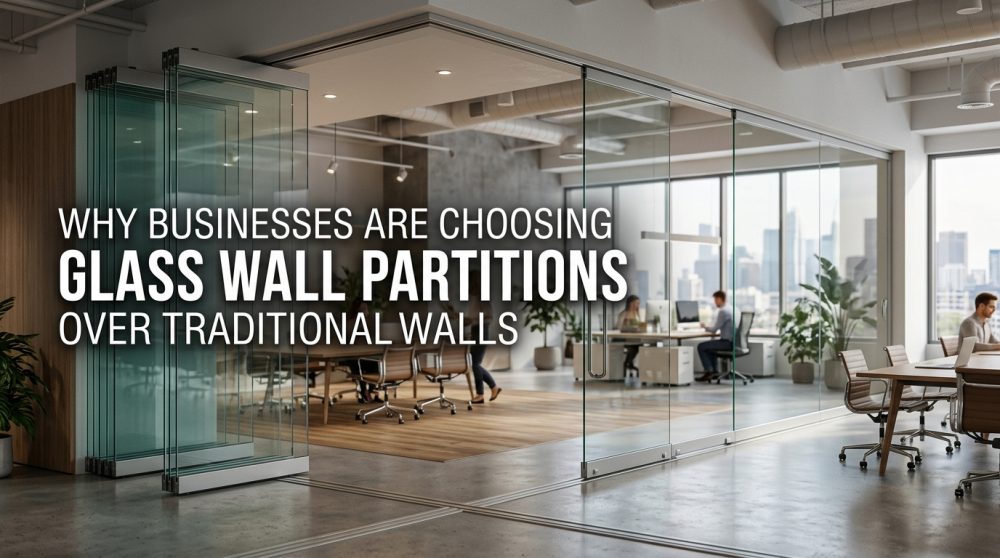
Glass partition systems are composed of modular, framed or frameless glass panels, which substitute solid walls and split interior space, while keeping visual contact between zones. Systems can be permanent single glass panels or completely operable fold, slide or stack away to one side to transform a separated area back to open plan in minutes.
Glazing options span clear, frosted, and acoustic-laminated glass. Frame materials cover aluminum, steel, and frameless edge-bonded systems. The configuration dictates acoustic performance, privacy level, and reconfiguration speed, and all of these parameters match real commercial requirements rather than forcing a compromise.
How They Differ from Traditional Walls
Traditional walls commit. Once built, moving them costs money, time, and disruption often requiring permits, trades, and weeks of fit-out works. They also block daylight, permanently define how much natural light each zone receives, and contribute nothing to spatial flexibility when the business model shifts.
Glass movable partitions reverse all of these constraints. They install without structural modification to the building, reconfigure without demolition, and carry daylight across their full height rather than absorbing it. A meeting room that seats 12 today reconfigures into two smaller breakout spaces tomorrow morning no contractor required.
Why Businesses Prefer Glass Wall Partitions Over Traditional Walls
Better Space Flexibility and Utilization
Floor space costs money whether the room it contains suits the day’s operational requirements or not. Movable glass wall systems let businesses respond to fluctuating headcount, project-based team configurations, and shifting space demand without committing to permanent construction. An operable glass partition system converts a large conference room into two training rooms in 20 minutes and back again for the afternoon town hall.
Scalability matters particularly in fast-growth environments. When headcount increases, the partition system relocates to a new configuration rather than triggering a full fit-out. That agility directly reduces the facilities budget burden of growth.
Improved Natural Light and Modern Design
Open-plan offices typically distribute daylight better than cellular layouts, but they sacrifice privacy and acoustic control. Commercial glass partition solutions capture both. Glazed panels carry daylight through the full floor depth while still providing visual separation between zones.
The design benefit compounds in client-facing spaces. A reception area or showroom divided with frameless folding glass wall partitions reads as contemporary and deliberate. Frosted or manifestation-patterned glass adds privacy selectively without eliminating the perception of space. Clients and visitors read the physical environment before they read the pitch deck and a light-filled, visually coherent space signals organizational competence.
Cost and Long-Term Efficiency Benefits
Building and removing traditional walls generates debris, requires multiple trades, and creates disruption that affects productivity for the duration of works. A glass partition installation completes in a fraction of the time with no demolition waste. The system also retains residual value the panels, frames, and hardware relocate to the next configuration or next premises rather than ending up in a skip.
Acoustic specification determines whether sliding glass partitions justify premium pricing over standard systems. Offices handling confidential client conversations, legal work, or sensitive HR discussions need acoustic-rated glazing that meets building regulations for speech privacy. Specifying this correctly at the outset costs less than retrofitting acoustic treatment to an underperforming installation.
Applications of Glass Partition Systems in Commercial Spaces
Offices and Corporate Spaces
Modern office partition systems allow open floorplates to be turned into conference rooms, focus zones and collaborative areas without blocking daylight or committing to permanent room arrangements. Law firms, financial services corporations and technology businesses often require moveable glass partitions to create flexible conference areas that may be adapted to the day’s plan.
Executive suite configurations use frameless or minimal-frame glazing to signal seniority while maintaining visual connection to the broader team floor. Private offices alongside open collaborative areas separated by acoustic-rated glass movable partitions achieve the privacy-collaboration balance that modern workplaces need.
Retail and Hospitality Environments
Retail environments that host events, presentations, or rotating displays benefit from folding glass wall partitions that allow the floor to convert between open-plan browsing and structured experience formats without permanent division, compromising the base store layout.
Hotels and conference centers use operable glass partitions to divide ballrooms and event spaces into smaller meeting room configurations. The system absorbs the acoustic load that hospitality events generate while permitting fast reconfiguration between different session formats across the same day. Glass wall panels partitions suppliers serving the hospitality sector stock acoustic-rated systems specifically sized for these applications. Malrox, alongside other established commercial glass partition solutions providers in India, covers the full range from standard office systems to hospitality-grade acoustic configurations.
Conclusion
Traditional walls served a different era of commercial real estate, one where floor plans stayed fixed for years and workplace flexibility wasn’t a design requirement. Glass partition systems serve the commercial reality of 2025: variable headcount, hybrid working patterns, client-facing environments where design signals competence, and facilities teams managing space cost against operational output. For businesses evaluating partition options or planning a fit-out, the Malrox glass sliding partitions range provides specification support, commercial system options, and installation expertise across India.