
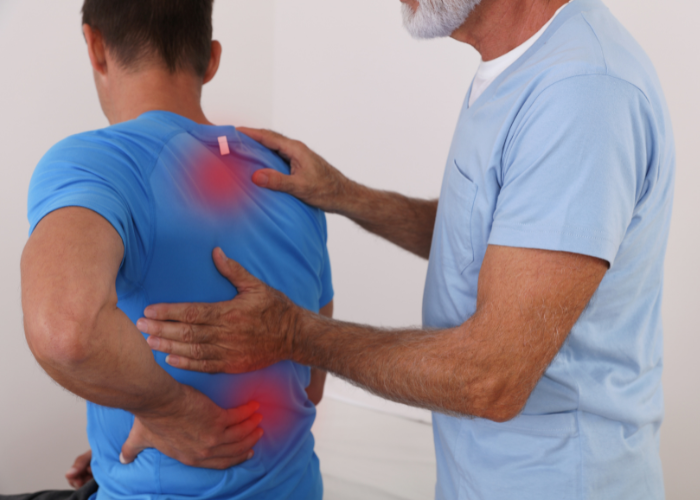
Chronic pain is one of the most common and misunderstood health issues of the modern world. It affects quality of life, productivity, and healthcare use in all age groups, and one in five US adults suffer from it. Nevertheless, despite its popularity, many approaches still address chronic pain as if it were simply an extension of acute pain. These methods treat it as a complication by trying to identify a source, eliminate or manage it, and expect the pain to resolve.
In reality, chronic pain is far more complex. Effective management strategies must recognize this complexity to deliver lasting relief. At iMotion Physical Therapy Fremont, clinicians approach chronic pain as a multidimensional clinical challenge. They combine expert physical therapy, evidence-based treatment methods, and a strong focus on patient education. This approach empowers individuals to take an active role in their recovery rather than remain passive recipients of care.
Understanding Chronic Pain: Why It Persists
There is a biological role of acute pain. The nervous system uses pain as an alarm signal to indicate tissue damage and justify protective action.Usually, when the tissue is healing, the pain signal subsides and will eventually disappear. Chronic pain differs at a more fundamental level: it persists beyond the projected healing process and continues even without further tissue damage because the chronic experience of pain has modified the nervous system.
Researchers call this process “central sensitization.” It reduces the pain threshold across the entire central nervous system, causing inputs that normally would not trigger pain to do so. The result is a real and disabling painful experience, often frustrating because it no longer directly links to tissue injury.
This knowledge is not just an academic understanding of this mechanism. It also has direct clinical consequences of the most effective management of chronic pain and why methods that explicitly aim at finding and treating a structural cause of pain typically provide partial remedies.
Efficient chronic pain management does not only focus on the sensitization of the nervous system but also on any underlying structural causes, employs movement and progressive exercise to re-tune the pain threshold and integrates patient education on the science of pain itself – since patients who know the reasons why their pain is persistent are much better placed to respond to the strategies that help to reduce their pain.
Physical Therapy as a Core Chronic Pain Management Strategy
Physical therapy is one of the most evidence-based and effective methods for dealing with chronic pain, and its applications extend far beyond the exercises and stretching that most patients associate with the field. At iMotion Physical Therapy Fremont, the chronic pain management process focuses on movement functioning, tissue condition, nervous system sensitivity, and behavioral patterns that sustain cycles of pain.
Expert physical therapists perform manual therapy, including joint mobilization, soft tissue work, and myofascial release, to correct structural restrictions that cause pain and limit movement. In most cases, these limitations do not cause chronic pain within a sensitized nervous system, but they contribute to the long-term stimulation persistent in central sensitization. Skilled manual treatment reduces these restrictions and plays a significant role in the overall management strategy.
Long-term management of chronic pain with the help of progressive therapeutic exercise is the new standard, and its action has several mechanisms at the same time. Physical activity around chronic pain can initially be counterintuitive – patients would be afraid that exercise will increase their pain.
The fact, with a lot of research backing it, is that graded, proper exercise gradually decreases central sensitization, develops that resilience of the tissue that lessens pain-producing input and breaks the avoidance/deconditioning loop that perpetuates pain chronicity. The therapists at iMotion facilitate this process by using their clinical expertise to manage the patient’s responses to pain and their patient education expertise to support the therapy during the difficult initial phases.
At iMotion, laser therapy uses specialized light to reduce tissue inflammation and support cell healing. It helps manage pain when combined with hands-on therapy and exercise. Laser therapy helps patients do their exercises to control pain and also offers another way to speed up pain relief for those with ongoing inflammation, nerve pain, or very sensitive tissues.
Physical Therapy in Los Gatos CA: Extending Expert Care Across the Bay Area
Chronic pain management does not stop at Fremont’s city limits. iMotion shows its professional approach by serving communities across the South Bay and East Bay. Its network of specialized facilities includes the clinic on National Avenue, offering physical therapy in Los Gatos, CA.
The Los Gatos clinic offers the Los Gatos patient and the communities surrounding it the same clinical standards and treatment capabilities that characterize the iMotion experience in any location. Proximity counts in the management of chronic pain – attendance at physical therapy sessions is possibly one of the most critical factors to predict positive outcomes, and a clinic that is physically convenient to a patient’s home or workplace eliminates one of the most frequent barriers to that convenience.
PT Before Surgery: Addressing Chronic Pain Proactively
PT before surgery is one of the most influential investments that can be offered to patients during the pre-surgery phase since the management of chronic pain, which involves surgical intervention, includes joint replacement, spinal surgery, or other surgery-related procedures.
Prehabilitation—physical therapy before surgery—targets muscle weakness, loss of movement patterns, and deconditioning that often occur before surgery. Patients entering surgery with improved strength, mobility, and neuromuscular performance recover faster afterward.They experience shorter rehabilitation periods and lower levels of post-surgical pain than patients entering the OR in a deconditioned state.
At iMotion Physical Therapy Fremont, PT pre-surgery programs customize care for each patient based on their upcoming procedure. For total knee replacement, the program focuses on strengthening the quadriceps and improving its range of motion. Spinal surgery preparation focuses on core stability, hip mobility, and postural awareness to protect the surgical site during early recovery. Preparation of shoulder surgery restores periscapular strength and joint awareness that hastens recovery of upper extremity functioning following surgery.
Patients with chronic pain who start physical therapy before surgery often benefit multiple times from this decision.
Building a Sustainable Chronic Pain Management Plan
Chronic pain does not have a one-treatment or specified appointment plan that will provide lasting relief. At iMotion Physical Therapy Fremont, pre-surgery programs tailor care to each patient’s upcoming procedure. For total knee replacement, the program targets quadriceps strength and enhances its range of motion.
iMotion Physical Therapy Fremont uses this long-term viewpoint as its basis for every chronic pain patient. Treatment plans are made to address the current issue. They also help patients develop physical and cognitive skills for independent use. Pain science education is included. Clinical intervention is extended between appointments through home exercises. There is a gradual return to activities that chronic pain has curtailed. The management plan focuses on long-term sustainability rather than short-term symptom relief. Physical therapy in Los Gatos CA and throughout the iMotion network offers this philosophy down to the communities most in need of it – the accessibility and consistency the long-term relief demands and the expertise of chronic pain management.