
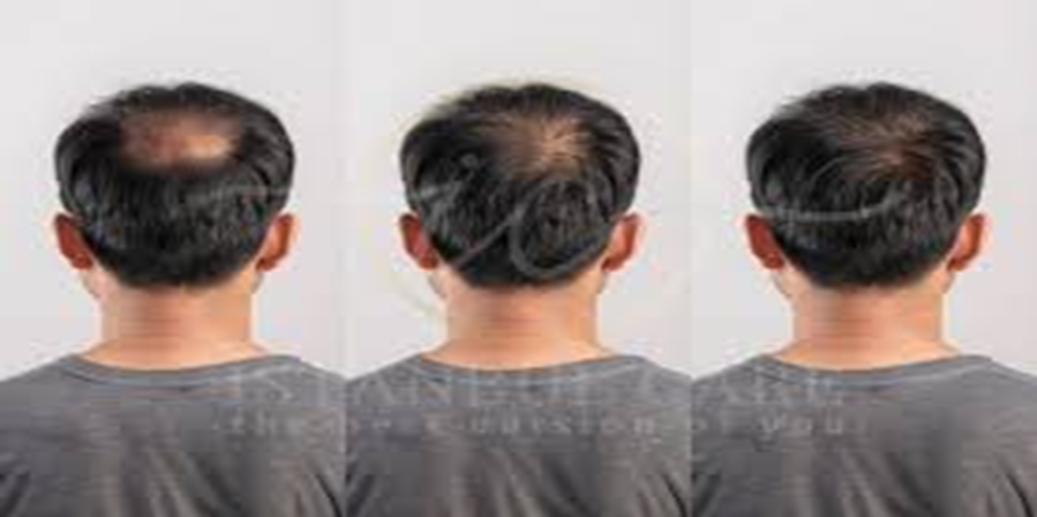
Thin hair is now longer something that men have just have to accept in order to age. In the modern age of technology, hair growth for men has become an endeavor that is fueled by scientific innovation and new habits that men can maintain in order for their scalps to be in the best possible position in order for new hair to grow.
Rather than seeking the quick fix, the trend has shifted to established techniques, practical time frames, and combination approaches. By understanding the underlying causes of balding and how different approaches can be effective, men can create a plan to successfully tackle the issue based on their requirements and the extent of their balding problem.
2. Why Hair Loss Happens in Men
For most men, thinning of the hair occurs progressively because of genetic, hormonal, and aging factors. The most common form of thinning in men is androgenetic alopecia, otherwise known as male pattern baldness, in which the hair follicles decrease in size and progressively begin to grow finer and shorter. The most common places for this to begin are at the sides and top of the head.
There may be other factors that contribute to the acceleration of shedding or the visibility of thinning. Stress, a bad diet, medications, health issues, hairstyles that pull tightly, and harsh chemicals used in hair products can all weaken the hair and contribute to breakage. Identifying your root cause is the first step towards determining the strategy for your hair growth for men.
3. Understanding the Hair Growth Cycle
To fully comprehend any treatment, it is helpful to have a basic knowledge of what is involved in the hair growth cycle. There are three phases that each follicle of hair grows through: growth phase (anagen stage), transitional phase (catagen stage), and rest/shed phase (telogen stage). Normal hair spends most of its time during the growth phase.
When there is interference due to hormones, genes, or inflammation, it results in a reduced growth phase and an increased resting phase. This results in thin hair growth or complete halt of hair growth. Helping hair growth in cases of male pattern baldness entails either extending the growth phase, reducing the resting phase, as well as maintaining a steady growth of new hair.
4. Topical Treatments That Support Regrowth
One of the most conventional methods of regrowth takes place with topical treatments that are applied directly to the scalp. The purpose of these is to enhance blood flow, support follicle function, and help extend the hair’s growth phase. For most topical treatments, consistency is very important; it usually takes several months with daily use before visible results appear.
Many men also turn to supportive topical formulas that include ingredients aimed at soothing the scalp and reducing build‑up. Light, leave‑in products, gentle serums, and non-greasy foams can keep the scalp environment clean and in balance. This becomes a basic building block of topical care in an all-rounded hair regrowth for men plan when combined with other approaches.
5. Oral Options and Internal Support
Because hair follicles receive nutrition from within, it is important that hair care and regrowth receive support from within as well. Some of these hair care methods involve hormonal factors associated with hair loss in males, which help slow down or halt hair loss.
In addition to medical choices, nutritional support can also help achieve the conditions required for stronger, healthier hair. A well-balanced hair growth dietary regime consisting of proteins, healthy fats, vitamins, and minerals can aid the hair growth process because these nutrients provide the hair with the building blocks it needs to get thicker and stronger. However, when the above measures do not work, nutritional supplements can help fill the gap.
6. In‑Clinic Procedures and High‑Tech Solutions
For men wanting more aggressive intervention, there are in‑clinic procedures that present further options. Certain other minimally invasive therapies stimulate the scalp to provoke a healing response and also can wake up lazy follicles. These may be done in several sessions over weeks, and the results are generally incremental over time.
More advanced techniques may involve surgical procedures where healthy hair follicles are transplanted from densely haired parts of the head to the sparsely haired areas. Carried out by skilled personnel, these techniques show good potential in reshaping the hairline to look more natural, hence can be an effective measure for men who seek physical renewal along with hair regrowth.
7. Lifestyle Habits That Boost Results
Even the best-approved hair treatment can go for naught if bad habits in our everyday lives prevail. Too much stress, insufficient sleep, smoking, and extreme starvation can all work against the process of growing healthy hair. Practices that can help the body overcome stress and, in turn, promote strong hair can be through exercising, meditation, and other hobbies.
Hair-friendly behaviors also include those related to food and how you care for your hair. A well-balanced diet consisting of lean proteins, healthy grains, vegetables and fruits, and minerals helps promote the nutritional needs of the hair. Concomitantly, good hair care practices that eschew the use of harsh chemicals and extreme hairstyles and temperatures also help to create less breakage while allowing the results of the hair regrowth for men to manifest effectively.
8. Building a Personalized Hair Regrowth Plan
There is no technique that will give desired results to everybody. This is why it is important to have a personalized plan. First of all, it is necessary to evaluate your own personal conditions. How is your hair loss condition? How fast is it progressing? What is your cost allowance? Answering these questions honestly will give you options.
Then, diversify by implementing multiple strategies rather than just one. In many cases, a good strategy for men would be to try a combination of treatments, dietary supplements, lifestyle changes, and in clinic solutions if needed. Regular follow-ups, whether with a professional or reviewing pictures and journal entries, will allow you to monitor which solutions work for you. In time, you can optimize the strategy to keep your hair regrowth for men plan effective.
9. Mindset, Confidence, and Long‑Term Expectations
Hair regrowth, after all, occurs incrementally, with progress measured in millimeters, not days. Having reasonable expectations can be the difference between discouragement and encouragement. The triumphs of most successful experiencers lie not in achieving very rich, youthful hair, but in recognizing noticeable change, good coverage, and robust, healthy hair.
At the same time, your confidence does not have to await your complete regrowth of your hair. Hair care, hairstyles that are tailored to your level of hair growth, as well as your personal grooming practices, can exert a profound impact upon your look. Noting that hair regrowth can be incorporated as part of your endeavor to adopt higher levels of health as well as confidence can often make even minute progress more significant.
10. Putting It All Together
Successful hair growth often requires much more than a silver bullet solution. Rather, it comes from understanding the root causes behind hair loss by implementing scientifically supported treatments on a consistent basis and supplementing those with sound daily habits. With this combined effort, it often proves possible to stabilize excessive shedding, boost density, and restore a fuller hair appearance.
Most importantly, the earlier you act, the better the outcome. The quicker one reacts to changes either at their hairline or crown, the more options they will have and the greater the possibility to preserve the existing hair. With a strategic, patient approach, hair regrowth for men becomes a realistic goal rather than an empty promise.