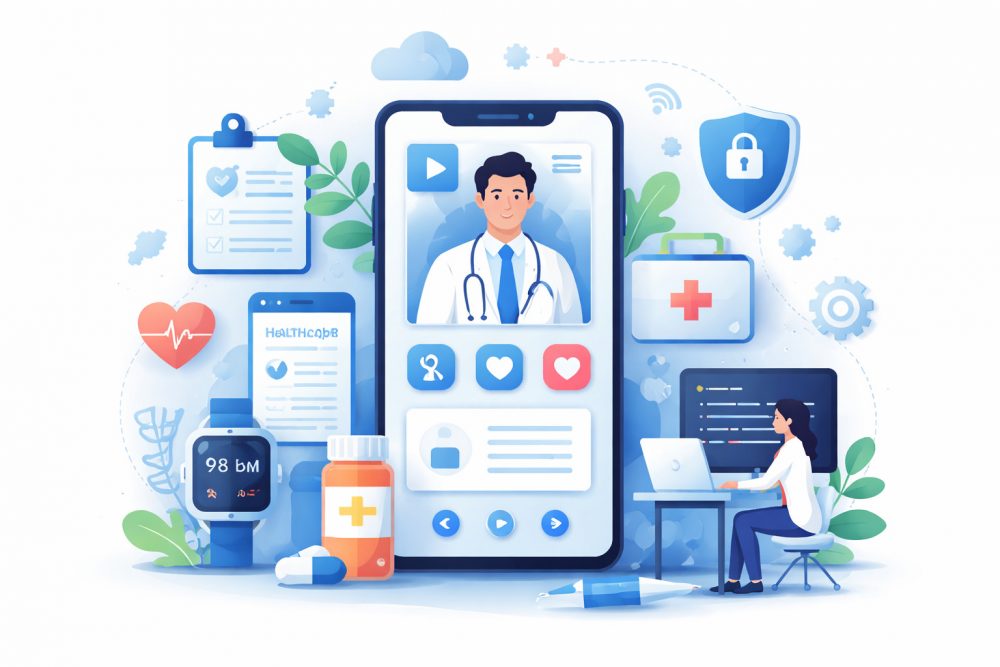
Health is not what you find in the hospital, at clinics or in long queues. Today, everything from scheduling appointments to monitoring your health vitals is being done on smartphones. That’s the purpose of health care mobile app development. If you’re a total newbie trying to wrap your head around this world, don’t worry – we’ll cover the basics in an easy-to-understand, practical manner.
What Is Healthcare Mobile App Development?
What Is Healthcare Mobile App Development? Healthcare app development refers to all the stages when developers build apps for medical, patient care, or health management industry. Such apps facilitate more efficient communication between physicians, patients, hospitals and even insurance companies.
These are online consultation apps, fitness tracking apps, medicine reminder apps, EHR system (Electronic Health Record) and mental health support app. The aim is straightforward: Access to healthcare will become easier, faster and more organized.
Why Healthcare Mobile Apps Are in High Demand
The need for healthcare apps has intensified, particularly following the popularity of telemedicine and remote patient monitoring. Nowadays, people want digital options when it comes to managing regular health care, rather than going to the clinic for every little thing.
Several start-ups and hospitals partner with healthcare app development company to develop secure and user-friendly compliant apps that provides seamless experience. These firms work to turn concepts in healthcare into working mobile apps designed for everyday use.
Types of Healthcare Mobile Apps
It should be noted as a novice, that healthcare apps are not all alike. Try to break them up into a couple of large groups:
Patient-Centric Apps
These apps cater to patients and enable them to schedule appointments, consult doctors online, monitor symptoms or get medication reminders.
Doctor & Hospital Apps
These apps have been created for medical professionals to manage patient records, schedules, prescriptions, and communicate with patients.
Fitness & Wellness Apps
These can be for tracking steps, heart rate, sleep patterns, diet and actual fitness goals.
Remote Monitoring Apps
These are used primarily to manage chronic disease, and monitor health data such as blood pressure or glucose levels that can be shared with doctors in real time.
Key Features of Healthcare Mobile Apps
A good healthcare app has to prioritize usability and security. Some common features include:
- User registration and secure login
- Appointment booking and notifications
- Video or chat-based consultations
- Health data tracking and reports
- Integration with wearable devices
- Secure payment gateways
Important to note for beginners is that healthcare apps are required by legal and ethical regulations to follow an intense set of data protection and privacy rules in order to protect patient information.
Technologies Used in Healthcare App Development
The healthcare apps are developed using the latest technologies for providing better performance and security. Popular tools include:
- Frontend: Flutter, React Native, Swift, Kotlin etc.
- Backend: Node. js, Python, Java
- Databases: MySQL, MongoDB, Firebase
- API: For wearables, POS and EHR integration
As such cloud technology also has a huge role to play, which makes storing and accessing data secure and available from any location.
Challenges Beginners Should Know About
- Healthcare app development: rewards and challenges The process of affordable app developers healthcare is rewarding, but fraught with the obstacles below:
- Data security and privacy compliance
- Complex medical regulations
- User trust and reliability
- Integration with existing healthcare systems
this is exactly why beginners need to lean on experienced developers or companies to help avoid the costly mistakes.
Future Scope of Healthcare Mobile App Development
The outlook for health care apps is bright. Apps are getting smarter and more personalized thanks to technologies such as AI, machine learning and IoT. From AI-driven diagnostic tools, to wearable-linked apps, this is a fast-growing sphere of innovation.
This presents massive opportunities for beginners – whether you’re interested in launching a startup, working as developer or investing in digital health solutions.
Conclusion
The development of Healthcare mobile app is changing the way medical services service delivered around the world. To start with, participants need to learn the ABC of things: from app types, features, technologies and challenges faced in embarking on this thrilling industry. Well-designed mobile applications will be essential to ensure patient care enhances as new technology becomes more pervasive in healthcare.