
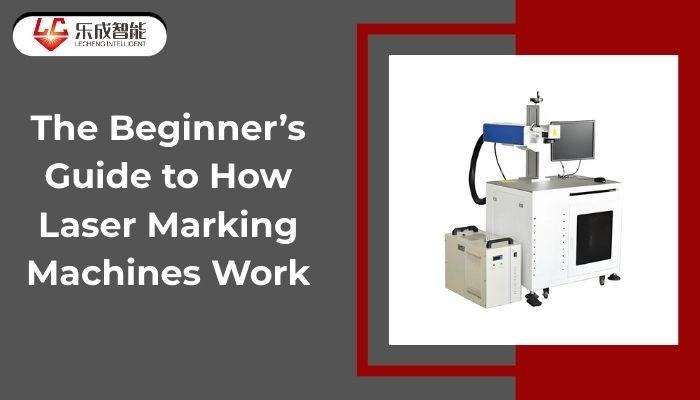
Laser marking machines are gaining significance in most industries, such as manufacturing, electronics, jewellery, medical tools, and gifts. They are fast, accurate, and produce permanent marks, so companies are increasingly using them.
You should be aware of how these machines work if you are new to laser marking, before purchasing or using one. It is good to know the basics so that you can use the correct machine, prevent errors, and achieve good outcomes each time.
This simple manual will tell how laser marking machines are utilized, its various varieties, key components, applications and safety measures in a simple manner so that laymen can understand without complexity.
What is a Laser Marking Machine?
A laser marking machine is a device that uses a focused laser beam to make permanent marks on a material. Such marks might consist of text, serial numbers, barcodes, QR codes, logos or decorative designs.
Laser marking vs. engraving vs. etching:
- Laser Marking: Modifies the appearance (colour or texture) of the surface without penetrating the material.
- Laser Engraving: Cuts away material in order to make deeper marks.
- Laser Etching: Heat is used to melt the surface to get shallow marks.
Laser marking is desirable in case of speed, clarity and minimum material damage.
Common industries using laser marking:
Laser marking machines have many beneficial features over conventional methods of marking:
- Long-term and accurate results with micron-level precision.
- Quick, non-contact process that does not wear tools.
- Less material waste due to controlled heating.
Benefits of Laser Marking
Laser marking machines offer several advantages over traditional marking methods:
- Permanent and precise results with micron-level accuracy
- Fast, non-contact process that avoids tool wear
- Reduced material damage due to controlled heat input
High versatility, working on:
- Metals
- Plastics
- Glass
- Ceramics
Think of laser marking like using a fine-tip pen made of light, accurate, controlled, and consistent every time.
How Laser Marking Machines Work
The basic principle of how a laser marking machine works is simple:
We use a peak-power laser beam to excite the material’s surface and observe visible changes. As the material absorbs the laser energy, it undergoes:
- Color change
- Surface oxidation
- Material removal
- Micro-structural modification
The effect depends directly on the laser type, its power, wavelength, and the material’s properties.
Types of Laser Marking Techniques
Different laser marking techniques are used depending on the material and desired outcome:
- Annealing: Changes surface color on metals without removing material—ideal for medical tools.
- Etching / Ablation: Removes a thin surface layer to create sharp, high-contrast marks.
- Carbonizing: Produces dark marks on organic materials like wood or leather.
- Foaming: Creates raised, light-colored marks on plastics through gas formation.
Key Components of a Laser Marking Machine
A standard laser marking system includes:
- Laser source:
- Fiber laser
- CO₂ laser
- UV laser
- Beam delivery system: Galvo scanners or CNC stages for precise movement
- Control software: Used to design, position, and control marking parameters
- Cooling and safety systems: Maintain temperature stability and operator protection
Different Types of Laser Marking Machines
Each type of laser marking machine is designed to mark certain materials in the most efficient way.
Fiber Laser Marking Machines
Fiber laser marking machines are popular in industries for their ease of operation, speed, and dependability. They work best on metal and hard plastic materials. Such machines are effective on stainless steel, aluminum, brass and tough plastics and leave visible marks that do not deteriorate as time goes by.
The reason why people opt to use fiber laser machines is that they are fast and thus it can be used to complete the work in a short period of time. They are also many years in service and do not require much maintenance to save time and money. Due to this, fiber laser marking machines are an excellent option to use on a daily basis at the industrial level, as well as in long term production activities.
CO₂ Laser Marking Machines
Marking machines using CO2 lasers are most effective with non-metal. Companies use fiber laser marking machines on wood, glass, leather, and acrylic. They often apply them to promotional items, signs, and packaging since the machines create precise marks without harming the material.
UV Laser Marking Machines
UV laser marking machines are designed on fragile and heat sensitive materials. They are ideal in electronics, medical plastics and small parts. UV lasers are able to create very accurate and clean cuts in a material since they generate very little heat and do not damage the material.
Comparison Table: Laser Marking Machine Types
| Feature | Fiber Laser | CO₂ Laser | UV Laser |
| Material Compatibility | Metals, plastics | Wood, glass, leather | Electronics, plastics |
| Speed | High | Medium | Medium |
| Precision | High | Medium | Very High |
| Maintenance | Low | Moderate | Moderate |
| Cost | Medium | Lower | Higher |
Step-by-Step Process of Laser Marking
Laser marking follows a clear and simple process that helps create accurate, clean, and repeatable marks on different materials.
Design creation
The first step is to create the design you want to mark. This may be a text, numbers, a logo or a mere picture. Laser marking software used to design the design gives you an opportunity to change the size and position before beginning.
Material preparation
Put the material in the machine and ensure that it is clamped firmly. The surface must be clean to allow a proper laser mark. The material may not come out as the mark may not come out properly.
Parameter setup:
Adjust the laser power, speed and focus. Such settings are determined by the material you are marking. Proper settings help achieve clear marks and avoid errors.
Execution of marking
Turn on the machine and allow the laser to do marking. The laser passes through the material and is applied on the surface to give the pattern.
Quality inspection
Check the result after marking. Ensure that the mark is clear, easy to read, and appears identical on the surface. Make adjustments to achieve improved results.
The steps assist in creating the same quality marks each time even in cases where many items are to be
Key Factors Affecting Laser Marking Quality
There are a few key factors affecting laser marking quality. The type of material used and the smoothness of its surface may influence the quality of the clarity of the mark. There are materials that are easily marked and those that require more caution.
To create precise marks, operators must set the laser’s power and speed correctly. Low-quality lenses or improper focus can result in blurred or distorted markings. The environment around is also important–dust, shaking or hot weather can influence outcome. Minor adaptations are beneficial in developing superior and more consistent marks.
Safety Considerations for Beginners
Before using a laser marking machine, it’s important to know the basic safety rules to protect yourself and others while working.
- Wear laser safety glasses at all times in order to safeguard your eyes.
- Wear machine covers and guards to prevent the touch of the laser.
- Ensure that the air is well ventilated or there is a fume extractor to get rid of the smoke and dust.
- Know the location of the emergency stop button and usage.
- It may seem simple, but basic training is necessary to operate the machine.
These steps will be useful in avoiding accidents and maintaining safe and smooth work.
Applications of Laser Marking Machines
Manufacturers use laser marking machines to imprint serial numbers, barcodes, and QR codes on products and components. These marks enable the companies to trace the products, quality control, and adhere to the regulations. Laser marks are not easily erased or lost, especially over time, since they are permanent.
Companies in the jewelry and gift sector employ laser marking to add names, logos, and basic designs. Personalization of products such as rings, pendants, and gifts is easily achievable without scratching or breaking them.
The electronics industry commonly uses laser marking on circuit boards and small components. Lasers are able to create very small and clear marks, this is important when handling delicate parts and they do not produce as much heat and leave the parts safe.
The medical profession uses laser marking on surgical tools and medical equipment. The marks remain visible despite cleaning and sterilizing processes and aid hospitals in identifying tools readily as well as comply with safety standards.
Conclusion
The use of laser marking machines has revolutionized the way industries seek to identify products, brand and trace them. They are useful in the present-day production facility by virtue of their precision, speed, and versatility.
By understanding the working principles, types, applications, and safety requirements of laser marking machines, beginners can make informed decisions and take their first steps toward professional use. At La Laser, we assist companies in choosing effective laser marking systems: among us, there are both new and advanced users.
FAQs
Q. What are the materials that laser marking machines can mark?
Laser marking machines have the capability of marking metals, plastics, glass, ceramics, wood, leather, and some coated materials.
Q. Is laser marking permanent?
Yes, laser marking leaves permanent marks that are resistant to wear, heat, and chemicals.
Q. Is there a difference between laser marking and laser engraving?
Laser marking changes the surface appearance, whereas engraving uses material removal in order to make deeper marks.
Q. Can laser marking machines be used by amateurs?
With proper training, shielding, and protective gear, operators can safely run laser marking machines.