Absolute knowledge of how the candidate molecules behave within the living organism over time is essential for pharmaceutical drug development. If a body breaks a drug down before it can get to the right places, its therapeutic properties will be of no benefit. New therapeutics are tracked using state-of-the-art technology to determine the exact absorption and distribution. These quantitative parameters enable scientific teams to tune-dial dosage forms, whilst working within strict patient-enlightened safety standards, during clinical trials. It is important to have to make clear timelines for drug exposure, which can be essential in obtaining regulatory approval for new drugs.
The Core Principles of Drug Disposition
Absorption, Distribution, Metabolism and Excretion (ADME) is being monitored by scientists to determine the behaviour of the drugs in the human body. A complete Pharmacokinetics Study (PK) gives quantitative data on the plasma levels of a compound and if it achieves therapeutic levels or not.
Preclinical tracking is characterised by important disposition phases:
- Absorption is the speed at which a drug is absorbed into the body.
- Maps the distribution in tissue/organ after entry into the bloodstream.
- Metabolism is the biochemical pathway(s) which transform the structures of drugs.
- Excretion measures the amount of drug residue removed from the body.
Early screening reduces rejected candidates before investing a lot of development resources on them.
Methodologies Underlying Exposure Tracking
To quantify concentrations of these drugs accurately, the analytical systems must be highly sensitive and should be able to detect trace amounts of the drug in serum. A validated PK assay is the combination of a liquid chromatography separation and tandem mass spectrometry detection method that can reliably detect small changes in concentration.
There are several key analytical performance controls, such as:
- Lower limit of Quantification (LLOQ) is the lowest concentration that a drug can be measured accurately.
- The detector response should be linear as a function of concentration (calibration linearity).
- The suppression of the signals by serum components is evaluated (matrix effect).
- Carryover testing helps to avoid contamination of high concentration samples with low concentration samples.
These are the parameters that assure the accuracy of the measured exposure under physiologic conditions.
Must Read: Comparing ELISA Assay Method vs. MSD Platform: When to Choose What?
Clinical Validation and Laboratory Excellence
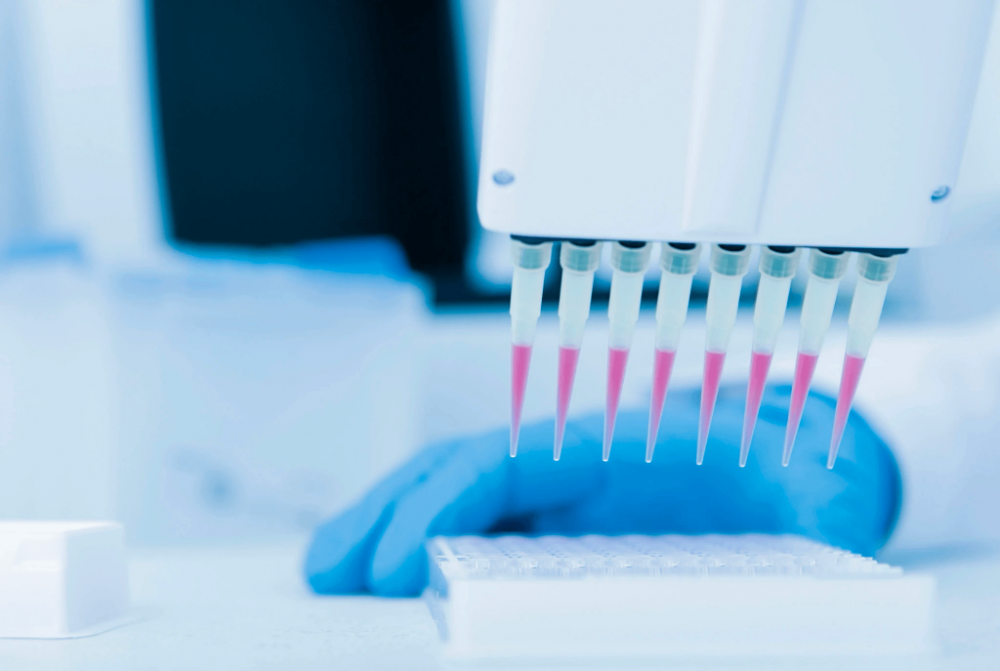
Starting a molecule on clinical trials requires a large amount of very standardised experimental infrastructure. The human serum is managed by Biopharma’s partner through a certified PK lab. These special facilities have strict quality assurance programs to ensure “no loss of sample integrity.”
Regulated analysis centers have infrastructure networks of sophisticated instruments to remove intra-study micro variations in manual processing.
- Reagents are evenly distributed by automated fluid workstations to make sure that all plates are known to receive the same treatment conditions.
- These all-in-one monitoring systems ensure that the storage conditions are maintained, preventing any biological samples from being damaged.
- Electronic database management platforms prevent unauthorized manipulation of the raw measurements by editing and deleting.
- Calibrator standards are used to gain detector’s accuracy prior to performing quantitative sample evaluation runs. Having these professional processing resources guarantees the security of important trial samples from unforeseen analytical failures.
This infrastructure guarantees sample integrity and ultra-regulated data sets.
Safety Profiling and Toxicological Insights
Safety margins also exist in the study of PK; they are based on a relationship between exposure and physiological effects. They are used to guide dosing in early Good Practices Laboratory assessment.
Some of the most important toxicological parameters are:
- MTD is the upper boundary of the level of safety in preclinical models.
- Steady state concentration is the concentration where repeated dosing is achieved and is equal.
- Bioaccumulation analysis identifies residue of drugs in tissues.
- Systemic clearance time is found from half-life estimation.
These are indicators that aid in the design of rational doses in the clinic without compromising safety.
Optimization and Critical Assay Parameters
Procedures that are generally used to characterise quantitatively can be tailored for the development of specialised biologics for the structural elucidation of macromolecules. A custom-developed PK assay allows researchers to monitor complex circulating MAb. These proteins have different binding properties, and their mode of binding is quite unique from that of small molecular drugs.
The parameters that enable large molecule tracking optimally should be considered during every stage of the validation process.
- Stability monitoring with reagents ensures critical detection antibodies perform throughout clinical trials.
- Specificity test: checking that the components of the assay do not react with blood proteins present in the body.
- Dilution linearity assessments ensure correct sample measurements are obtained when using buffer adjustments with concentrated samples.
- Target-receptor metrics evaluate the ability of therapeutics in circulation to bind to their respective target in serum matrices. Improving these analytical parameters establishes a solid base to accurately measure macromolecule activity in clinical trials.
Regulatory Compliance and Submission Data
FCEA’s seek all of the data and all the auditable trail necessary for regulatory submission, such as IND applications. Any studies must be conducted in Good Practices Laboratory conditions certified.
Normally, submission documentation will consist of:
- Precision, sensitivity and recovery data are provided in validation summaries.
- SOP’s: Providing full analytical procedures
- Stability performance records of the instruments of quality control logs (QC logs).
- Statistical analysis plans that specify how will be calculated PK parameters.
This comprehensive note-taking makes sure the notes are properly recorded, easily auditable, and straightforward to review by regulators.
Conclusion
Pharmacokinetic assessments deliver the key “exposure” aspects of a new therapeutic treatment that are essential to safely bring novel therapies from the laboratory to the clinic. Trials of both absorption and metabolic clearance of drugs as well as trials of the systemic stability of drugs informs pharmaceutical developers of optimal dosing standards for humans. These abusive test methods directly reflect the process through which development teams ensure maximum therapeutic benefit and minimise potential toxicities. Operations in these designed frames in certified facilities guarantees reliability of data and smooth adherence with health rules of the entire world. Finally, all exposure profiling has as its basis the advancement of safe, predictable precision treatment to global patient populations.