
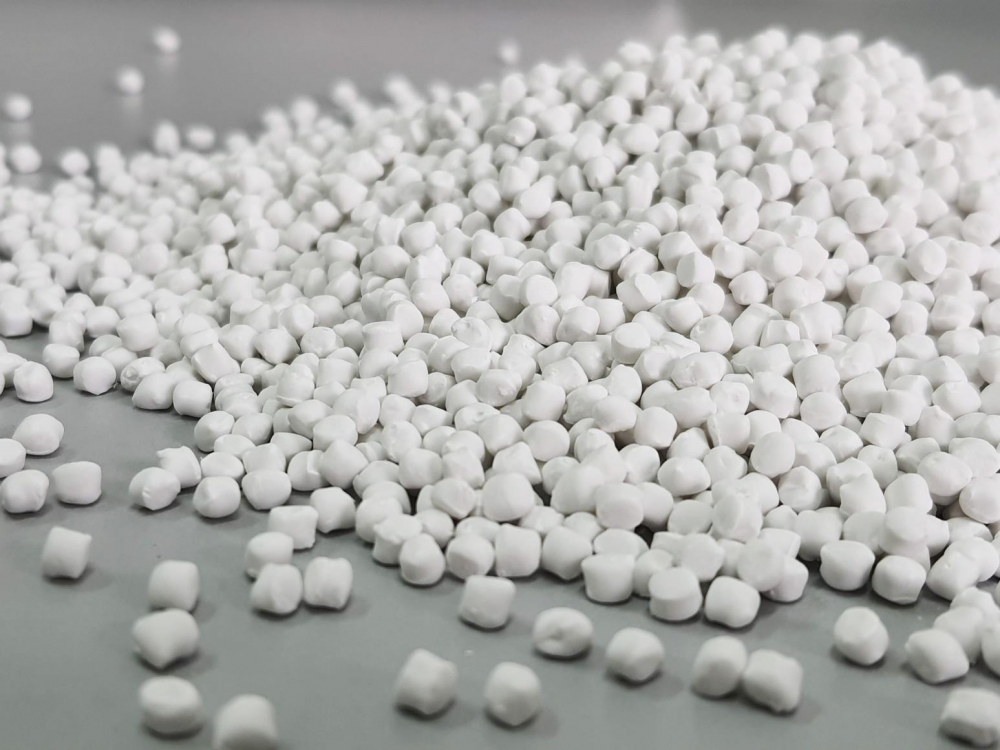
Global plastic usage requires a continuous and unbiased supply of quality material, color consistency, and usability strength. Across continents all over the world, manufacturers rely on suppliers that can deliver quantity. The contribution and importance of a masterbatch manufacturer in India can also be understood and recognized through these criteria. From producing for local requirements to meeting requirements for production lines all over the world, plastic production and processing have indeed come a long way.
- Large Scale Production Capacity: In India, the master batch manufacturing volume meets the overall consumption volume of polymers around the world. The plants possess a constantly increasing volume, enabling large supplies across various industries like packing, automotive, and agriculture. Such facilities can benefit overseas buyers by handling peaks in consumption without having to deal with multiple suppliers during this process.
- Material Consistency Across Markets: Process consistency plays a crucial role when raw materials are sourced from a different nation and yet must perform similarly for a given application. Indian makers concentrate on controlled dispersion, pigment loading levels, and carrier material consistency in essence. These conditions help polymer processing to be performed consistently within various moulding and extrusion operations. This plays a crucial role when considering an operation that must work within economic constraints and production time limits.
- Categorizing and Supporting Diverse Polymer Applications: Demand for polymers at a global level encompasses various applications, such as thin films and rigid components. There are masterbatch companies in India that provide materials for different melt flow rates, widths, and processing temperatures. This flexibility allows the industry to serve not only packaging, pipes, and textiles but also plastic components. Fewer sources can be beneficial since this reduces dependence on various regional suppliers for polymer materials.
- Alignment With International Quality Needs: Export-oriented production entails satisfying diversified expectations over the quality of the product. The Indian masterbatch units fall in line with international norms for testing the colour strength, dispersion, and performance stability of products. Regular testing at each production stage ensures predictability in processing behaviour. This attention to detail enables overseas buyers to fulfil their regulatory or customer requirements without seeking additional layers of validation, thereby gaining precious time when launching their respective products.
- Reliability of Supply Chain and Delivery on Time: Meeting global demand for polymers isn’t just about producing the material; it is also about mobilizing the material efficiently. Indian suppliers move within mature logistics networks that connect ports with warehouses and processing hubs. The predictable delivery schedule supports the uninterrupted manufacture of polymers abroad. Reliability in shipment cuts the risks of downtime, which is so crucial for large-volume processors who run a manufacturing line without stoppages.
- Cost Balance Without Performance Loss: In Indian masterbatch making, there exists process efficiency and trained technical manpower, which aid in keeping costs under control while maintaining functional performance. In the case of international buyers of polymers, such factors aid in keeping costs constantly stable, hence effectively providing competitive pricing with no compromise on material properties. Owing to such factors, the stability of costs becomes vital in the long term.
Conclusion
As polymer demand increases globally, robust backing of the material is necessary. From the viewpoint of quantity, regularity, applicability, and logistics power, a Compound manufacturer in India effectively contributes to a smooth flow of global polymer manufacturing activities. Unlike a particular geographical focus, polymer production receives backing from an Indian base, allowing better transition of the polymer from its raw state to processed end products.