
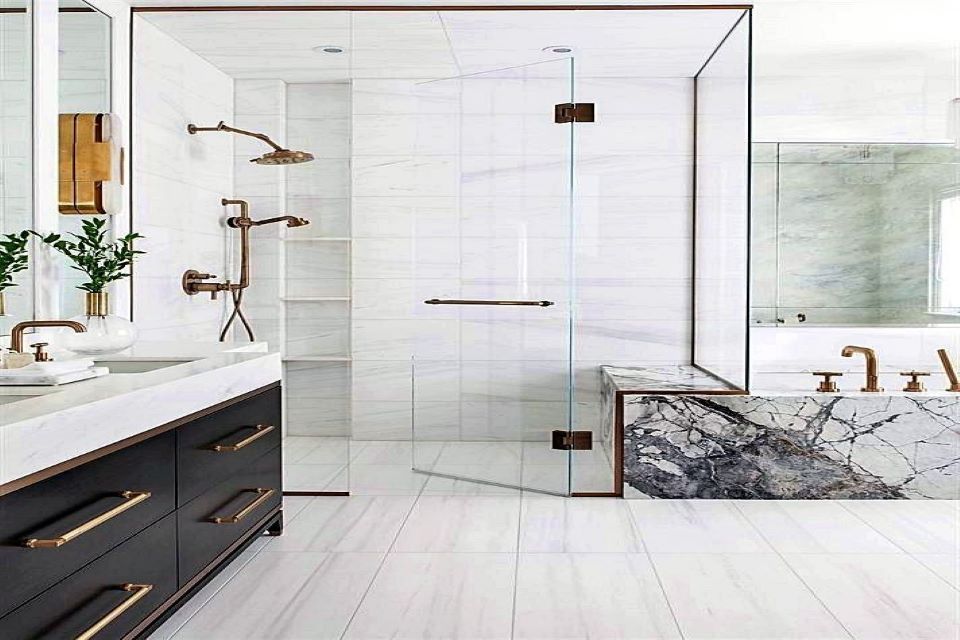
Sanitary ware plays a vital role in kitchens and washrooms. The sanitary wares fulfill our basic and daily needs. It would have been impossible to have high-quality toilets without sanitary wares. Sanitary wares are nothing but appliances used in kitchens and washrooms.
About the Sanitary ware Manufacturers
The Sanitary ware company India produces products that comply with international standards such as ISO 9001:2008. The best manufacturers concentrate on the quality parameters from raw material selection to each process to provide the best quality sanitary wares.
The raw materials used in the production process of sanitary wares are China clay, felspar, ball clay, quads, white prepared pigments, and more. The glaze is also prepared using high-quality raw materials to get pure snow-white colors with the best texture.
The Sanitary ware Company India uses equipment in the production processes like high-speed blenders, body slip storage which provides more plasticity naturally, and others.
The working molds are made using high-quality VOP material from raising mother molds which provide sharp edges and good finishing quality. Along with the traditional batch casting, they have battery casting lines that provide green casting. All working molds must be carefully prepared and inspected daily.
Have you ever wondered how manufacturers make sanitary wares and what processes they follow to produce them?
Manufacturers make sanitary wares from a mixture of clay and minerals such as granite, sand, white clay, ball clay, and others.
There are eight steps in the Sanitary ware Manufacturing Process,
1. Minerals mixed in Rotating Mills
Workers mix the minerals in rotating mills in carefully controlled amounts. At the initial stage, workers feed the rough raw materials into large rotating mills, where they add water and other minerals. As the mills turn, the particles grind into a fine powder, producing a watery liquid clay mixture.
2. Huge tanks
These huge tanks are bottomless and store the liquid clay mixture used to make the sanitary appliances. These machines are automatic, and they utilize high-pressure casting technology, which reduces the size of sanitary appliances.
3. Molding process
Workers close the pieces of the resin mold and hold them in place with hydraulic pressure. The top section fits into the rest of the mold, creating an airtight joint. Meanwhile, they prepare the ceramic liquid in vast tanks, drawing it from storage or larger tanks.
Workers send the mixture to the molding machine through a series of pipes and pump it into each mold. Computers control the entire molding process.
Inside the mold, the porous resin forces water out of the liquid clay, leaving behind the solid material. As this process proceeds, the layer formed on the mold surface increases in thickness.
Once the wall thickness reaches the required level, workers drain the excess liquid and recycle it to storage tanks. They then use high‑pressure air to remove water from the continuous layer during the hardening phase.
4. The casting process
The company controls the casting process with computers, entering different settings for each appliance design and size.
Workers open the casting machine and see the sanitary appliance. At this stage, it is soft, so they handle it with great care. They remove the appliance from the mold, and the system automatically washes and cleans the mold.
These techniques are used to manufacture ceramic sanitary appliances that are in demand all over the world.
5. Suction Action
The machine creates suction that holds products firmly in place. When it opens, the suction prevents them from falling and getting damaged. A worker can switch off the suction and remove the molded piece. After removal, the products feel soft like clay and remain wet.
6. Drying tunnel
Workers leave the products to air dry for about 10 hours, then stack them onto a trolley and feed them into a drying tunnel. The products spend 12 hours in the dryer at 65 degrees Centigrade, which removes moisture from the clay.
7. Processed in a pneumatic lift
Since the products are heavy, the company uses a pneumatic lift so workers can move them with minimal effort. Workers smooth the entire unit with a scouring pad to remove rough edges and create a perfectly smooth surface.
This process is done in a unique vacuum workstation. The vacuum at the top of the unit draws the dust away from the work surface. When the technician is satisfied that the product is perfect, he blows off all the excess dust removed by the vacuum.
8. Blazing stage
The products now move into the blazing stage, where workers spray them with a liquid glaze. This glaze eventually creates a glass-like structure that is extremely hard and smooth.
Glazing occurs in two stages – in the first stage, a robot applies glaze to the product, and the excess clay is drained. Then it moves to the next stage, where a spraying robot sprays the outside of the piece.
The spray robot is a self-learning robot. The products are sprayed on my hands, and the robot learns the movements of the human sprayers. These movements are consistently repeated for each unit to ensure consistent results.
The units are loaded into cone cars and made ready to move into a second firing tunnel. Each car will spend 12 hours in the kiln, where the units will reach a temperature of 1200 degrees centigrade to melt the glaze and rectify the ceramic body. The ceramic units come out of the other side of the tunnel with a gleaming appearance and a tough finish.
Thus, the sanitary wares are now ready to the marketplace and supplied as separate units or complete sets.
Conclusion
We hope you would have understood the manufacturing process of the Sanitary wares. It is also essential to know about the manufacturing process before using it. Thus, Sanitary ware Company India uses various things to provide us with the best quality products.