
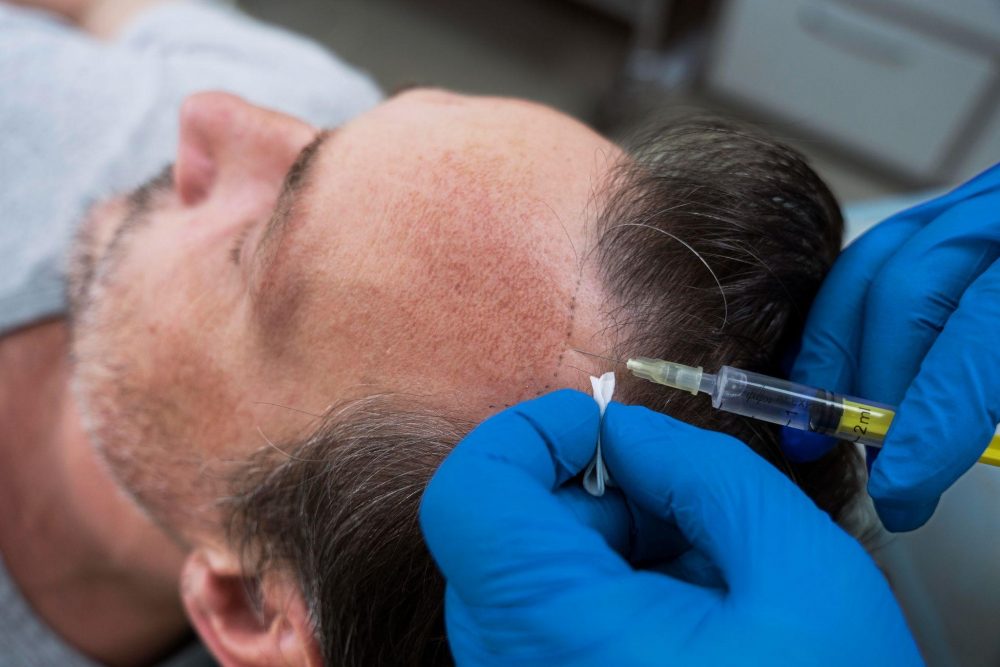
Hair loss can be a frustrating and confidence-damaging experience for many people. Hair transplant surgery has been the traditional option for restoring hair growth, but it comes with significant costs, risks, and downtime. Non-surgical hair transplant techniques, however, are emerging as a promising alternative that can provide effective results with fewer complications and less recovery time.
What is Non-Surgical Hair Transplant?
Non surgical hair transplant refers to a range of techniques that stimulate hair growth without surgery. These techniques are often less invasive than traditional hair transplant procedures and use advanced technology to deliver hair growth-promoting treatments to the scalp.
One of the most popular non-surgical hair transplant techniques is called Platelet-Rich Plasma (PRP) therapy. In this procedure, a patient’s blood is drawn, and the platelet-rich plasma is separated out. This platelet-rich plasma is then injected into the scalp to stimulate hair growth. The procedure is relatively painless, and patients can resume their normal activities immediately after the treatment.
Another non-surgical hair transplant technique is Low-Level Laser Therapy (LLLT). This treatment involves exposing the scalp to low-level laser light, which stimulates hair follicles to grow. LLLT is painless and does not have any significant side effects, making it a popular choice for those seeking non-surgical hair restoration.
The Future of Hair Restoration
Non-surgical hair restoration techniques are gaining in popularity, and it’s easy to see why. These procedures offer several advantages over traditional hair transplant surgery, including:
- Minimal discomfort and downtime: Non-surgical hair transplant procedures are less invasive than traditional surgery, which means patients experience less pain and can return to their regular activities more quickly.
- Lower cost: These hair restoration techniques are often more affordable than surgical hair transplant procedures.
- Fewer risks: Traditional hair transplant surgery carries a risk of infection, scarring, and other complications. These techniques are generally safer and have fewer risks.
- Natural-looking results: These techniques can deliver natural-looking results that are virtually indistinguishable from traditional hair transplant procedures.
As technology continues to advance, these hair restoration techniques are only going to get better. New treatments and procedures are emerging that promise even better results with fewer risks and less downtime.
In conclusion, these innovative hair restoration techniques are an exciting development in the field of hair restoration. They offer a less invasive, less costly, and less risky alternative to traditional hair transplant surgery. With continued research and development, these procedures are likely to become even more effective and widely available in the coming years.