Daily waste refers to garbage or waste that is generated in our homes as part of our daily activities. It includes organic waste such as vegetable peels, papers, and any other item that we only use once. With increased urbanization and consumerism economies, there has been an increase in this form of waste. Present-day lives emphasize convenience and speed, and therefore a sudden rise of disposable items is seen.
An individual generates 0.5 to 1 kg of daily waste; however, in dense environments, the amount can exceed this level due to easy access to packing. Unfortunately, the present refuse disposal management has failed to cope with the ever-increasing volume of waste generated.
Moreover, the trend towards convenience such as ordering takeout food and online shopping also results in a large amount of packaging waste. Such trends not only lead to the increased quantity of waste, but they also worsen environmental problems like land and water pollution, carbon dioxide emissions, and environmental degradation.
As a possible way out of this problem, it is important to consider reusable goods as a viable option. This will reduce the use of disposable items and thus prevent waste generation.
The Environmental Impact of Single-Use Products
The term single-use refers to items that have been created solely for one-time use followed by immediate disposal. Examples include plastic bags, plastic bottles, straws, plastic wraps around foods, and cutlery made from disposable material. Though convenient, such products come with an extremely high environmental toll. The majority of such items are produced from plastics and non-biodegradable materials that will take several centuries to decompose.
While a considerable share of the trash is dumped in landfills, much larger amounts of single-use waste escape landfills and enter bodies of water across the world, causing marine pollution. Such products have a severe impact on wildlife, whose members either mistake plastic for food or get tangled in such material.
The effects do not end with their disposal. The manufacture of these materials is very energy-intensive, using many resources such as fossil fuels, thereby increasing carbon emissions. On the other hand, sustainable manufacturing seeks to cut down resource use, minimize waste, and reduce emissions while producing, hence becoming an important strategy for dealing with the environmental effects of one-time products.
However, despite having such a short life cycle that lasts for just minutes, the harm done by single-use products is severe and thus makes them significant in global sustainability goals.
How Reusable Products Minimize Waste at the Source
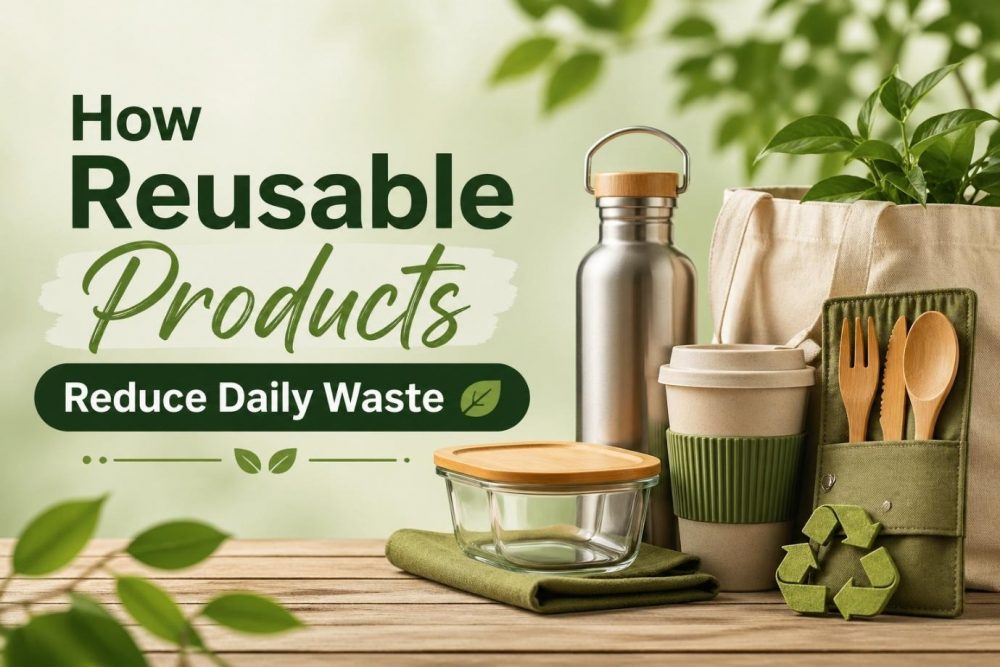
Reusable products are durable products that are designed to be used more than once, such as cloth bags, reusable bottles made from stainless steel, containers, and cutlery made of glass or metal. These products differ from other products since they are supposed to serve as an alternative to disposable products when conducting daily operations to solve the issue of generating waste from the start.
One of the best benefits of reusable products is that they help prevent waste even before it is generated. For instance, if one switches to a reusable bottle made from steel for drinking water, then there will be no need to use plastic bottles anymore. The same principle applies to reusable containers used to store food products.
In addition to reducing waste physically, such products also promote better practices when consuming them. The consumer becomes more aware of his/her purchase and how it affects the environment. In most cases, reusable products have a smaller carbon footprint than disposable products because of the longer product life cycle that justifies the manufacturing cost of such products.
Long-Term Benefits and Lifestyle Shifts Toward Sustainability
The adoption of reusable products brings many advantages in terms of savings and the development of environmentally friendly attitudes in the long run. Despite being initially more expensive than disposable goods, the use of reusable products helps save money because one does not have to purchase them repeatedly, which creates additional expenses. The saving of resources is also accompanied by a change in the attitude of consumers, who become more aware about their actions and impacts.
Moreover, reusable products can be an incentive to make others follow suit. One may influence family members, friends, and other people and encourage them to choose reusable products rather than disposable ones. By following these recommendations, one will contribute to creating a different attitude towards environment preservation in society as a whole. Besides, the choice of reusable products can help support sustainable companies.
An environmental standpoint implies that using reusables on a regular basis greatly lessens the size of the ecological footprint left by a person due to reduced waste production and resource conservation. This is highly compatible with world sustainability goals such as combating climate change and pollution.
The shift towards leading a sustainable life does not need to be dramatic; it begins with making small but impactful changes in one’s daily routine and consistently implementing them.
Conclusion
Waste production increases every day because of the urbanization and consumerism trends that rely on the use of disposable products such as plastics and packaging materials that cause environmental degradation, destruction of ecosystems, pollution, and microplastics. The use of reusable products, for example, reusable shopping bags, metal water bottles, and reusable boxes, helps minimize waste production by replacing disposable items. Even though reusable products cost more than disposable ones, using them saves money in the long run. Using reusable products raises awareness of environmental issues and helps minimize one’s carbon footprint.