
A strong online presence is no longer built by publishing pages and hoping they perform. Search engines have come to the point where they evaluate a site in the same way potential users do, as to how reliable, helpful, and useful it feels with every interaction. Every click, scroll, and repeat visit sends signals that influence how a brand is ranked in search results.
Google’s ranking systems work like a continuously learning evaluation engine. They do more than just read text on a page. They watch the behavior of the page in the real world. Understanding these signals explains why certain websites continue to develop while others fade, even when they offer comparable information.
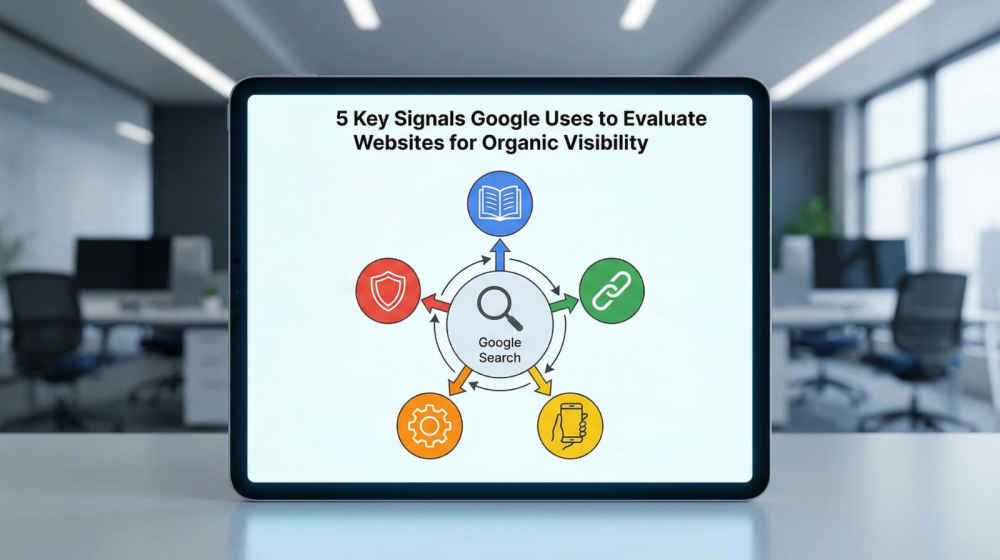
The five signs listed below have a big influence on Google’s assessment of whether a website deserves a sustained search presence.
1. Website Authority: The Trust Factor Behind Rankings
A website is not evaluated in isolation. The way the rest of the internet reacts to it serves as a measure. Links, brand mentions, and interaction trends are seen by Google as indicators of a website’s legitimacy in its industry.
When authoritative sources refer to a website, Google interprets that as a vote of confidence. These signals shape what is known as website authority, which directly influences how easily pages can rank.
Authority is built through:
- Links from respected, relevant websites
- Mentions across industry platforms and publications
- Consistent brand references across the web
- Engagement patterns that show real users value the content
Search engines do not reward aggressive link-building. They reward recognition. When a website becomes part of its industry’s digital conversation, its pages gain ranking leverage that cannot be artificially replicated.
2. Content Quality: The Difference Between Noise and Value
Not all content is treated equally. Google’s systems are trained to detect whether a page genuinely helps users or merely exists to occupy space.
True content strategies are not defined by word count or keyword placement. It is determined by how clearly a page solves a problem, answers a question, or delivers meaningful insight.
High-performing content usually demonstrates:
- Clear structure and easy readability
- Accurate, current, and specific information
- Natural language that mirrors how people think and search
- Depth that reflects real expertise
Over time, pages that skim issues without providing clarification tend to lose momentum. On the other hand, Content that regularly satisfies readers, develops organic exposure not only because of what it says, but also because of how users react to it.
3. Search Intent Alignment: When Relevance Becomes a Ranking Signal
Google’s systems are designed to understand why someone searches, not just what they type. This makes search intent optimization one of the most influential ranking factors today.
A search for “CRM software” may reflect research, comparison, or purchase intent. If a page fails to match that purpose, it will struggle to perform, even if it is well written.
Search intent is evaluated through:
- Whether users stay on the page or return to search?
- How often does a page satisfy the full query?
- Engagement with related content on the site.
- Navigation behavior after the first click.
Pages that align closely with intent create smoother user journeys. That consistency tells Google the result was useful, which improves long-term ranking stability.
4. User Experience Signals: How Visitors Validate Your Site
Search engines monitor how people behave after clicking on a result. These interactions quietly influence how pages are positioned in search results.
Key experience indicators include:
- Time spent on a page
- Bounce behavior and return visits
- Ease of navigation
- Mobile and loading performance
A well-designed experience signals that a website is built for humans, not algorithms. When visitors can find what they need without friction, Google reads that behavior as a quality endorsement. This is why design, speed, and structure now play a direct role in organic visibility solutions.
5. Technical Reliability: The Foundation Search Engines Depend On
Even the best content cannot perform if the underlying site is unstable. Google expects websites to be technically sound, accessible, and secure.
Strong technical health includes:
- Fast page loading across devices
- Secure HTTPS connections
- Clean, crawlable site architecture
- Proper indexing and error handling
These behind-the-scenes elements ensure that Google can discover, understand, and trust the content. When technical weaknesses exist, even authoritative pages may struggle to compete.
How Do These Signals Work Together?
Each of these signals strengthens the others.
- High-quality content attracts links.
- Links increase authority.
- Authority improves ranking potential.
- Better rankings bring more visitors.
- Visitor behavior then reinforces credibility.
Modern Google ranking signals prefer ecosystems over isolated pages because of this feedback loop. Websites that expand organically do so because every aspect of their digital presence works in tandem.
When this alignment is in place, SEO visibility improves naturally. Not through manipulation, but through consistent value creation.
Conclusion
In the end, creating a digital foundation that gradually gains trust is more important than ranking for a few keywords. Search engines reward websites that make investments in relevance, experience, and reputation because they build momentum. A strong web presence fosters confidence online. It shows that a website is aware of its users, values their time, and offers clarity when others make noise. Because of this, current search performance is more about matching users’ expectations with what they really get than it is with taking shortcuts.