
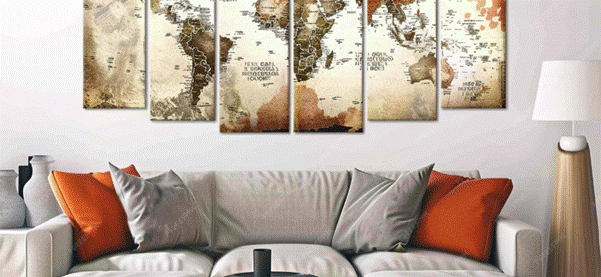
When you are at the point of renting a flat, it arises with unwritten rules that most tenants know deep down. For starters, these can involve matters like touching the walls and then paying for it afterwards. On the other hand, those canvas prints sit right at the center of that tension.
No less, it’s how I felt when I looked at the gallery of my African American Canvas Wall Art. In fact, they felt and appeared quite incredible. They change how a room feels within minutes of going up, but the obvious solution of hammering a nail in carries consequences that can eat into a deposit fast. The good news is that proper display does not require a single hole. These ten methods hold canvas prints securely, look genuinely finished and leave walls exactly as they were found.
Strips, Ledges and the Nail-Free Approach
Adhesive hanging strips remain the most reliable starting point for damage-free canvas display.
For one thing, they bond to both the timber frame and the painted surface of the wall firmly. At the same time, they hold their rated weight without the slightest slip. Then, they just release in a clean manner as the removal tab is stretched slowly towards the downside.
However, that one particular mistake people consistently make is buying strips without checking the actual frame weight first. Matching the two figures before purchase prevents the most common failure with this method.
Picture ledges take a different approach that pays back over time. A single installation creates a permanent display surface that never touches another canvas frame directly. Prints rest upright on the shelf and change positions without any additional wall involvement. Staggered ledges at varying heights create layered gallery arrangements that carry far more visual interest than a single centered piece. For anyone who rearranges their space frequently, ledges remove the decision-making entirely.
Leaning, Propping and Letting Prints Breathe
Large canvas prints leaned against a baseboard stopped reading as an unfinished decision several years ago. In living rooms particularly, a substantial piece resting against the wall at floor level adds warmth and a sense of ease that formally hung art does not always produce. There is no wall contact, no weight limit to check, no commitment to a fixed position. Moving the piece to a different wall takes ten seconds.
Removable adhesive hooks serve the smaller end of the canvas range well. Prints already fitted with hanging wire or D-ring hardware attach directly and the hooks release from smooth painted surfaces without residue when removed at the correct angle. The method loses reliability on textured walls, so smooth, clean paint finishes produce the best results. Canvas wall art buyers investing in detailed, larger-format pieces may find other methods in this list better suited to heavier frames, but for lighter prints the removable hook is genuinely hard to beat for simplicity.
Easels and Tension Rods for Flexible Rooms
A floor-standing decorative easel does something most wall-based methods cannot: it makes the canvas a moveable room feature rather than a fixed element. Placement changes in under a minute. The piece can shift from one corner to another depending on natural light, furniture arrangement or simple preference without any tools involved. Tabletop easels bring the same flexibility to smaller prints on shelves, sideboards or mantlepieces.
Tension rods fill a gap that most people overlook when thinking about display options. Narrow hallways, bathroom alcoves, recessed spaces between two facing walls all work with this approach. The rod installs between parallel surfaces through outward pressure alone with no adhesive, no wall penetration, nothing left behind on removal. Canvas prints hang from the rod on wire or cord and the arrangement adjusts freely. It is one of the few methods that works particularly well in tight spaces where other options simply do not fit.
Tape, Suction and Surface-Specific Solutions
Double-sided foam mounting tape bonds the back of the canvas frame directly to the wall and sits the piece completely flush with no visible gap at the edges. Lighter prints on smooth, clean walls get the best results with this method.
Most people wipe the wall down as an afterthought or simply skip it entirely. Yet, then wonder why the tape gives up after a week. Dust and grease sitting on the surface break the bond before it ever gets a proper chance to set. When removal day comes, the worst thing to do is yank it. Work at it slowly, keep the tension low and the wall underneath stays clean.
Tiled bathrooms, polished porcelain panels, glass feature walls all accept suction cup hooks cleanly because the grip mechanism involves no adhesive at all and releases without any residue. Weight capacity runs lower than strip products, which makes this method suited to smaller canvas sizes. Cleaning the wall contact surface before application is worth doing properly rather than quickly, since surface dust is the most common reason suction hooks lose their hold ahead of schedule.
Magnetic Systems and Over-the-Door Techniques
Magnetic mounting systems represent a serious investment for buyers who display and rearrange canvas prints regularly across seasons. A single wall-fixed track is the only point of permanent wall contact. After that, every individual piece attaches and detaches magnetically with no additional wall involvement per canvas. An entire gallery wall rearranges completely in minutes. For collectors of canvas wall art building curated rotating displays at home, this system handles frequent changes better than any other method on this list.
Over-the-door solutions complete the range by covering situations where no wall surface is available at all. Hooks designed for door frames hold canvas prints without touching surrounding walls. Furniture-leaning techniques, propping pieces against the back of a bookcase or the side of a wardrobe, extend the same principle further. Bedrooms, compact home offices, box rooms with almost no spare wall space all benefit from these approaches. Nothing is drilled. Nothing is adhered to a wall. The setup reverses in under two minutes.
Conclusion
Damaged walls are not an unavoidable side effect of displaying canvas prints well. Every method above holds prints properly, looks finished when done correctly and leaves surfaces completely undamaged. Now, if you just work through those three questions. along with the ideal solution, the answer after it gets to the point for almost any living situation.