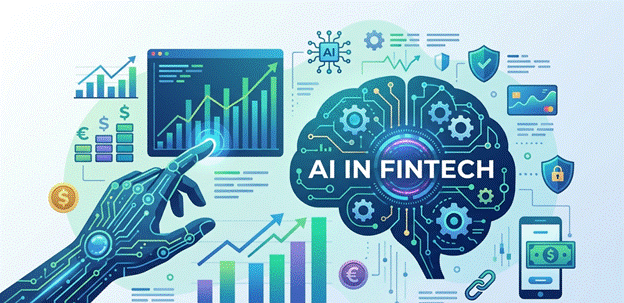
Artificial Intelligence in FinTech, this must be sounding complicated and more technical. But if you strip away the jargon, what top financial leaders are doing with AI is actually pretty simple: they are using it to make smarter decisions, save time, reduce risk, and give customers a better experience.
Are you looking at how AI is being used in FinTech? Don’t worry, you have landed on the right page! In this blog, we will explain why fintech companies adopted AI in their financial services and what the outcomes have been. Let’s delve!
Stepping Small, Instead of Big
Leaders understand that the market cannot be captured by integrating massive amounts of data initially; rather, they take small steps to build. They start by focusing on areas that need to be filled early.
For example, a bank might begin by using AI to detect unusual transactions, such as when your card is suddenly used in another country. So, once that feature works well, they expand AI into other areas, such as customer support or loan approvals.
Making Customer Experience Smoother
Imagine days when users feel restless due to server issues with bank staff; they even have to wait for days or weeks to resolve that query. But now, modern banks and financial institutions have integrated AI chatbots that can handle multiple clients’ queries simultaneously, 24/7/365.
But the leaders aren’t just adding for the sake of it; they are making them smarter over time. These systems learn from past interactions, so they get better at understanding what customers actually mean, not just what they type.
Using Data for Smart Decisions
Have you ever wondered what banking services actually do with your data? How do they handle them? As banking runs on a lot of your financial data, it includes how much you spend on property and homes, how much you invest in the stock market, and more. They keep your data safe and analyse it to predict future investments you must make.
It does not end with predicting your expenses; it also catches early signs of fraud that might affect your entire savings. With AI for Fraud Detection in banking, users can protect their money before it shows a “Zero balance”.
Automating the Boring Stuff
Earlier, around 50% of staff and employees were more drawn to boring, repetitive tasks. Like processing documents, verifying identities, or checking compliance rules.
By witnessing all these, they bring AI-powered financial analytics, which handle these routine tasks. This doesn’t just save time; it frees employees to focus on more important or productive tasks, such as helping customers and making strategic decisions.
Keeping Risk Under Control
Risk is a big deal in finance. One wrong move can cost millions. AI in Financial Services helps leaders manage this by constantly monitoring transactions and behaviour in real time.
It can detect suspicious activity earlier than traditional systems. But this doesn’t mean humans rely entirely on AI judgment; humans still guide it properly, especially in high-stakes situations.
Investing In People, Not Just Technology
People are often misguided; they think of AI just as a tool. But instead, FinTech AI solutions are for people. Top leaders are training their teams to understand and work with AI. They are hiring talent, upskilling employees, and creating a culture where people aren’t afraid of technology but excited to use it.
Overall, we know that at the end of the day, AI is just a tool. People are the ones who make it useful.
Final Thoughts
AI-Driven Financial Technology utilises artificial intelligence, machine learning, and predictive analytics to automate, optimise, and personalise financial services. Overall, machine learning in banking enables institutions to enhance security, personalise customer experiences, and streamline operations through AI-driven analytics.