Introduction
Healthcare systems aren’t short on data. If anything, they’re overwhelmed by it.
Patient records, appointment history, lab results, insurance details—it’s all there, just not always in one place. And that’s been a long-standing problem. Information lives in different systems, teams work in silos, and getting a complete picture of a patient often takes more time than it should.
That’s part of the reason many organizations are starting to look at Salesforce’s Health Cloud more seriously.
It’s not just another tool. For a lot of teams, it’s becoming the system that connects everything else.
The Shift From Systems to Patient-Centric Care
For years, most healthcare platforms were built around departments—billing, clinical, administration. Each one had its own workflow, its own data, its own priorities.
But patients don’t experience healthcare in silos.
They expect continuity. They expect providers to already know their history. And increasingly, they expect communication to feel as smooth as it does in other industries.
That shift—from system-focused to patient-focused—is where Health Cloud starts to make sense.
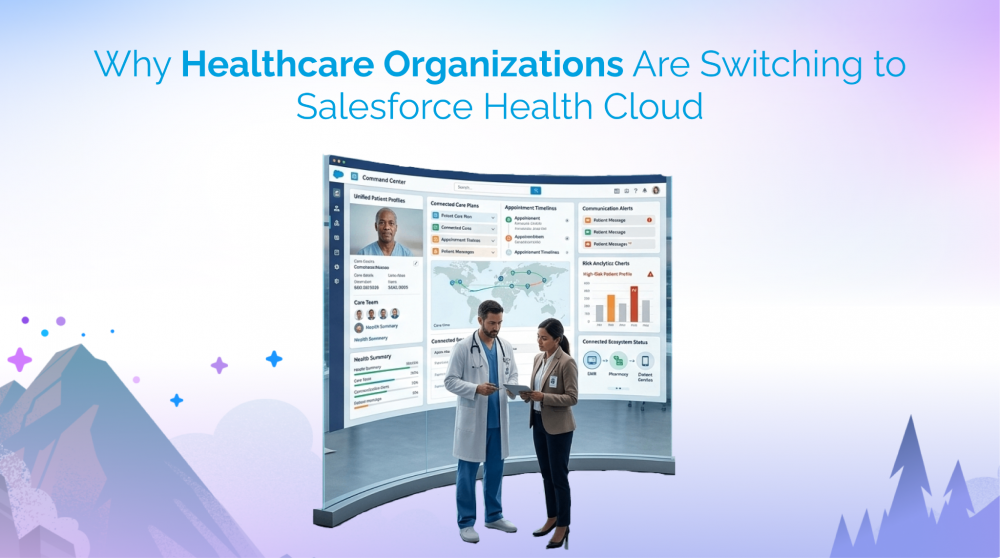
It brings different pieces of information together so care teams aren’t working with fragments. Instead, they get a more complete, real-time view of each patient.
Where AI and Automation Start to Fit In
As healthcare systems become more connected, there’s also a growing focus on how automation and AI can reduce manual effort.
Agentforce makes it possible for businesses to create and run autonomous agents that support different teams across the organization. The idea is simple—bring intelligent agents into everyday workflows, whether it’s care coordination, patient communication, or administrative tasks.
What’s interesting is how all of this actually comes together behind the scenes. Instead of relying heavily on code, Salesforce has designed Agentforce so most of the setup can be done through a click-based approach. That’s a big shift from traditional automation tools.
During Dreamforce, especially in the Agentforce Launchpad area, many people got hands-on experience with it. The general feedback was pretty consistent—this isn’t just a concept. It actually works, and it’s much easier to configure than most expected.
A More Connected View of the Patient
One of the biggest practical advantages is visibility.
With Salesforce Health Cloud, patient data isn’t scattered across disconnected tools. It’s organized in a way that’s easier to access and actually use.
That includes:
- Medical history
- Medications and allergies
- Appointments and interactions
- Care plans
What matters here isn’t just storage—it’s context. When everything is connected, decisions become faster and more informed.
And in healthcare, that can make a real difference.
Better Coordination Across Care Teams
Care rarely happens in isolation.
Doctors, nurses, specialists, and administrative staff all play a role, and they need to stay aligned. Without the right system, that coordination usually depends on emails, calls, or manual updates.
Health Cloud simplifies that.
Teams can:
- Share updates in real time
- Track patient progress more clearly
- Avoid duplicate work or missed information
It doesn’t remove complexity entirely, but it reduces the friction that slows teams down.
Patient Engagement Is Becoming a Priority
This is something that’s changed a lot in recent years.
Patients aren’t just passive recipients of care anymore. They want reminders, updates, easy communication—and they expect it to be convenient.
Health Cloud supports that shift by making it easier to:
- Send appointment reminders
- Manage follow-ups
- Personalize communication
It’s a small change on the surface, but it has a noticeable impact on patient satisfaction and adherence.
Built-In Flexibility (Without Starting From Scratch)
One concern healthcare organizations often have is flexibility.
Every organization is different. Workflows vary. Regulations differ. So a rigid system doesn’t work well.
Health Cloud sits on top of the broader Salesforce platform, which means it’s customizable without requiring everything to be built from the ground up.
That balance—structure with flexibility—is part of the appeal.
Data, But Actually Usable
Having data is one thing. Using it effectively is another.
Many healthcare systems generate reports, but they’re not always actionable. By the time insights are available, they’re often outdated or disconnected from day-to-day operations.
With Health Cloud, data can be used more proactively:
- Identifying high-risk patients
- Tracking outcomes over time
- Supporting preventive care efforts
It’s less about reporting the past and more about improving what happens next.
It’s Not Without Challenges
To be fair, adopting any new platform comes with trade-offs.
Health Cloud implementations can involve:
- Integration with existing systems
- Data migration and cleanup
- Training for staff
And those things take time.
Organizations that see the most success usually treat it as a long-term investment rather than a quick fix.
That’s where salesforce health cloud implementation services can make a real difference. Working with an experienced partner like Perigeon helps organizations avoid common roadblocks, streamline adoption, and build a system that actually supports care teams in their day-to-day work.
Why the Shift Is Happening Now
So why now?
Part of it is pressure—rising patient expectations, operational complexity, and the need for better outcomes.
But part of it is also timing.
Technology has reached a point where unifying data, automating workflows, and improving engagement can actually happen in a meaningful way. A few years ago, that wasn’t as realistic.
Now, it is.
Conclusion
The move toward Salesforce Health Cloud isn’t really about adopting another platform.
It’s about fixing something that’s been broken for a long time—disconnected systems, fragmented data, and inconsistent patient experiences.
Not every organization will move at the same pace. And not every implementation will be smooth.
But the direction is clear.
Healthcare is becoming more connected, more data-driven, and more patient-focused. And platforms like Health Cloud are playing a big role in that shift.