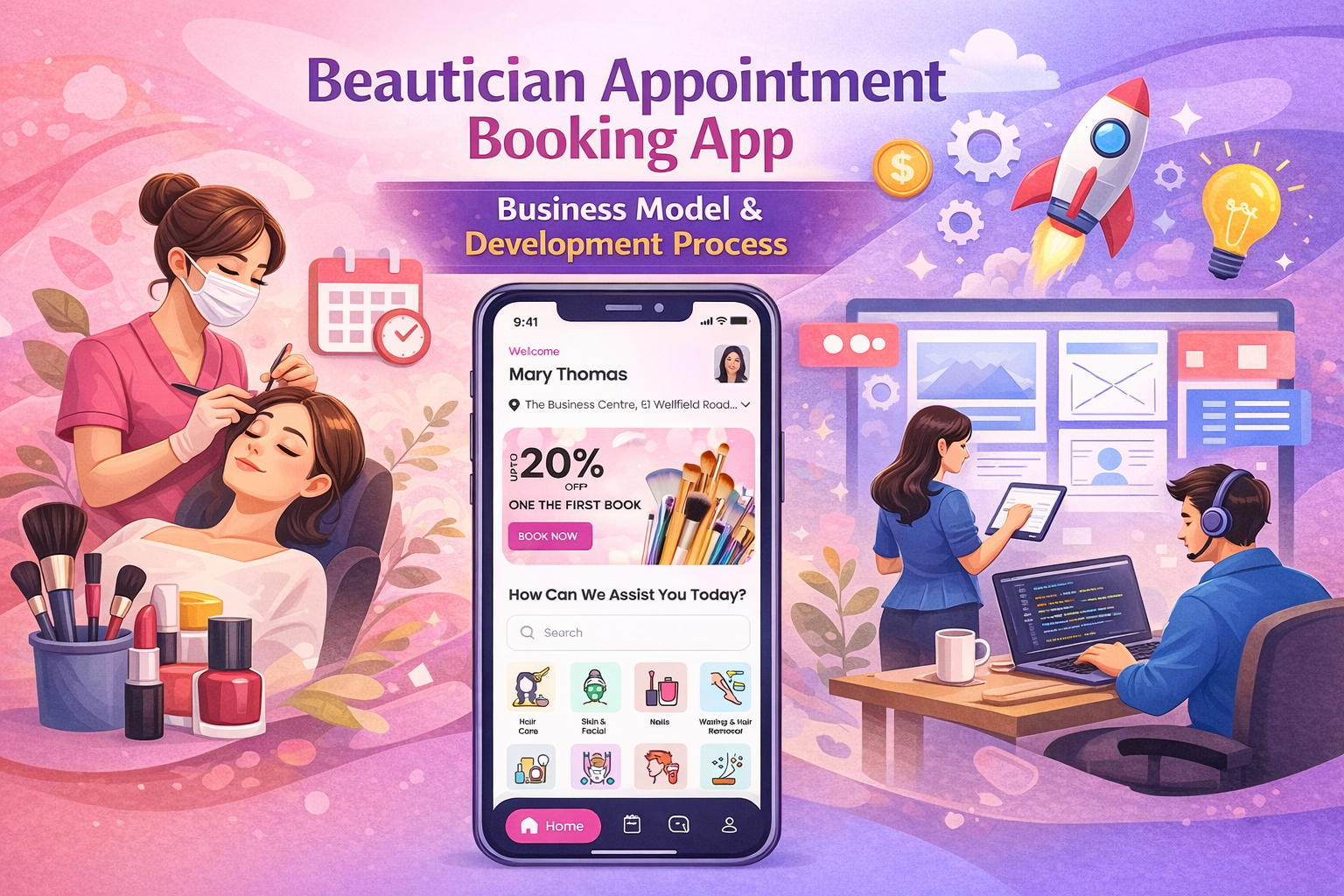
The beauty and wellness industry has changed rapidly in recent years. Customers no longer want to call salons or wait for appointments. They prefer quick bookings, transparent services, and flexible scheduling. This is where a Beautician Booking App plays an important role.
The beauty industry is shifting toward convenient digital platforms. Whether it is a haircut, skincare treatment, bridal makeup, or home beauty service, customers want easy access with just a click. This growing trend makes beauty booking apps a promising business opportunity.
If you’re looking to create or purchase a beauty booking application, knowing how it operates and how it earns money is crucial. Let’s look at the entire business model in an easy and practical manner.
What is a Beautician Book App?
The Beautician Booking app is a platform online that links customers to salons, beauticians and beauty experts. Users can browse through services, look for availability, schedule appointments, and pay online.
From the perspective of the service provider beauty salons and beauticians are able to sign up, manage their schedules and accept bookings. They can also keep track of their earnings using the platform.
This results in a digital ecosystem that allows supply and demand to work effortlessly without the need for manual coordination. Customers enjoy convenience, and beauticians are guaranteed booking opportunities.
How Does a Booking App for a Beautician App Work?
The design of the app for booking a beauty therapist is a well-organized and simple process. The entire process is usually completed through six main steps.
Profile Registration and User Registration
The process starts with the download of the application and then creates an account. The registration process is typically straightforward. Users can sign-up using their telephone number, email address or Facebook or Twitter accounts.
After registering, users can include preferences, such as their locations, preferred services or their preferred beauticians. This lets the app tailor suggestions.
Searching for and selecting a Service
After login, users can browse available services. A beauty salon’s scheduling application typically lists different categories like beauty, hair care grooming, nail care and bridal services.
The app also displays prices, service duration reviews of customers and reviews. It allows users to compare different the options prior to making a booking.
Beauty Therapist or Salon Selection
When a user chooses the service they want it will display the list of beauticians and salons that offer the particular service. Users can view profiles of professionals which include expertise and specializations, portfolio photos and ratings from customers.
This transparency allows customers to make better choices.
Scheduling Appointments
After choosing the provider, customers are able to view the available timeslots. The scheduling system lets users to pick the most convenient times and dates.
Many apps for beauty treatments also offer the option of instant booking or for a pre-planned booking. This increases the user’s convenience.
Confirmation of Payment and Payment
After booking, clients can pay their bill using various options, such as online payments as well as digital wallets or cash payments. When the payment is made the app confirms the reservation and then sends notification.
Some apps also offer OTP-based verification that confirms the service’s start.
Service Completion and Review
Once the service has been completed after the service is completed, customers are able to comment and rate the beautician. In the same way, service providers may also solicit feedback from their customers when needed.
Reviews play an important part in maintaining the quality of service and establishing credibility of the platform.
Key stakeholders in the Beautician Booking App Business Model
The app for booking a beauty therapist works by coordinating three major users.
Customers
Customers are people who use beauty services. Their primary requirements are the convenience of having transparent pricing, reliable professionals and simple booking.
Service Providers
They include beauty salons, beauticians as well as freelancers and professional home services. The platform allows them to increase the reach of their clients and helps them manage bookings online.
Platform Owner
The platform owner oversees all platform operations. This includes managing bookings, payments, promotions, and service quality. The platform earns revenue by facilitating transactions between service providers and customers.
Essential Features for an Beauty Appointment App
A well-known app for booking appointments with a beautician concentrates on features that ease both the customer experience as well as service providers’ operations.
User-Friendly Booking Interface
Customers should be able search, select services and easily book appointments. Booking processes that are complicated can hinder the use of apps.
Professional Profiles
Service provider profiles should include their experience, certificates, service listings, pricing, and portfolio. This information helps build customer trust.
Real-Time Scheduling System
The calendar system has to be updated with availability immediately. False schedules or double bookings result in customer dissatisfaction.
Multiple Payment Integration
The flexibility of payment improves customer experience. The app should offer different and secure payment options.
Systems for Notifications and Reminders
Automated reminders help reduce cancellations and non-shows. The notifications also assist beauticians in managing their daily schedule effectively.
Admin Dashboard
The admin panel lets the owners of platforms to control bookings, track the earnings, analyse performance, and monitor promotions.
How does a Beautician Booking App Generate Revenue?
The revenue model for an app to book beauty professionals is flexible and adaptable. The majority of platforms employ multiple revenue streams to increase profits.
Commission Per Booking
This is the most popular source of revenue. The app charges a fixed percentage or a service charge for every booking that is successful via the application.
This is since revenue increases automatically when the volume of bookings increases.
Services Providers: Subscription Plan Plans
Salons and beauty salons can subscribe to premium plans in order to enjoy other advantages. This could include a higher visibility on listings as well as priority booking access as well as advanced tools for analytics.
Subscription revenue is an annual or monthly income that is consistent to the website.
Promotion Fees and Featured Listings
Service providers pay to advertise their profiles or services in most popular results in search engines. This allows beauticians to increase their visibility and draw more customers.
In wedding or festive seasons, promotional advertisements can generate substantial revenue.
In-App Advertising
Cosmetics companies, beauty brands and wellness products sellers can promote their products on the platform. Advertorial placements in the app can lead to new monetization opportunities.
Beauty Product Sales
A lot of scheduling apps for beauty salons include marketplaces for beauty products. Customers can purchase products for their beauty directly via the application. The platform is paid commission or a percentage of sales.
Why Apps for Booking Beauticians Are Expanding Rapidly?
A variety of industry trends are assisting the development of apps that help you make appointments with your beauty. The Demand for On-Demand Service is growing. Customers want services that are suited to their lifestyles. On-demand beauty services allow the flexibility and ease of use.
The growth of freelance beauty professionals
Many beauticians choose to work as freelancers rather than traditional salon jobs. Booking applications provide them with consistent clients with a variety of opportunities, without requiring a large investment.
Digital Payments Adoption
The development of electronic payment systems makes online booking more convenient and more efficient.
Customers Preference for Transparency
Customers like platforms that let them look up pricing, customer reviews and professional experiences prior to making a.
White-Label vs. Custom Development for Beautician Booking App
Companies that plan to launch a booking app for beauticians application typically select between white-label development and Custom development.
White-Label Development
White-label applications come with pre-built features and a tested system architecture. They can be launched faster and with less investment. This is an option that is ideal for businesses who want to have a quick market entry.
Custom Development
Custom development involves creating an application from scratch. It offers full flexibility and unique feature design but requires higher investment and more development time.
Many startups choose white-label options initially, and then move into custom design later, if needed.
Future scope of Beautician Booking Apps
The beauty industry is constantly evolving. Beauty booking apps are expected to include AI-based service recommendations, virtual consultations, and advanced customer analytics.
The demand for beauty services at home is expected to also increase and will increase the demand for online booking platforms.
Wearable device integration as well as skin analysis technologies could be incorporated into future apps for beauty appointments.
Conclusion
The Beautician Booking Application is much more than a simple platform for booking services. It’s a complete digital business ecosystem which connects beauty professionals and service providers with the convenience of technology and.
The operating model is simple and effective. It enables easy bookings, transparent service selection, and smooth payments. Businesses can earn revenue through advertising, commissions, subscriptions, and product sales.
The growing demand for convenient services and digital technology is creating new opportunities in the beauty industry. Beauty salon booking apps are becoming a sustainable business solution. Companies that focus on customer experience, service quality, and effective platform management can achieve long-term growth in this evolving market.