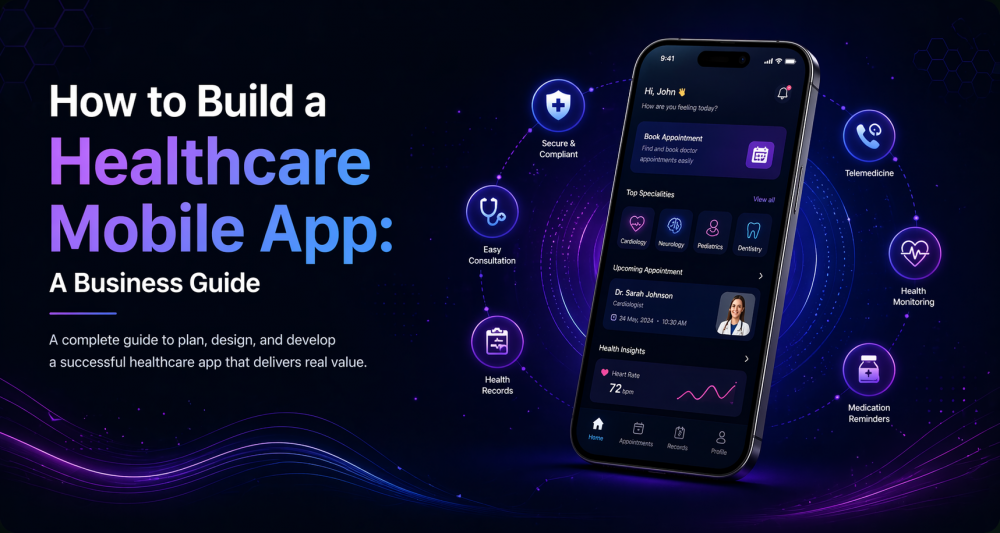
The healthcare industry is rapidly adopting digital transformation, which now relies on mobile applications as its most important technology. Healthcare applications are changing the delivery and experience of medical services through their implementation of virtual consultations and remote patient monitoring technologies. The development of a successful healthcare mobile application requires business organizations to use strategic methods that achieve innovation and compliance with regulations and fulfill user requirements.
Understand the Market Needs
Development work requires the identification of the specific problem that your application will address. Healthcare applications provide multiple functions, which include telemedicine, appointment scheduling, e-prescriptions, fitness tracking, and chronic disease management. Market research enables you to identify user requirements, analyze competitor products, and discover existing weaknesses in the market.
A clear value proposition not only helps differentiate your app but also ensures long-term user engagement.
Focus on Compliance and Security
Healthcare applications handle extremely confidential patient information, which requires them to maintain strict security measures and full compliance with all regulations. Your business needs to comply with regulations, which include HIPAA for the United States and GDPR for Europe, based on the specific area you want to operate in. Organizations need to implement robust encryption systems together with safe authentication techniques and data protection measures. Users will begin to trust the system when the organization demonstrates its commitment to protecting their personal information.
Choose the Right Features
The success of a healthcare app depends on its ability to meet user requirements through its features. The software must include the following fundamental elements, which need to be implemented:
- User registration and profile management
- Appointment booking and scheduling
- Video consultation and chat support
- EHR/EMR integration
- Push notifications and reminders
- Payment gateway integration
The application needs to maintain its focused features by avoiding the addition of unnecessary functions. The process should begin with an MVP, which will develop into a complete product through customer validation.
Prioritize User Experience
Healthcare applications serve a wide range of users who include patients, doctors, and administrators. The design needs to be clean, intuitive, and accessible to all users because it serves as the main element that enables users to operate the system. Users will experience greater satisfaction when they can easily navigate the system through understandable text, and they can reach important functions with minimal effort.
Your app can reach more users when you include accessibility options that enable voice control and support multiple languages.
Plan Your Development Strategy
The success of your application depends on your selection of an appropriate development method. Your selection between native and cross-platform development needs to align with your financial resources, project duration, and expected user base.
The complete development process from initial concept to final product launch becomes more efficient through collaboration with a professional Healthcare app development company. The experts provide industry insight and technical knowledge while applying established methods to decrease dangers and speed up product development.
Understand the Cost Factors
Budget planning is another essential requirement for developing healthcare applications. The overall investment depends on factors such as app complexity, features, platform choice, design requirements, and integrations. The Healthcare app development cost require businesses to include permanent expenditures for system maintenance, software updates, and regulatory compliance improvements. A well-planned budget ensures smoother execution without compromising quality.
Test, Launch, and Scale
The process of testing and launching an application includes three stages that lead to its expansion. Your app needs thorough testing before its launch to discover all bugs, performance problems, and security issues. User feedback collection after the app launch enables ongoing improvements based on actual user behavior.
Advanced features such as AI diagnostics, wearable device compatibility, and data analytics capabilities will help you maintain your market position as the healthcare industry develops.
Final Thoughts
The development of a successful healthcare mobile application requires more than technological capabilities because its success depends on delivering value and establishing trust while achieving better patient results. Businesses can develop digital solutions that create market distinction through their emphasis on user requirements, compliance, and scalability.
Your chances of success will increase when you work with trustworthy healthcare software development companies who will ensure your application fulfills both technical requirements and industry standards while producing actual business outcomes.