The Rise of Electric Cycles in India
Electric cycles, which are also popularly referred to as e-cycles, are experiencing tremendous popularity in India and are becoming a revolutionary mode of transportation. The bicycles are fitted with a battery and engine setup that makes cycling much easier for the rider and enables them to ride at faster speeds with minimal effort. E-cycles are therefore perfect when convenience and simplicity are considered.
During recent years, India has seen significant changes in mobility patterns, especially in urban areas. Rising fuel prices, increasing traffic congestion and growing environmental concerns have pushed people into looking for alternate, smarter and more sustainable solutions.
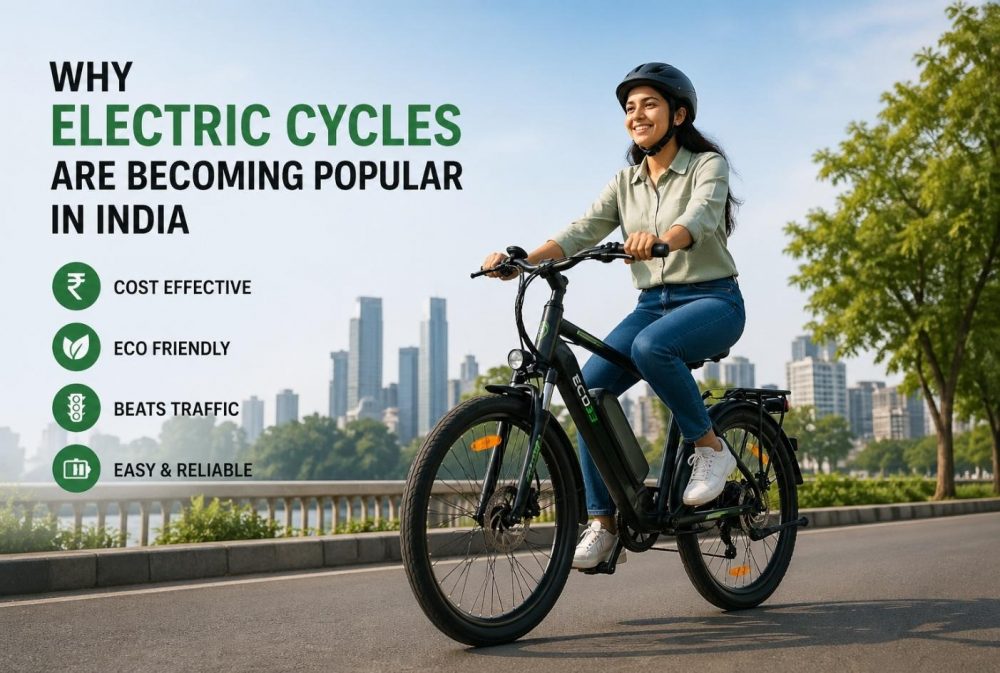
Electric cycles fit perfectly into this shift towards smart transportation, as they are economical, with running costs as low as ₹0.07 per kilometre compared to ₹2.50 for petrol vehicles, environment friendly and produce zero emissions. Their ability to navigate through traffic and congestion is what makes them suitable for Indian cities as traffic here is unpredictable.
Moreover, e-cycles appeal to a large number of users specially students, office goers and delivery workers due to their affordability and low maintenance requirement. They do not require fuel, extensive care and drivers licence in many case, which adds to their affordability.
With support from government initiatives, advancement in battery technology and increased awareness about sustainable living, electric cycles are no longer seen as an alternative but as a practical and forward-looking solution.
Cost-Effective Mobility Solution
One of the biggest reasons of the growth of e-cycles is its affordability and cost effectiveness. With petrol and diesel prices significantly rising due to the ongoing geopolitical conflicts, daily commute using bikes and cars is becoming very expensive, especially for students and middle-income household.
In contrast, electric cycles only require a few amounts of electricity to charge, costing just few rupees per day. This greatly reduces the travel expense, making them an affordable alternate for everyday commute.
Furthermore, another positive aspect is that electric bikes also require very little maintenance. The absence of engine oiling or repair in such cycles is another advantage as compared to traditional vehicles. Moreover, the simplicity in their structure makes them easier to maintain.
Finally, the initial cost of purchasing an electric bike is relatively cheap when compared to normal bikes. It allows them to access a larger audience, particularly those coming from poorer economic backgrounds.
On the whole, these characteristics make the electric bicycle a cost-effective means of transport in a densely populated nation like India.
A Step Towards Sustainable Transportation
The increasing use of electric cycles in India is a major step towards sustainable transportation. With increasing concerns about air pollution and climate change, there is a need for cleaner and greener mode of transport.
In contrast to petrol and diesel vehicles, e-cycles produce zero tailpipe emissions, helping reduce air pollution in densely populated cities. Using electric cycles also helps lower the overall carbon footprint, making them an environmentally friendly mode of transport.
Furthermore, e-cycles require much less energy in comparison with other modes of transport. Electric cycles make use of rechargeable batteries that are now increasingly being charged using renewable sources of energy such as solar energy. This means that in addition to being economical, they are sustainable as well.
Easing Urban Commutes and Traffic Congestion
Electric cycles are helping address urban commuting challenges in India, especially in densely populated cities with heavy traffic congestion.
The growing number of vehicles on roads has increased travel time and made it unpredictable. Electric cycles offer a practical solution because they are lightweight and compact. They can move easily through congested areas and help riders avoid long traffic jams.
Electric cycles are also efficient for short to medium distances, which make up most daily commutes such as travel to colleges, workplaces, and local markets. They also support last-mile connectivity between public transport stations and home locations.
Motor vehicles and motorcycles take up more space for parking and lead to traffic pollution in urban centers. On the other hand, electric cycles need less space and lead to fewer traffic pollutants when adopted in big numbers. Thus, not only do they save time but also help make the urban transportation process more efficient and streamlined.
Policy Support and Future Growth Potential
The increase in the use of electric bikes in India is largely due to favourable government policies and a general move towards electric vehicles. Initiatives promoting renewable energy and sustainable transportation, along with incentives offered under various electric vehicle programs, have made this possible.
Looking ahead, the future of electric cycles in India appears highly promising. Fast-paced improvements in battery technology can help increase the efficiency, reliability and lower costs in regard to charging and range. Due to shifting demands for environmentally friendly and cost-effective mobility solutions, e-cycles are expected to see significant demand in India.
Moreover, the growth of the gig economy and logistics will likely contribute to the rising popularity of e-cycles. Taking into consideration that people’s demands in terms of mobility have shifted to more environmentally friendly and cheaper options, e-cycles are going to be in great demand in India.