Turquoise has been the most loved and popular jewelry among the jewelry lover and fashion enthusiasts for a very long time. It has the most beautiful shades specially the blue-green shade and it has the natural earthy pattern. This gemstone is mostly popular for making every piece of jewelry like rings and elegant pendants. But as demand grows for this, many sellers are using cheap and fake versions as well.
Nowadays many cheap variations of this stone are made by using plastic, resin, glass or dyed howlite, just to make it look like the real turquoise. Most people sometimes get fooled as they appear like the real one and convincing, especially in online photos. Due to this many buyers always get confused and tense while purchasing the turquoise and loose gemstone.
But don’t worry at all as this blog will guide you to be a gemstone expert and help you to identify natural turquoise. With understanding and learning a few details, you can easily identify the difference between real or fake turquoise.
Curious About- How to Tell If Turquoise Is Real?
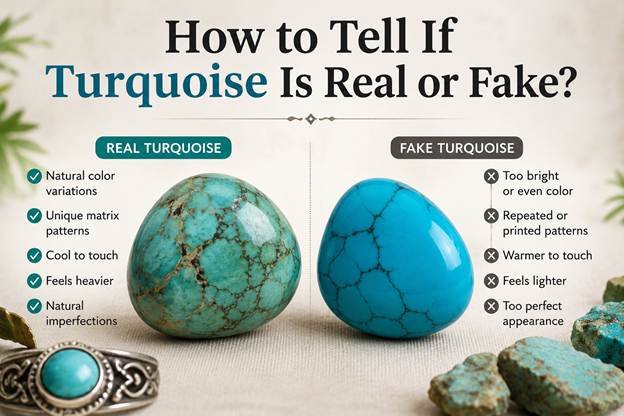
If you are eager to know that your turquoise stone is the real or fake one, then start by observing it very carefully. Notice its appearance and texture, as real turquoise generally has the variation of natural color, or has the uneven matrix patterns, and when you touch u can feel a little coolness. Compared to that, the fake one often looks perfect, bright and very smooth.
Here are a few basic things you should check:
- Natural-looking color instead of perfectly even shades
- Uneven web-like veins or matrix patterns
- Slight weight and cool temperature in the hand
- Minor imperfections that make the stone look natural
- Surface texture that does not feel plastic-like
There are also some simple methods like scratch test and acetone test can help you to identify that the stones are real and fake.
Understand the Real vs Fake Turquoise
Let’s understand the difference between real and fake turquoise by comparing their basic features side by side.
| Feature | Real Turquoise | Fake Turquoise |
| Color | Natural with slight variations | Bright and overly even |
| Matrix Patterns | Uneven and unique | Repeated or artificial-looking |
| Weight | Feels solid and slightly heavier | Lightweight |
| Temperature | Cool to touch | Warm or room temperature |
| Surface | Minor natural imperfections | Very smooth or plastic-like |
| Material | Natural gemstone | Resin, plastic, or dyed stone |
This simple comparison table guides every buyer to notice the common differences while purchasing the turquoise jewelry.
Fake Turquoise Signs Buyers Should Know
There are some warning signs that can help you identify fake turquoise before making a purchase.
Perfect Patterns – Real and natural turquoise rarely has identical veins or patterns throughout the stone. If the stone looks too perfect or smooth, it may be fake and artificial.
Extremely Bright Color – Fake turquoise are very bright and perfect shiny blue shades as compared to real ones.
Plastic Feel- Real turquoise gemstone feels heavier when lifted but the fake one generally feels lighter or dense as they are made from the resin and plastic.
Very Cheap Pricing- Price is the most simple and important identification method to know about the fake ones because sellers offer them at low prices. So, it’s very important while shopping to check the authenticity carefully.
These common fake turquoise signs can help buyers avoid imitation stones and make better gemstone purchases.
Easy Methods for a Turquoise Authenticity Test
Here are some simple methods that help you to inspect the stone more closely and clearly. For this you do not need any professional tools to check the authenticity of basic turquoise.
Scratch Test- Real turquoise is harder than plastic or resin copies. Gently scratching a hidden area may help reveal softer imitation material.
Acetone Test- Some fake stones are dyed to imitate turquoise color. Rub a cotton swab dipped in nail polish remover on a hidden section of the stone. If color transfers onto the cotton, the stone may not be natural.
Temperature Check- Natural gemstones usually feel cool when touched, while synthetic materials often feel warm or match room temperature.
Matrix Inspection- Carefully inspect the web-like veins or markings. Genuine turquoise normally has irregular and naturally formed patterns instead of perfectly designed lines.
Why Buying from Trusted Sellers Matters
When buyers have no basic idea about the fake turquoise, they get trapped by purchasing the fake one as they look more attractive and shinier. This is why choosing the right and trusted gemstone seller is very important especially when you are shopping online.
Trusted and Authentic sellers will give you right and clear information about gemstone quality, treatments, or needing details.
GemstonesForSale– Trusted Source for Natural Turquoise
If you are looking for genuine turquoise jewelry and gemstones, GemstonesForSale offers a wide collection of natural gemstone pieces in different styles and designs. Buyers can explore statement jewelry, gemstone varieties, and custom-made options created for gemstone lovers.
Whether you are searching for collectible gemstones or Turquoise for sale online, choosing a trusted source helps ensure authenticity, quality, and long-term value.
Final Thoughts
Turquoise is a timeless gemstone, but the increasing number of imitation stones in the market can make buying difficult for beginners. By checking the color, matrix patterns, texture, and overall feel of the stone, you can better understand whether it is genuine or fake.
Simple methods like the scratch test, acetone test, and temperature check can also help identify imitation materials. Most importantly, purchasing from trusted sellers gives buyers greater confidence when investing in natural turquoise jewelry and gemstones.