Artificial Intelligence is evolving, as much as we adults enjoy the luxury and comfort of it. Most parents are afraid and intimidated by the thought of their children using it and becoming lazy. However, AI for kids is much more than that, and even when you believe it or not. If your children have ever asked Alexa to play their favourite song or magically liked the Netflix recommendation. They have already experienced it, because AI tracks the patterns and, based on that, provides answers and recommendations. AI is a way of teaching machines how to think and learn like humans.
Therefore, it includes recognizing speech, solving problems, or making smart decisions on their own. It happens when we first train them. AI for kids can be their own new partner, which can help them learn and evolve in the best possible way. The positive part is that you don’t need to explain neural networks or complex programming and algorithms for them to use AI. They can start simple with a real-life example that makes sense to kids, something they are already familiar with. Moreover, this guide also helps in uncovering the AI for kids, along with their working mechanisms and some real-life examples.
Why is AI a Big Deal for the Future Generation?
It’s not practical and logical anymore that children who want to pursue engineering need to learn about technology only. Rather, AI for kids is about understanding the world they’ll grow up in, where tasks are automated, and worlds are shaped by technology. In the future, all things are going to revolve around technology, data, and creativity, and early learning can be a gem for kids.
This will matter because it will be everywhere and in every field of careers, from voice assistance to traffic lights and smart classrooms. Even now, AI is surrounding us, and by the time kids grow up, it will be embedded in their daily lives. Therefore, very soon it can be fundamental to learn AI as reading any other subject.
AI for kids also builds the skills that enormously benefit the careers of children when they grow up. It teaches them problem-solving, logic, and even empathy, when emotions are also a part that will be integrated into AI tools.
As we know, kids’ future depends on it, and having skills and exposure to it can be game-changing in opening new doors. Because the future job market will look very different from now, as many careers will be tarnished by then. At the same time, many other things will evolve that don’t even exist yet, and certainly they’ll all involve AI.
That’s the reason AI coding classes for kids are now a new trend and becoming vital. The summer camps are held with many courses that can be done during this vacation time, which are also introduced by many classes.
Learning them now will promote digital literacy, and being the first few kids to learn about it will be beneficial in schools as well. Soon, schools will also treat it as a main subject, so learning to navigate it responsibly is now part of being a good global citizen.
How Does AI Work?
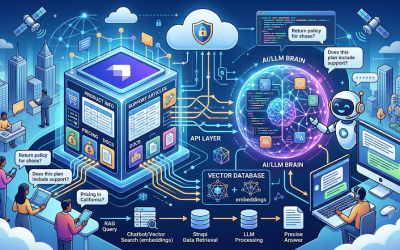
For clearly understanding how AI actually works, AI coding classes for kids are the best place. Let’s start with the big picture, which is to understand the AI hierarchy. It will uncover all the layers that made AI feasible and usable to us in our normal daily lives. Including all the tools, programs, and different technologies, here’s how it breaks down:
1. Artificial Intelligence (AI)
This is the largest concept. Any machine that can emulate the actions performed by humans, such as speech recognition, decision-making, and pattern recognition, falls under the category of AI. AI may be considered an umbrella term.
2. Machine Learning (ML)
It is a part of artificial intelligence and can be taught in AI coding classes for kids. Machine Learning refers to learning by the computer system without explicit programming through its own experience. How does YouTube know your child’s interests? It is done with the help of machine learning algorithms.
3. Deep Learning
This is a sophisticated version of machine learning. Deep Learning imitates the human brain using neural networks. For instance, deep learning technology enables Siri to recognize your child’s voice and respond accordingly if he/she asks, “What’s the weather?”
4. Natural Language Processing (NLP)
NLP (natural language processing) is the area of AI concerned with understanding and responding to human language. NLP drives systems such as Google Translate, Siri, and auto-correct in your kid’s iPad or laptop. That can be learned in classes from Contact Master Ji.
“As stated in the 2023 Stanford AI Index report, NLP was among the areas of AI growing the most in the past years, accounting for over 60% of all progress in artificial intelligence and its applications, which involved language-based models.”
5. Generative AI (Gen AI)
This is a term for AI that generates new content rather than analyzes existing content. ChatGPT and DALL·E are examples of tools belonging to generative AI, popular in many generative AI for kids applications that stimulate children’s creativity.
With GenAI tools, you can ask for something simple, like “Write me a story about a dragon learning to code,” and get an entire narrative composed within seconds. Such tools have proved highly popular with kids, developing their skills in creativity and self-expression.
What Are Some of the AI Specialized For Children Activity?
As of now, when half of 2026 has passed, we all, from kids to parents to elders, have all come across AI in our daily lives. While some of the big giants are also accommodating and updating their versions to specialize in AI for kids. Here are a few activity types that children can perform or use AI to learn, have fun, and grow alongside technology.
| Activity Type | Description | Example(s) |
| Creative Arts & Design | Children use text prompts to create unique images, turning their imagination into visual art. This enhances creativity and vocabulary. | AI Art Generators (e.g., Midjourney, DALL-E) |
| Literacy & Storytelling | AI helps co-write stories, suggest plot twists, or create characters. Kids can guide the narrative, boosting their writing skills. | AI Story Generators, ChatGPT |
| Personalized Tutoring | AI tutors adapt to a child’s learning pace, explaining complex subjects like math or science with interactive examples and quizzes. | Khanmigo (from Khan Academy) |
| STEM & Coding | Platforms that suggest code, help debug errors, and explain programming concepts, making coding more accessible for beginners. | Code.org’s AI features, Replit |
| Language Learning | Uses AI for personalized lessons, interactive conversations with chatbots, and provides real-time pronunciation feedback. | Duolingo, Memrise |
| Smart Robotics | AI-driven toys that recognize faces, respond to commands, and can be programmed, teaching robotics and cause-and-effect. | Cozmo, Sphero BOLT |
Wrapping It Up!
Technology does play a significant role in our lives. We can’t see the world without it, as every second task is associated with AI these days. Therefore, AI for kids is a technology specialized for children aged 8 and above, so they can also interact without harm. These models follow safety ethics and are used in compliance to only support children’s learning growth and creativity. The top brands like ChatGPT, Gemini, Suno, and many other AIs have come out in these periods of time. So that children can also interact and learn, enrolling them in classes that teach these are the best for them.
Because they not only teach how to use it but also cover the mechanism and process of building these AI personalized for them. Many children, with the help of these classes, have learnt and made their own study buddy for homework, playing, learning, and researching. These can be your child also, if you enroll them in classes. However, if you are worried or searching such classes, look no further than Contact Master Ji.