Finding your perfect wires and cables manufacturer in India… Wait! I should not have started that way. In truth, I used to be an industrial sourcing professional for a long time and trust me if I say that I could have a luxurious life in a Goa beach if I had a rupee every time a brand owner comes to me with a “fantastic” quote that after all turns to be a budget sucker nightmare.
I still recall that one particular day when the D2C wave was only about to start beating Mumbai I was assisting a friend with a “clean beauty” face serum launch. We were promised premium actives and glass bottles by the factory that also promised everything. It seemed like the quote was a very good deal. However, the premium pumps leaked and the natural stabilizer separated by the third month and the papers were not stamped for regulatory filing. We paid triple the original cost just to fix the “savings.”
This is exactly what Cosmetic third party manufacturing poses. Take India, for example, it is a giant, extremely competitive market filled with so many options that the price you see on paper is seldom the one you end up paying. You just have to be able to see through all the clutter. So, let’s have tea and break down the real cost of taking your product from a chemist’s lab to a customer’s vanity in 2026.
The Basics: Formulation and Ingredient Costs
The whole thing is initially about the “juice.” I mean, after all, that’s what your customer is shelling out for, no? In the Indian market, you’re practically faced with a couple of options, and not picking the right one according to your brand’s stage is where the first major “leaks” occur.
Stock vs. Custom Formulations
Honestly, if you are at the very beginning of your journey, you should definitely consider “white label” or stock formulations. These are pre-tested, stable, and ready to go.
- Stock Formulations: Their unit-wise cost generally fluctuates within the range of ₹60 to ₹120. This approach is quick, safe, and the outcome can be predicted.
- Custom Formulations: This is the whole… thing. You want that particular “velvety” feel or a secret blend of Ayurvedic herbs? You will be charged ₹150 to ₹400+ per unit. Besides, do not forget the R&D fees, which may vary greatly according to the intricacy and be anywhere from ₹20,000 to ₹1,00,000.
The biggest mistake I keep witnessing is startups launching their first product and trying to reinvent the wheel. Use a tested formula as your basis. You can make changes later when you have some money.
The “Active” Tax
It’s 2026 and Indian consumers are well-informed. They can differentiate between Niacinamide and Hyaluronic Acid. High grade actives especially those biotech derived, e.g., vegan retinoids or algae stabilizers will raise significantly your ingredient cost. I had a case when the price of a serum soared by 40% just because the brand was insisting on a certain, globally-sourced peptide.
Packaging and Decoration: The Face of the Brand
Let’s face it. Beauty products are judged by their packaging, no matter if it is fair or not. Marketing is a huge part of the product these days. Further in the line of Cosmetic third party manufacturing, packaging can take up a big chunk of your cost.
Materials Matter
- Plastic (PCR): Being sustainable is the biggest differentiator in 2026. The usage of Post-Consumer Recycled (PCR) plastic is very handy for the planet, however, it usually costs a 15-20% premium over virgin plastic.
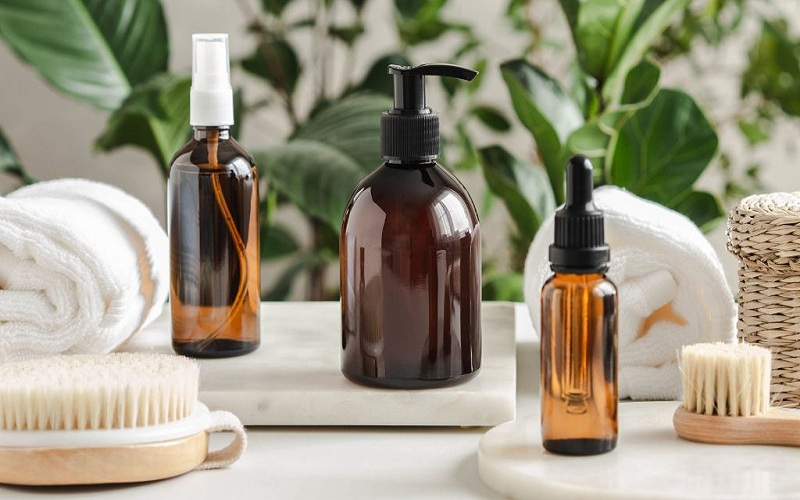
- Glass and Aluminum: These are the “luxury” standards. They feel heavy, they look expensive, and predictably they are. The price may go beyond ₹20 to ₹100 for an airless pump or a thick-walled glass jar that is premium.
Decoration Costs
It’s not just the bottle; it’s the “vibe.”
- Screen Printing vs. Labeling: Screen printing looks really elegant but usually requires a much higher minimum order quantity. Labels are cheaper and more flexible if you produce small batches.
- Special Touches: Foil stamping, embossing, or even a specific Pantone-matched cap color? Each of these adds a “setup fee” or “tooling cost.” I’ve seen brands spend ₹50,000 just on custom molds for a unique bottle shape before a single drop of product was even made.
The “Gatekeeper”: Minimum Order Quantities (MOQs)
This is where the majority of dreams (and pocketbooks) crumble. For a Cosmetic third party manufacturing MOQ is a manufacturer’s tool to prevent losses when they decided to run their machinery for a small batch.
- Small-Scale (The “Startup” Tier): Low MOQ manufacturers in Industrial Hubs like Gujarat & Maharashtra offer 500-1,000 units as minimum order quantity. You will be charged more for each product but the risk of total capital is less i.e the launch of 2-3 products would cost you ₹3.5 to ₹8 lakhs approximately.
- Medium to Large Scale: When you reach 5,000 or 10,000 units, your costs per unit will greatly decrease due to “economies of scale.” The machines are more efficient, and the producer can purchase raw materials in bulk.
Pro Tip: In case the manufacturer demands a 10,000 unit MOQ and you are just starting… I suggest you walk away or at least negotiate. You are better off paying ₹10 more per unit for 1,000 units rather than having 9,000 units of “learning experiences” in a warehouse.
Compliance and Testing: The Boring (But Critical) Stuff
Licenses or microbial testing may be very boring topics to discuss but my friend with the leaking pumps is a great example that one who make this mistake. Her biggest problem was not pump leakage but that her “manufacturer” had not properly filed stability reports for the local Indian market.
Regulatory Costs in India (2026)
- Cosmetic License: The Drugs and Cosmetics Act mandates you to have certain registrations. The cost of applying for a license through Form 31 is usually around ₹2,500 plus an additional inspection fee.
- Testing: You really need to have it:
- Microbial Testing: Testing for unwanted microorganisms (bacteria, fungus),
- Stability Testing: Testing whether the product remains stable (color, texture, efficacy) for 6-12 months.
- Patch/Dermatological Testing: A claim of “dermatologist recommended” is going to cost you – usually, it is in the range of ₹10,000 to ₹50,000 per product.
- Microbial Testing: Testing for unwanted microorganisms (bacteria, fungus),
- Stability Testing: Testing whether the product remains stable (color, texture, efficacy) for 6-12 months.
- Patch/Dermatological Testing: A claim of “dermatologist recommended” is going to cost you – usually, it is in the range of ₹10,000 to ₹50,000 per product.
If I were you, I would be willing to pay ₹15,000 to ₹30,000 per product for going through all necessary procedures.
“Hidden” Budget Killers
When I get questions about the cost of cosmetic third party manufacturing, the person has probably already forgotten the post-production stuff.
Shipping and Logistics
India is big. It is not cheap to ship a stack of glass bottles from a factory in Baddi to a storage facility in Bangalore.
- Inland Freight: Basic calculations show that you have to set aside 3-5% of the total order value for moving goods.
- GST: Keep in mind that the GST rate for cosmetics in India is 18%. You could procure “input tax credit” on your raw materials. However, you will need to initially accommodate that 18% cash outflow in your budget.
Inventory and Returns
If you have chosen to sell on marketplaces such as Nykaa or Amazon, you will most certainly face the issue of returns. You will have to make a provision for damaged goods and expired items. I usually advise people to include a 10% “mistake” margin in their business plans.
Making the Decision: A Strategic Cost Table
| Expense Category | Estimated Cost (Startup/Low MOQ) | Estimated Cost (Established/Custom) |
| Product Manufacturing (per unit) | ₹60 – ₹150 | ₹150 – ₹400+ |
| R&D / Sampling | ₹500 – ₹2,000 (per sample) | ₹20,000 – ₹1,00,000 (bespoke) |
| Packaging & Design | ₹20 – ₹50 (standard) | ₹50 – ₹150+ (custom/premium) |
| Compliance & Licensing | ₹10,000 – ₹30,000 | ₹50,000+ (clinical claims) |
| Total Launch Budget (2-3 SKUs) | ₹3.5 Lakhs – ₹8 Lakhs | ₹15 Lakhs – ₹40 Lakhs+ |
(Please note: These are approximations based on the market situation of 2026; always double-check with your specific partner.)
The Final Takeaway: Trust Your Gut, but Verify Everything
Then, here is the bottom line. Indian cosmetic third party manufacturing industry is a great mixture. It is the birthplace of some of the most advanced, AI-driven factories in the world but it still has lots of unorganized players that will do everything to give you a “low price.”
Your task is not to hunt down the lowest priced quotation, rather, it is to find the one that offers the most transparent information.
- Start with the certificates: GMP and ISO are not optional; they are the baseline.
- Confirm the raw materials: Inquire about the source of actives. If the price of “Swiss-sourced Vitamin C” is so low that it leaves you wondering, it probably is.
- Evaluate the process: Inquire about their stability testing and the quality rate of their “first-pass.”
So don’t let a marginal price difference tempt you to sacrifice the very foundation of your brand for that little upfront saving which is most probably going to be paid back tenfold in customer complaints, legal headaches, and worst of all potential safety risks.
Partner, not supplier. Look for a manufacturer who cares about their product so you can care about your brand in the future. It is somewhat dramatic but for real, the quality of the “juice” you put in the bottle is the success factor of your venture.
Now, go and make something beautiful!