Introduction
In today’s digital world, businesses rely heavily on technology, online communication, cloud storage, and internet-based services to manage daily operations. While digital transformation has created many opportunities for growth and innovation, it has also increased the risk of cyber threats. Modern businesses face constant dangers from hackers, malware, phishing attacks, ransomware, and data breaches. Because of these risks, cybersecurity has become one of the most important priorities for companies of all sizes.
Cybersecurity refers to the practice of protecting computer systems, networks, software, and sensitive data from cyberattacks. Businesses use cybersecurity strategies to prevent unauthorized access, protect customer information, and ensure safe digital operations. Without strong cybersecurity measures, organizations can suffer financial losses, damaged reputations, legal problems, and operational disruptions.
As technology continues to evolve, cyber threats are becoming more advanced and difficult to detect. Businesses that fail to invest in cybersecurity place their data, customers, and future growth at serious risk. For this reason, cybersecurity is no longer optional for modern companies. It has become an essential part of business strategy and long-term success.
The Growing Threat of Cyberattacks
Cyberattacks have increased significantly over the past decade. Businesses across industries are targeted by cybercriminals who attempt to steal financial information, customer data, and confidential business records. Small businesses, large corporations, hospitals, educational institutions, and even government organizations are all vulnerable to cyber threats.
Hackers use different methods to attack businesses. Some criminals send phishing emails designed to trick employees into revealing passwords or sensitive information. Others use malware and ransomware to lock company systems and demand payment in exchange for restoring access. Data breaches can expose private customer information such as credit card details, addresses, and personal records.
The financial impact of cyberattacks can be severe. Businesses often spend large amounts of money recovering lost data, repairing systems, and improving security after an attack. In some cases, companies lose customer trust and face legal penalties for failing to protect sensitive information. These risks show why cybersecurity is essential for protecting business stability and reputation.
Protecting Sensitive Business Data
Data is one of the most valuable assets for modern businesses. Companies collect and store large amounts of information related to customers, employees, finances, and operations. This data helps businesses make decisions, improve services, and understand market trends. However, if sensitive data falls into the wrong hands, it can create serious problems.
Cybersecurity helps businesses protect confidential information from unauthorized access and cybercriminals. Security systems such as firewalls, encryption, antivirus software, and multi-factor authentication help reduce the risk of data theft. Businesses also use secure cloud storage and backup systems to protect important files from loss or damage.
Customer trust depends heavily on data protection. People expect businesses to keep their personal information safe. If a company experiences a data breach, customers may lose confidence and choose competitors instead. This can harm the company’s reputation and reduce future sales.
Strong cybersecurity measures help businesses maintain trust and demonstrate that customer privacy is taken seriously. In today’s competitive market, protecting sensitive information has become a key part of maintaining long-term customer relationships.
Cybersecurity Supports Business Continuity
Business continuity refers to a company’s ability to continue operating during unexpected events or disruptions. Cyberattacks can interrupt normal business operations and cause significant downtime. For example, ransomware attacks can lock important systems and prevent employees from accessing files or applications.
When businesses are unable to operate normally, they may lose revenue, productivity, and customer satisfaction. Cybersecurity plays an important role in reducing these risks by protecting systems and preventing attacks before they cause damage.
Companies use cybersecurity strategies such as regular system updates, network monitoring, and data backups to ensure smooth operations. Backup systems allow businesses to recover important information quickly if systems are compromised. Disaster recovery plans also help organizations respond effectively to cyber incidents and minimize downtime.
Modern businesses depend on digital systems for communication, sales, customer support, and financial management. Without proper cybersecurity, even a small attack can create major operational problems. By investing in cybersecurity, companies improve stability and reduce the chances of unexpected disruptions.
The Role of Employees in Cybersecurity
Employees play a major role in maintaining cybersecurity within an organization. Many cyberattacks occur because of human mistakes such as weak passwords, clicking suspicious links, or sharing confidential information with unauthorized people.
Businesses must educate employees about cybersecurity risks and safe online practices. Training programs help workers identify phishing emails, avoid unsafe websites, and protect company information. Employees should also understand the importance of using strong passwords and keeping software updated.
Creating a cybersecurity-focused workplace culture helps reduce risks and improves overall security. When employees understand their responsibilities, they become the first line of defense against cyber threats.
Businesses also use access control systems to limit who can view or manage sensitive information. This reduces the risk of internal security breaches and unauthorized access. Regular security audits and monitoring help companies identify weaknesses and improve protection measures.
Cybersecurity is not only the responsibility of IT departments. Every employee contributes to maintaining digital safety and protecting company data.
Cybersecurity and Customer Trust
Customer trust is one of the most valuable assets for any business. Modern consumers are increasingly aware of online security risks and expect companies to protect their personal information. Businesses that fail to maintain strong cybersecurity may struggle to retain customers and build a positive reputation.
When customers share payment information, contact details, or personal data with a business, they expect that information to remain secure. Cybersecurity measures help businesses meet these expectations and create safer online experiences.
E-commerce companies, banks, healthcare providers, and online service platforms particularly rely on cybersecurity to maintain customer confidence. A single security breach can damage years of trust and negatively affect brand image.
Companies that invest in cybersecurity demonstrate professionalism and responsibility. Customers are more likely to choose businesses that prioritize digital safety and privacy protection. In many industries, cybersecurity has become an important competitive advantage.
As online transactions and digital communication continue to increase, maintaining customer trust through cybersecurity will remain essential for business growth and success.
Legal and Regulatory Compliance
Many countries have introduced laws and regulations that require businesses to protect customer data and digital systems. Companies that fail to meet cybersecurity requirements may face fines, legal action, and penalties.
Businesses must follow data protection regulations and industry security standards to avoid legal problems. These regulations often require organizations to implement security measures, report data breaches, and protect sensitive information.
Cybersecurity helps businesses maintain compliance with legal requirements and reduce the risk of financial penalties. Organizations that follow security standards are also better prepared to handle cyber threats and protect customer data.
In addition to avoiding legal issues, compliance improves business reputation. Customers and business partners are more likely to trust companies that follow recognized cybersecurity standards and demonstrate commitment to data protection.
As governments continue to strengthen digital security laws, cybersecurity compliance will become even more important for modern businesses.
The Future of Cybersecurity in Business
The future of cybersecurity will continue to evolve as technology advances and cyber threats become more sophisticated. Businesses are increasingly using artificial intelligence, cloud computing, and remote work systems, which create both opportunities and security challenges.
AI-powered cybersecurity tools are helping businesses detect threats faster and respond to attacks more effectively. Machine learning systems can analyze large amounts of data and identify unusual activity that may indicate a cyberattack.
Cloud security is also becoming more important as companies store information online and use cloud-based services. Businesses must ensure that cloud platforms are properly protected from unauthorized access and data breaches.
Remote work has increased cybersecurity risks because employees often access company systems from different locations and devices. Businesses need secure communication tools, VPNs, and authentication systems to protect remote work environments.
The future of cybersecurity will require continuous improvement, employee education, and investment in advanced security technologies. Companies that adapt to changing cyber threats will be better prepared for long-term success in the digital economy.
Conclusion
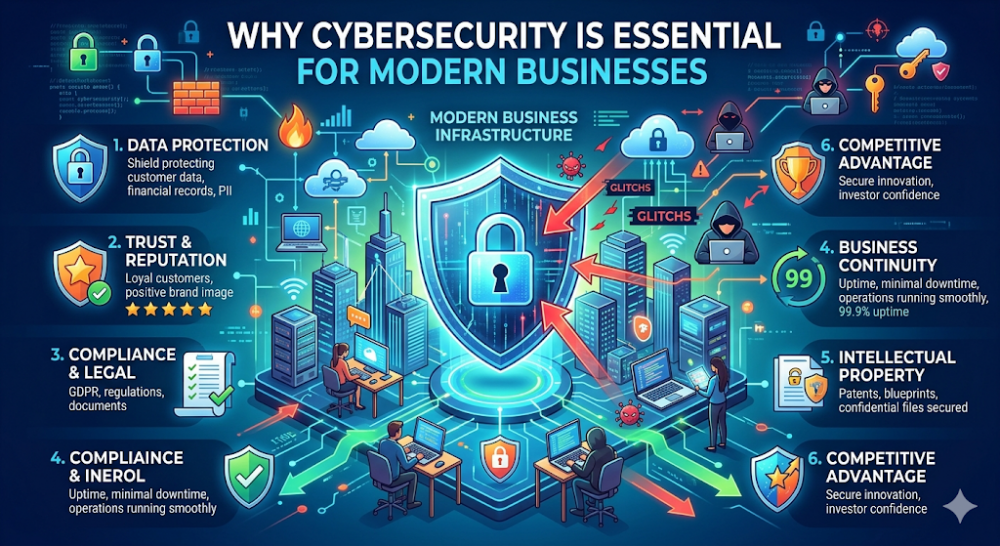
Cybersecurity is essential for modern businesses because it protects sensitive information, supports business continuity, maintains customer trust, and reduces the risk of cyberattacks. As businesses become more dependent on digital technologies, the importance of cybersecurity continues to grow.
Cyber threats can cause financial losses, operational disruptions, and reputational damage. For this reason, businesses must invest in strong security systems, employee training, and advanced technologies to protect their operations and customers.
Modern companies that prioritize cybersecurity are better prepared to compete in the digital world and build long-term success. Cybersecurity is no longer just an IT issue; it has become a critical part of overall business strategy and organizational growth.In the future, businesses that focus on cybersecurity will have greater opportunities to build customer trust, maintain operational stability, and succeed in an increasingly connected world.