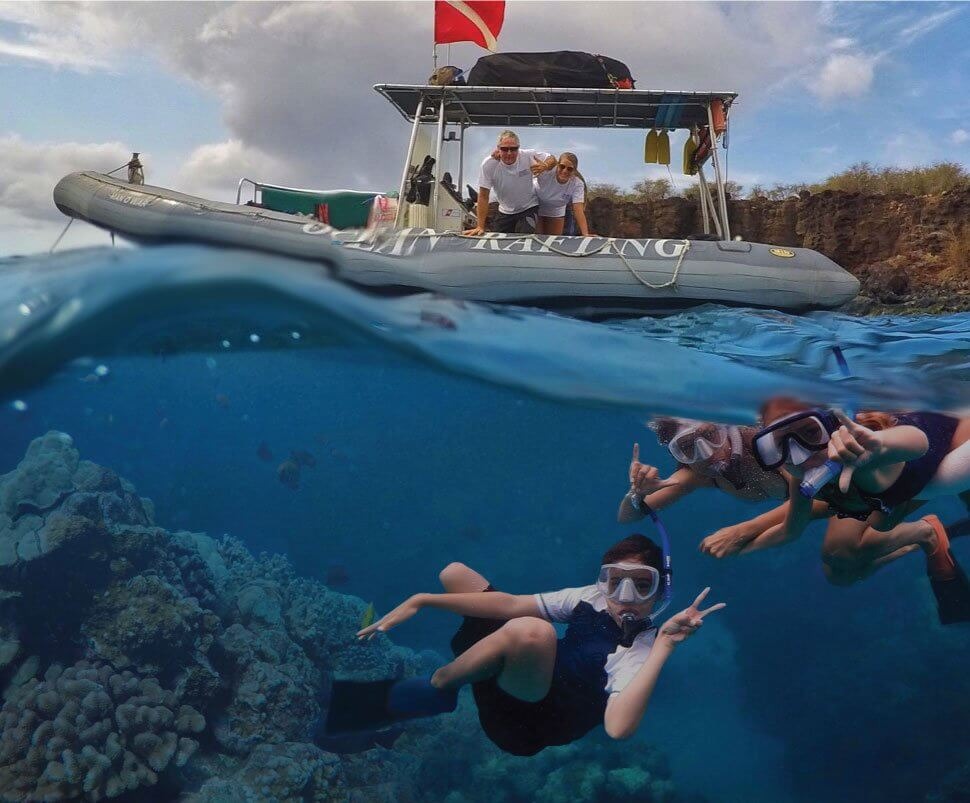
Quick Answer: Honolua Bay sits on Maui’s northwest coast and delivers some of the best snorkeling in Hawaii, healthy coral, sea turtles, tropical fish, and occasionally spinner dolphins. It’s free, no permit needed, and open to all skill levels. But timing, conditions, and a little prep make the difference between a good trip and a great one.
Look, I’m going to be straight with you.
When I first heard about Honolua Bay, someone described it as “just a snorkeling spot near Kapalua.” I almost skipped it entirely because Maui has no shortage of places to stick your face in the water and call it a day.
That would’ve been a mistake.
Honolua Bay Snorkeling is something else. Not in a brochure-perfect, overhyped kind of way in a genuine, first-time-you-see-a-sea-turtle-at-arm’s-length kind of way. But it’s also a spot that’ll humble you fast if you show up unprepared. Rocky entry, no beach, winter swells that can go from calm to chaotic, and a parking situation that’ll test your patience on a busy Saturday morning.
So here’s what you actually need to know before you go.
1. Forget the Beach — There Isn’t One
This surprises people every single time.
You drive up Honoapiilani Highway, park on the shoulder somewhere near mile marker 32 (there’s no sign, you just look for a string of cars), and hike down a narrow jungle trail to the water. Beautiful walk, honestly big tropical leaves overhead, occasionally muddy underfoot but at the end of it, you’re not stepping onto sand.
You’re stepping onto rocks.
Boulders, actually. Some of them are covered in algae that gets slippery the moment water hits them. The left side of the bay tends to be slightly easier for getting in and out, but “easier” is relative. Wear proper water shoes not sandals, not bare feet and budget more time than you think for the entry. Rushing it is how people twist ankles or cut their feet before they’ve even gotten to the good part.
Put your fins on at the edge or once you’re ankle-deep in the water. Not while you’re still navigating rocks. That’s a fall waiting to happen.
2. Come in Summer — Or at Least Check the Swells First
Here’s the thing about Maui Honolua Bay that most travel articles gloss over: it’s a world-class surf spot in winter. Like, legitimately world-class. Professional surfers travel specifically to ride the waves that come through between November and March.
Those same waves make snorkeling somewhere between pointless and dangerous.
The water gets murky, the surge makes the rocky entry genuinely hazardous, and visibility drops enough that you’d be better off at literally any other spot on the island. Summer April through October roughly is when the bay settles down and becomes the snorkeling paradise people talk about. Visibility on a good morning can stretch 40 to 50 feet. You can see the reef structure clearly from the surface before you even duck your head under.
If you’re visiting outside peak summer, pull up a surf report the night before. Anything over 3–4 feet of swell on the north shore and you should probably make different plans that day.
3. Show Up Early — No, Earlier Than That
I know “go early” is advice you get for every tourist spot and it gets old hearing it. But at Honolua Bay it matters in a way that’s different from, say, showing up at a museum when it opens.
The parking situation is legitimately rough. There’s no lot just the highway shoulder and on a summer weekend it fills up fast. By 9, 9:30 in the morning you might find yourself parking a significant walk away or slowly following departing cars like you’re stalking a space at a mall on Black Friday.
But the bigger reason to go early isn’t parking. It’s the water. Between roughly 7 and 9 AM, Honolua Bay is frequently calm in a way it just isn’t later in the day. Wind picks up through the morning. Tour boats start showing up mid-morning and stir things up. The experience of floating over the reef at 7:30 AM when the bay is quiet and the light is just starting to filter through the water is genuinely different from the same reef at noon.
Get there early. It’s worth the alarm.
4. The Marine Life Is the Real Deal
Okay, this is the part where I could just list fish names and call it informative. But let me give you a more honest picture of what snorkeling in Honolua Bay actually looks like underwater.
The fish density is high. Not “wow, I saw three fish” high genuinely thick schools of yellow tang moving together over the reef, parrotfish big enough to look slightly prehistoric, Moorish idols doing their elegant thing near the coral heads. Hawaii’s state fish, the humuhumunukunukuapua’a (say that five times fast), shows up along the rocky edges if you look carefully. Needlefish cruise just under the surface. Moray eels tuck themselves into crevices and are easy to miss if you’re not scanning the darker gaps in the reef.
Sea turtles are what most people are really hoping for, and Honolua Bay delivers more consistently than most spots on Maui. They feed along the reef and sometimes park themselves on sandy patches between coral heads. They’re not performing for you, they’re just living their lives which somehow makes seeing them even better.
Spinner dolphins show up offshore fairly regularly. You won’t always see them but when you do, it’s one of those moments you don’t forget quickly.
5. It’s a Marine Conservation Area — Behave Accordingly
Honolua Bay has been a Marine Life Conservation District for a long time. That designation is the reason the reef looks the way it does today. No fishing, no collecting shells or coral, no anchoring on the reef. Rules that sound obvious but that people apparently need reminding of.
What it means practically for a snorkeler: don’t touch the coral. Not even to stabilize yourself when a wave pushes you around. Not even the stuff that looks dead or bare. Coral takes years to recover from casual contact and the cumulative effect of thousands of snorkelers touching it “just a little” adds up to genuine damage over time.
Don’t feed the fish either. It seems harmless and the fish go absolutely wild for it, which is part of why people do it. But it messes with natural feeding behavior and makes fish aggressive in ways that can turn an otherwise pleasant snorkeling session weird.
The bay looks the way it does because it’s been protected. Don’t be the person who chips away at that.
6. Gear — A Few Things Actually Matter Here
You don’t need to buy anything special for Honolua Bay snorkeling, but a couple of gear decisions actually matter more here than at easier spots.
Mask fit is everything. A mask that leaks constantly is miserable. If you’re renting, try a few before you commit to one and make sure you test the seal before you pay. Defog it before you get in either with commercial defog drops or with spit if you’re old school.
Bring fins. The reef extends way out from shore. Without fins you’ll exhaust yourself just trying to cover distance and you’ll spend more time swimming hard than actually watching what’s below you. Fins make the whole experience more relaxed.
Reef-safe sunscreen only — and this isn’t optional. Hawaii banned sunscreens with oxybenzone and octinoxate back in 2021. These chemicals genuinely damage coral and there are real fines for violating the rule. Mineral-based sunscreen with zinc oxide or titanium dioxide is what you want. Apply it before you leave wherever you’re staying, not in the parking area it needs time to absorb properly.
Water shoes for the trail and entry. Already mentioned this but worth repeating because people show up in flip flops and regret it immediately.
Gear rentals are available in Lahaina and around the Kapalua area if you didn’t travel with your own.
7. Solo Snorkeling vs. Booking a Tour
Honolua Bay is free and public. You can absolutely just show up with your gear and go, no booking required, no fee, no permission needed. That’s one of the things that makes it special compared to Molokini, which requires a boat tour.
That said, a Honolua Bay snorkeling tour makes genuine sense in certain situations.
If you want to know- is honolua bay snorkeling worth it or not read our full guide.
If you’re not confident in open water or if you’re bringing kids or less experienced swimmers, having a guide in the water changes the experience in a meaningful way. Guides know where the turtles typically are on any given day, they understand the current patterns, and they can make quick decisions about conditions that a first-timer might not be equipped to make.
Some tours go by boat, which gives you access to the deeper outer reef sections that shore snorkelers don’t typically reach. That’s a legitimately different experience.
If you’re a comfortable ocean swimmer with your own gear and no need for hand-holding, going solo is perfectly fine and honestly quite wonderful. The bay is big enough to explore for a couple of hours without running out of reef.
8. Hazards Worth Knowing
Honolua Bay isn’t a dangerous spot by any reasonable measure. But there are a few things that catch people off guard.
The current across the bay runs laterally generally south to north and while it’s usually manageable it can get stronger than it looks, especially toward the middle of the bay. If you feel like you’re working harder than you should be to stay in place, swim closer to the edges.
The rocky entry zone is honestly where most problems happen. Slips, cuts, the occasional bad step. There’s no dramatic ocean hazard causing most of the injuries at Honolua Bay; it’s the transition between land and water where people get sloppy. Slow down there.
Sea urchins are tucked into every rocky crevice in the shallower areas. Don’t grab rocks, don’t put your feet down in rocky spots without looking first.
And if you arrive and the bay looks wrong, heavy chop, murky water, serious surge just leave. Maui has plenty of other spots for snorkeling on any given day. There’s no award for going in anyway.
9. Honolua Bay vs. Other Maui Spots
People ask constantly whether Honolua Bay is better than Molokini. It’s not really a fair comparison; they’re different experiences. Molokini is a submerged volcanic crater that you can only reach by boat, visibility is often extraordinary, and the fish population is dense. But it’s a tour-only destination and on busy days it can feel crowded in a way that takes something away from it.
Honolua Bay is free, accessible, and the reef quality in terms of coral health honestly rivals Molokini on a good day. The main difference is the rocky entry versus a boat ladder, and the fact that Honolua Bay rewards early morning visitors in a way Molokini doesn’t because of the calm.
Black Rock at Kaanapali is a solid beginner spot and great for turtle sightings, but it’s smaller and gets crowded with hotel guests quickly. Ahihi-Kinau down south is remote and beautiful but the access points are rocky in a less forgiving way than Honolua Bay.
For a combination of reef quality, marine diversity, accessibility without booking, and the realistic chance of a genuinely wild experience of a turtle cruising past you, dolphins in the distance Honolua Bay are hard to beat on Maui.
10. Leave It the Way You Found It
The trail into Honolua Bay has trash cans near the highway. Use them. Pack out anything you pack in. Pick up something on your way back up if you see it on the trail, even if it’s not yours.
Don’t try to touch the turtles. Don’t swim aggressively toward dolphins when they appear. Watch them from a respectful distance and let the encounter happen on their terms; it will be better that way anyway.
The reef at Honolua Bay is healthy because people have been treating it right for a long time, and because the Marine Life Conservation District protects it from the worst of what unchecked human activity does to reef systems. That ongoing health isn’t guaranteed. It depends on every single person who snorkels there choosing to be respectful.
This is a remarkable place. Treat it like one.
Quick Reference
| Where | Kapalua, Maui — near Mile Marker 32, Hwy 30 |
| Best months | April through October |
| Ideal arrival time | 7–9 AM |
| Cost to enter | Free |
| Permit needed | No |
| Water temperature | Around 75–80°F |
| Visibility on calm days | 30 to 60 feet |
| Skill level | Manageable for beginners; rewarding for advanced |
| Conservation status | Marine Life Conservation District |
| Parking | Highway shoulder only — early arrival critical |
FAQ
Is Honolua Bay snorkeling actually as good as people say?
Genuinely yes. The reef health here is unusual for Hawaii in 2026, where so many spots have degraded. The fish diversity is high, turtle sightings are common, and on a calm morning the visibility is exceptional. It earns the reputation.
Is it safe for people who aren’t strong swimmers?
The ocean conditions during summer are mild enough that cautious beginners can manage it but the rocky entry is the real challenge, not the water itself. A guided Honolua Bay snorkeling tour would be the smarter choice for anyone not fully comfortable in the open ocean.
Do you need to book anything in advance?
Not for independent snorkeling. Just show up. If you want a guided Honolua Bay snorkeling tour, booking ahead during peak summer months makes sense since they fill up.
Why avoid it in winter?
The north swells that arrive November through March are what make Honolua Bay famous among surfers and exactly what makes snorkeling here a bad idea during those months. Rough water, poor visibility, hazardous entry.
What fish and animals will I actually see?
Yellow tang, parrotfish, moray eels, Moorish idols, needlefish, humuhumunukunukuapua’a, and Hawaiian green sea turtles are all regular sightings. Spinner dolphins appear offshore with some frequency. Manta rays occasionally show up, though never on schedule.
What’s the sunscreen situation?
Mineral-based only. Hawaii law bans chemical sunscreens with oxybenzone or octinoxate — and beyond the legal side, those chemicals genuinely harm the coral you’re there to see. Zinc oxide formulas work great.
How early is early enough?
Before 8 AM on weekdays, before 7:30 AM on summer weekends if you want a decent parking spot and the calmest water. It’s worth setting the alarm.
Final Thought
Honolua Bay doesn’t need much of a sales pitch. It’s one of those places that handles its own marketing the moment you’re in the water.
Just go prepared. Reef-safe sunscreen, proper water shoes, fins, a mask that actually fits, and an alarm set early enough to beat the crowd. The reef will take care of the rest.