Engineers, architects and procurement teams now really care about sustainable building. The pressure to choose structural materials is greater than just being strong. Materials need to perform well over time, have low environmental impact and be able to withstand a variety of site conditions without constant replacement.
For decades, stainless steel has been a cornerstone of modern infrastructure. It doesn’t rust, and when a building is taken down the material can be fully recovered and reused. Stainless steel angles are but one of the many stainless steel products used for structural and architectural purposes. They have an L-shaped cross section. They are used as framing members, supports and brackets. Low maintenance requirements. Lifecycle costs are more favorable than other structural options over 20 to 30 year building horizons.
For sustainable construction, engineers need to review detailed Stainless Steel Angle Specification standards to select structural materials that provide durability, strength, and long-term environmental performance.
What Are Stainless Steel Angles?
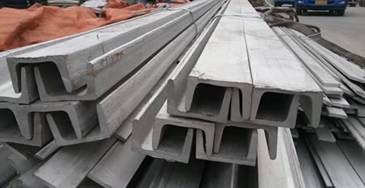
A stainless steel angle is a structural section with an L-shaped cross-section. Stainless Steel Equal Angles have both legs of the same length and are the more commonly stocked option for general framing and brackets. Unequal angles have legs of different lengths and are used when the connection geometry requires it.
Stainless steel angle bar is available in a range of grades. Grade 304 is used in most construction applications. 316 Resistance to chlorides is selected for coastal or chemically aggressive environments. These sections are defined by standards such as ASTM A276, EN 10088 and JIS G4303, which specify the chemical composition, mechanical properties and dimensional tolerances.
Why Green Building Projects Need Sustainable Structural Materials
LEED certification requires projects to show that materials are responsibly sourced, durable, and have a low environmental impact over the life cycle of the building. A building that needs major repairs every 10 to 15 years is not in line with the goals of sustainability. Long lifecycle materials reduce raw material extraction, construction waste and carbon footprint.
Stainless steel is environmentally responsible throughout its entire lifecycle. It is made with a high percentage of recycled materials, is 100% recyclable and lasts for decades with little maintenance.
Key Ways Stainless Steel Angles Support Green Building Projects
High Corrosion Resistance Reduces Replacement Needs
Stainless steel angles develop a passive chromium oxide layer which protects from rusting without coatings or periodic surface treatment. Properly specified stainless steel angle bar can last 50 years and more. 316 stainless steel equal angles are commonly used in waterfront buildings and infrastructure subject to salt air.
Recyclability Supports Circular Economy
Stainless steel can be completely recycled without significant quality loss. Current production uses 60% or more recycled scrap as feedstock. At the end of building life, stainless steel angles go directly into the scrap recycling chain, reducing virgin raw material demand.
Long-Term Structural Strength and Durability
Stainless steel angles have high tensile and yield strength and are suitable for load bearing applications. They provide structural stability at a range of temperatures and are used in construction in seismic zones where ductility is required in addition to strength.
Lower Lifecycle Costs in Sustainable Construction
Upfront cost is higher than carbon steel, but the comparison shifts over a 20 to 30-year building life. Carbon steel requires regular coatings and maintenance. Stainless steel eliminates most of those recurring costs, resulting in a lower total cost of ownership.
Supports Energy-Efficient Building Design
Stainless steel equal angles and stainless steel angle bar sections are compatible with curtain wall systems, ventilated facades and structural glazing frames. Dimensionally accurate tight tolerance fits reduce scrap in fabrication.
Applications of SS Angles in Green Buildings
- Structural framing: Primary and secondary structural members where corrosion resistance is required alongside load capacity.
- Solar panel mounting systems: Support frames for rooftop and ground-mounted panels, particularly in coastal locations.
- Architectural supports: Canopy supports and facade brackets where exposed metal must maintain appearance without treatment.
- Staircases and railings: Stainless steel angle bar used for stringers, nosing reinforcements, and railing bases.
- HVAC support structures: Equipment platforms and duct support frameworks resistant to condensation-related corrosion.
- Modular construction systems: Connecting elements in prefabricated modules due to dimensional consistency and reusability.
Importance of ASTM Standards in Sustainable Construction
ASTM A276 covers chemical composition requirements by grade and minimum mechanical properties such as tensile strength, yield strength and elongation. Compliance means material has been tested against defined thresholds.
Choosing a reliable ASTM A276 Stainless Steel Angle Supplier ensures compliance with global quality and sustainability standards. Mill test certificates and traceability records are also required for LEED audits. Goodluck Metal Corporation, Mumbai, founded in 1974 supplies ASTM A276 compliant stainless steel angles sourced from mills across Japan, Korea, Italy, the USA, UAE, and other countries, with full documentation.
How to Choose the Right SS Angle for Green Projects
Grade 304 is used for most normal environments. Grade 316 is for coastal or chloride exposed sites. Duplex grades such as 2205 are used in high stress structural applications. Size and thickness depend on the load requirements and the connection geometry. The full Stainless Steel Angle Specification sheet has all the mechanical information you need. Ensure that the stainless steel angle bar is supplied with mill test certificates. Procurement for certified green projects is easier when you have a supplier with consistent stock and proper documentation.
Conclusion
Stainless steel angles provide real sustainable advantages to construction projects. Corrosion resistance, long structural life, and full recyclability are highly compatible with green building standards in LEED and other similar systems. Higher initial cost is offset by lower maintenance and better end-of-life recovery. Since 1974, Goodluck Metal Corporation has been providing stainless steel angles to engineering houses throughout India, with complete traceability and certification documentation for every requirement.